Estimated Reading Time: 6 minutes Contains 1,220 words
Primary Audience: Instructional Coaches and Classroom Teachers
As the season shifts from summer to fall, educators, students, and families prepare for the changes in schedule, routines, and transitions. Teachers prepare their classrooms, organizing new notebooks, unboxing pencils, and sorting fresh crayons, as they begin the process of planning the first days or weeks of a new school year. Within this preparation come routines and procedures for every aspect of the day. Next week, at Two Writing Teachers, we will explore the importance of developing routines to build capacity within the context of a writing workshop.
What the Research Says
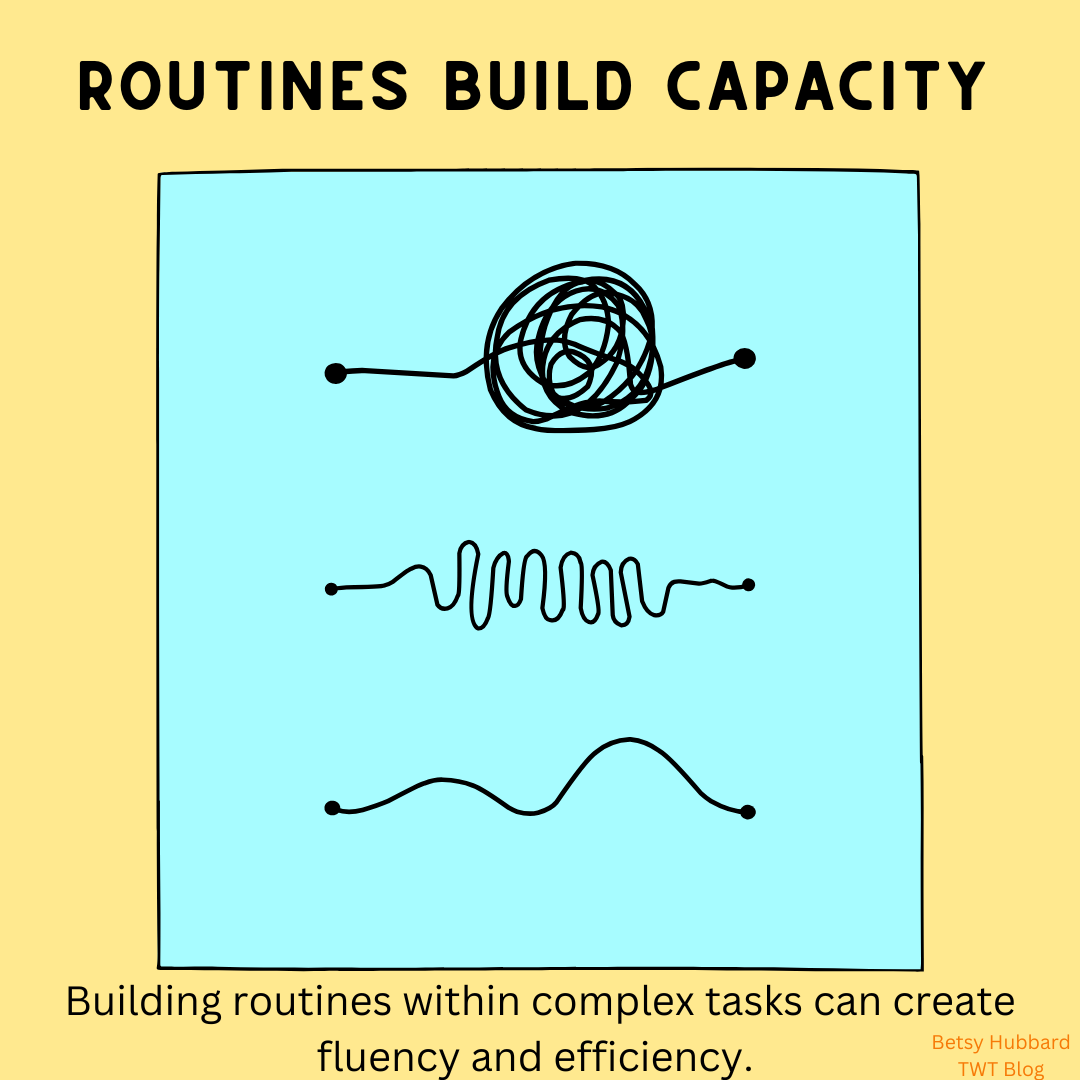
As children repeat experiences and gain awareness within a particular context, they are better equipped to engage in goal setting within the same context (Yanaoka & Saito, 2020). This process of repetition builds a child’s capacity for new skills and develops their executive function (EF) skills. Mitch Weather, author of Executive Function for Every Classroom, believes that the best predictor of success and the greatest impact we can have on students is through developing their EF skills (2024). The term executive function has gained a lot of attention in the past few years, and it isn’t just a fad or a buzzword. Teachers have been supporting students’ executive function development for years, and much of that is in part due to the establishment of routines and procedures.
How it Works
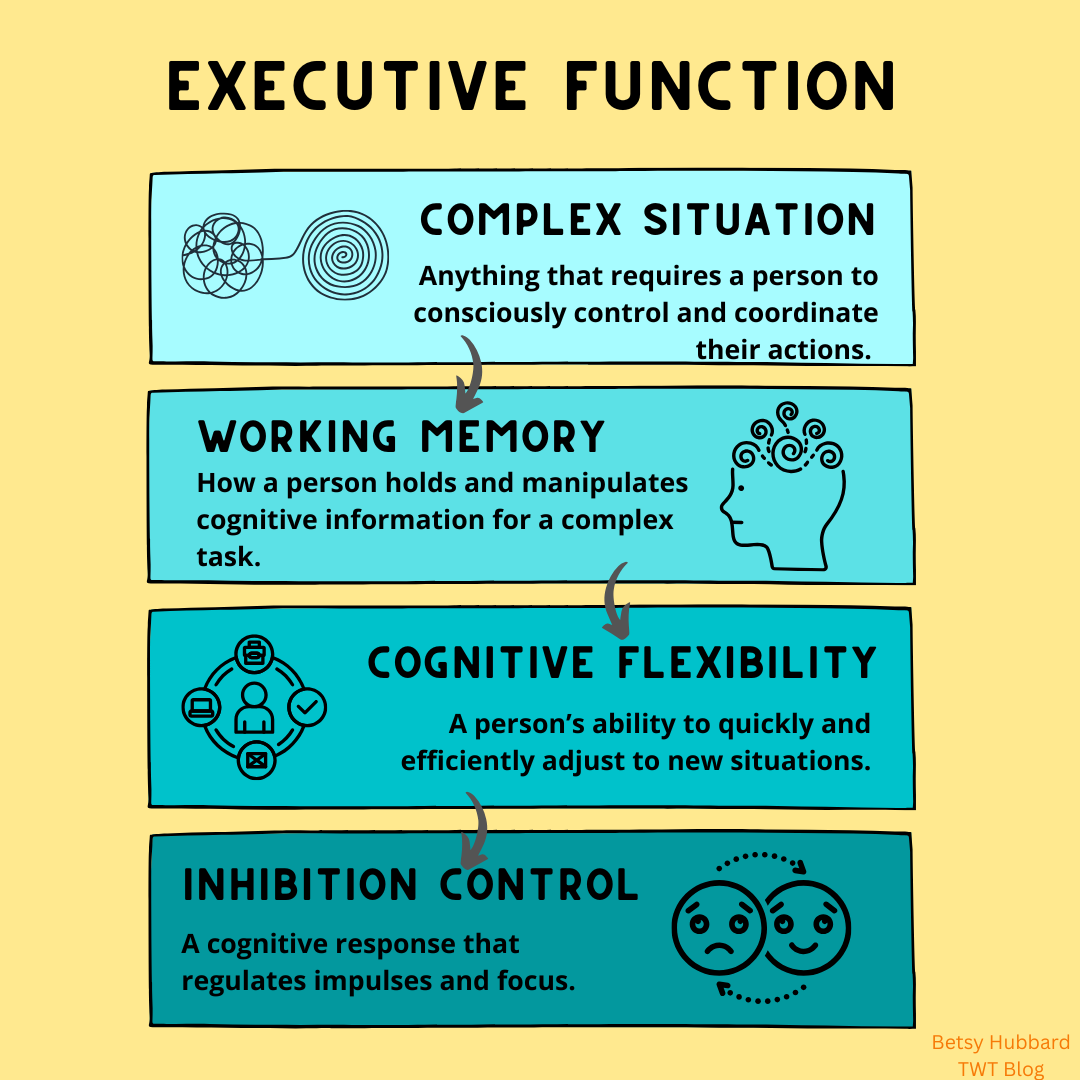
How can we intentionally support students’ executive function? We can continue to build our awareness around what executive function skills are and how we can support them through daily routines within our content! Although there is no universal number of EF skills, some experts suggest ten, while others suggest twelve. In A. Miyake’s research, the connection and separation of executive function skills were studied within three categories: mental set shifting, updating (monitoring information), and inhibition. The Cleveland Clinic categorizes these similar ideas into three categories: working memory, cognitive flexibility, and inhibition control, which are widely used terms by researchers and educators.
The Details
Working Memory is the ability to integrate new information with existing knowledge.
Example: Knowing how to form letters with automaticity will lead to word-level spelling fluency, sentence fluency, and so on. If remembering how to form letters remains challenging for a student, this will require more mental effort, called cognitive load, leading to less fluent word or sentence-level writing.
Routine: In primary classrooms, using visual tools to reduce cognitive load, like letter formation or sound charts, can be part of a daily routine. Play letter formation and word games as a warm-up using these tools before the writing workshop. This also helps students transition smoothly from one task to another, utilizing a warm-up routine that incorporates familiar information and tools.
Cognitive Flexibility is the ability to smoothly move from one task to another, or juggle between thoughts and ideas efficiently.
Example: In middle grade classrooms, students are learning to flexibly move from organizing and planning to drafting, revising, and rewriting, all while editing along the way. This takes cognitive flexibility to think ahead, draft, and manage one idea to the next.
Routine: Creating multiple opportunities for students to receive and give feedback to peers can create cognitive flexibility. As students are within any area of their writing process, they move from drafting, asking a peer for feedback, and then acting on that feedback.
Inhibition Control relates to focus and control over thoughts and actions.
Example: Writing down every idea that comes to mind in a first draft can be a good way to capture your thoughts. In a middle school classroom, it’s essential to validate this form of planning, while also encouraging focus on the topic and slowing down the process to discourage the impulse to write everything down and submit a draft.
Routine: Writing a draft and then refusing to revisit it can be a common issue. Creating a routine that incorporates stopping points along the way, putting a focus on the writing process, interrupts the urge to draft and stop. Building in routine tasks, such as rereading and sharing, can help suspend these impulses.
Supporting students’ executive function skills through intentional routines lays a foundation for independence, flexibility, and confidence as the year progresses. Next week on Two Writing Teachers, we’ll unpack how routines can be established across grade levels and writing stages to build students’ capacity in writing workshop settings. Join us as we explore practical strategies that bring these routines to life.
The Week Ahead: Unboxing Fresh Routines
Throughout the week, we will delve into the details of routines and explore how they support students and teachers. Here is the line-up!
- Starting on Sunday, Jess will kick off the series with routines designed to help you get to know your writers and develop their identities as writers.
- Monday, Melanie will encourage teachers to move beyond the script of a unit and shift agency to students when working through a unit of study.
- On Tuesday, Stacey will remind us of the importance of the immersion phase of a unit and the routines to build anticipation through mentor texts and more.
- Wednesday brings Leah’s post all about the routines that help shape a writer’s process and build identity.
- Lainie will continue our series on Thursday, sharing phases of routines for building a writing community.
- On Friday, Sarah will close out the series, encouraging intentional routines that set the tone for the school year.
Go Deeper
If you have a growing interest in building capacity using routines in your writing workshop and classroom environment, here is a list of resources to start or build on your understanding of executive function in the classroom.
- Adele Diamond, Neuroscience Pioneer on Executive Function from Tools of the Mind
- Executive Function Skills in the Classroom: Overcoming Barriers, Building Strategies by Laurie Faith, Carol-Anne Bush, and Peg Dawson
- FLIPP the Switch: Strengthen Executive Function Skills by Sheri Wilkins and Carol Burmeister
- Accompanying website: FLIPP the Switch
- Randomized control trial of Tools of the Mind: Marked benefits to kindergarten children and their teachers by Adele Diamond et al.
References from this post:
Cleveland Clinic (2024, March 15). Executive Function. Retrieved July 6, 2025, from https://my.clevelandclinic.org/health/articles/executive-function
Miyake A, Friedman NP, Emerson MJ, Witzki AH, Howerter A, Wager TD. The unity and diversity of executive functions and their contributions to complex “Frontal Lobe” tasks: a latent variable analysis. Cogn Psychol. 2000 Aug;41(1):49-100. doi: 10.1006/cogp.1999.0734. PMID: 10945922.
Weathers, M. (2024). Executive Functions for Every Classroom, Grades 3-12: Creating Safe and Predictable Learning Environments. Corwin Press.
Yanaoka, K., & Saito, S. (2022). The development of learning, performing, and controlling repeated sequential actions in young children. Topics in Cognitive Science, 14(2), 241-257.
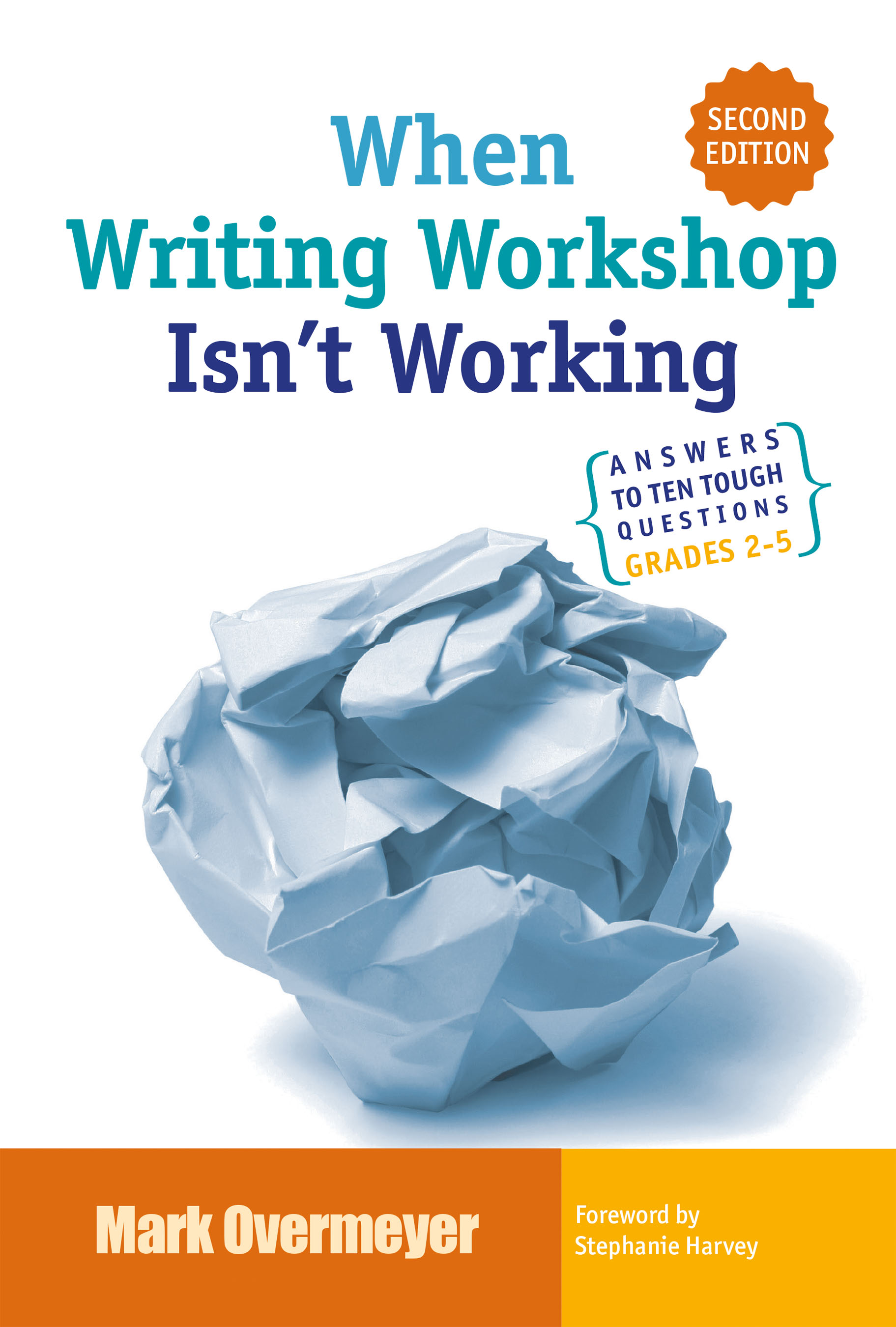
Giveaway Information: Want to win a copy of When Writing Workshop Isn’t Working (2nd Edition) by Mark Overmyer? Stenhouse Publishers (Routledge) has donated a copy for one lucky reader.
How to Enter:
- Comment on this post by Friday, 8/15/25, 11:59 p.m. EST.
Winner Selection:
- One winner will be chosen randomly and announced at the bottom of Sarah Valter’s post by Tuesday, 8/19.
Eligibility:
- You must have a U.S. mailing address when you comment.
If You Win:
- You’ll get an email from me with the subject “TWTBLOG – UNBOXING FRESH ROUTINES.”
- We’ll pick a new winner if you don’t reply with your mailing address within five days.
- Routledge will ship the book to you.
Discover more from TWO WRITING TEACHERS
Subscribe to get the latest posts sent to your email.


