Estimated Reading Time: 5 minutes, 923 words
Primary Audience: Early childhood and elementary school teachers
The Context:
When I look at my kindergarten students’ writing, I begin with two simple questions: “What do I notice?” and, “What do I wonder?” By leading with inquiry, I am able to see their work more objectively and with less judgment. This also aligns with my pedagogical stance that writing is a rather abstract concept for our youngest writers. The process is inherently messy until all the components begin to gel together in ways that allow children to write more fluently and confidently. It makes sense from a developmental standpoint that these pieces are typically not yet in place at the age of five or six.
For this blog post, I will share how I notice and wonder about three students’ recent “true stories” as part of my ongoing reflective practice.
Examples in Action:
1.
Notice:
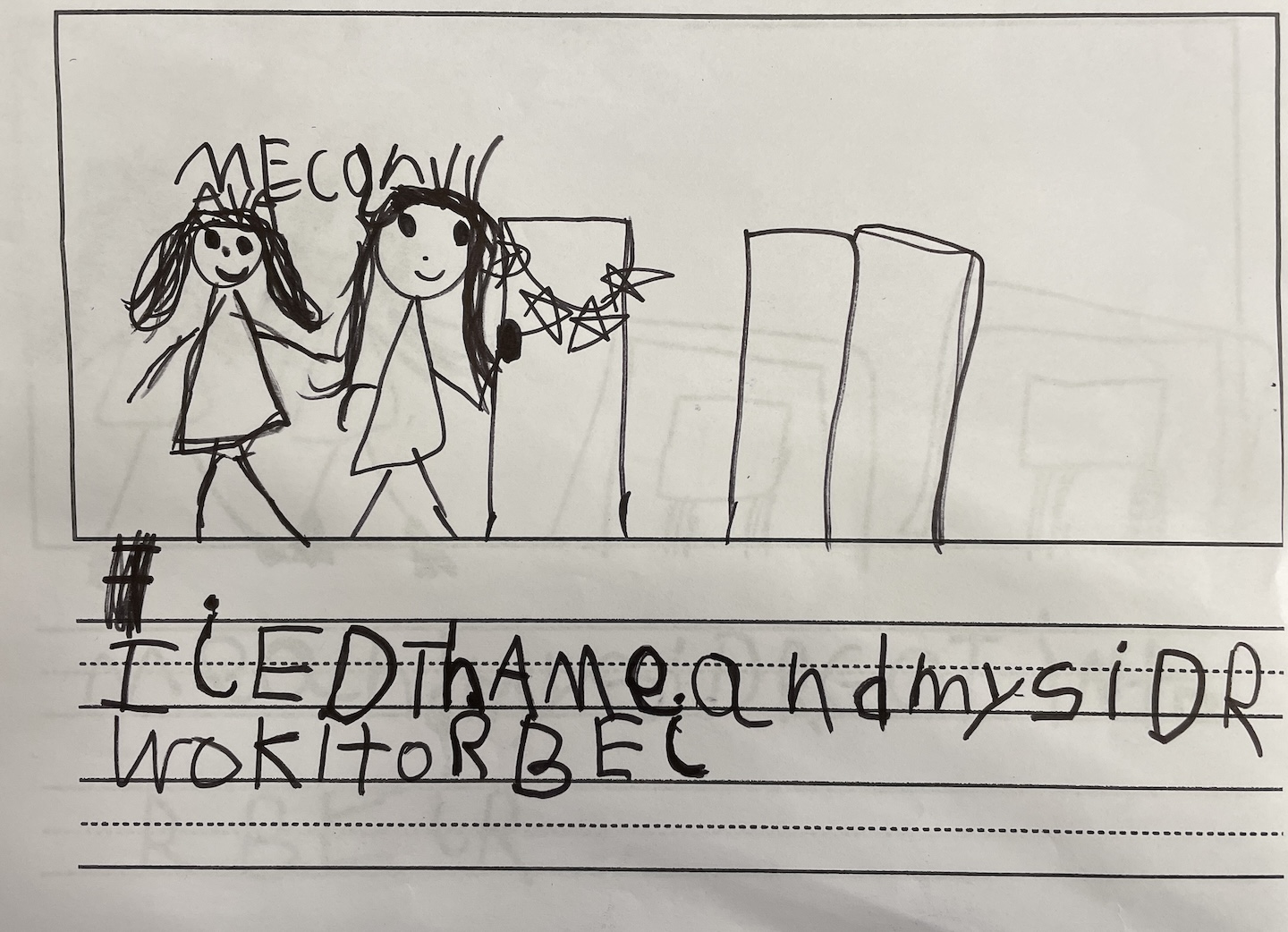
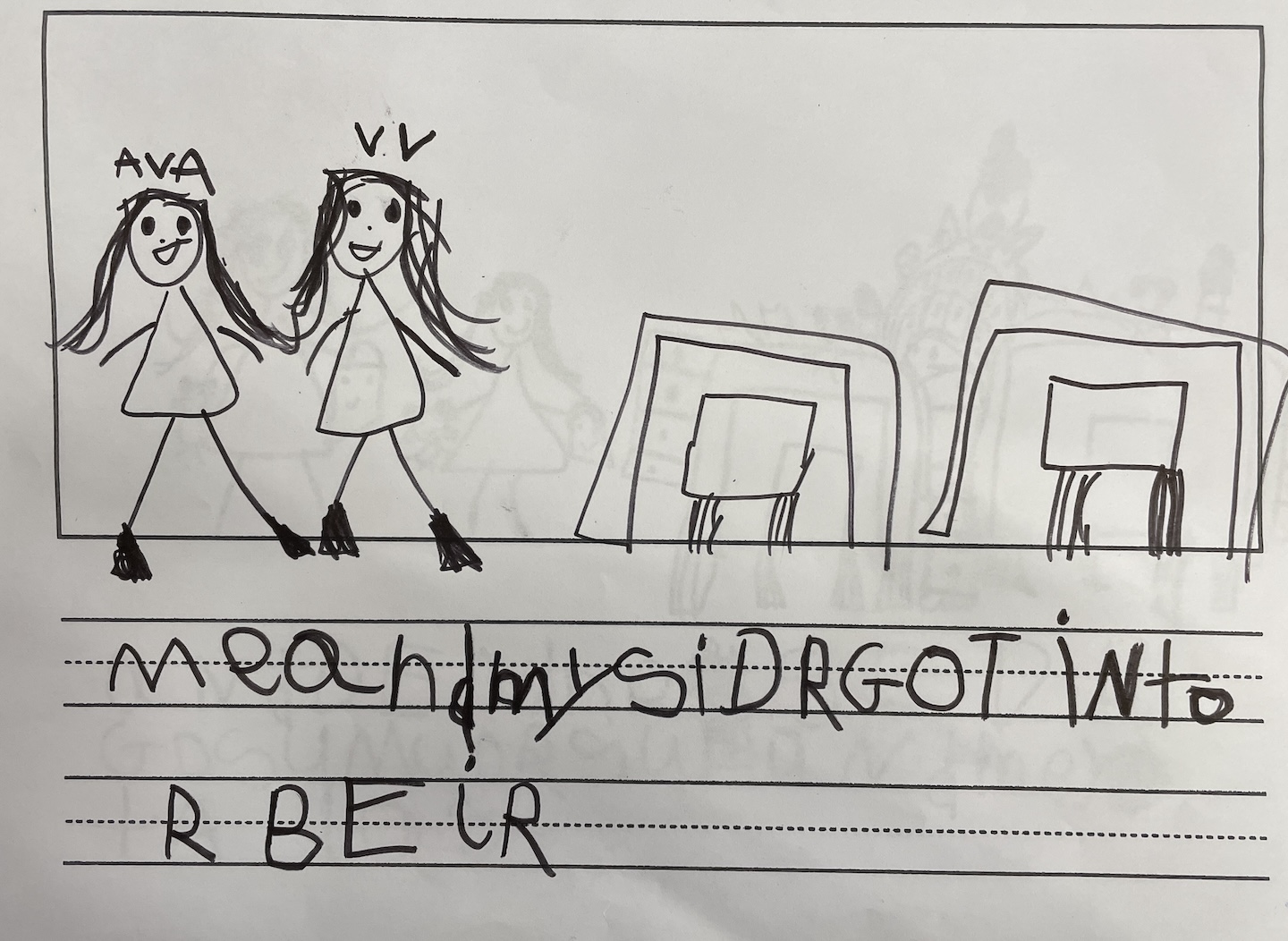
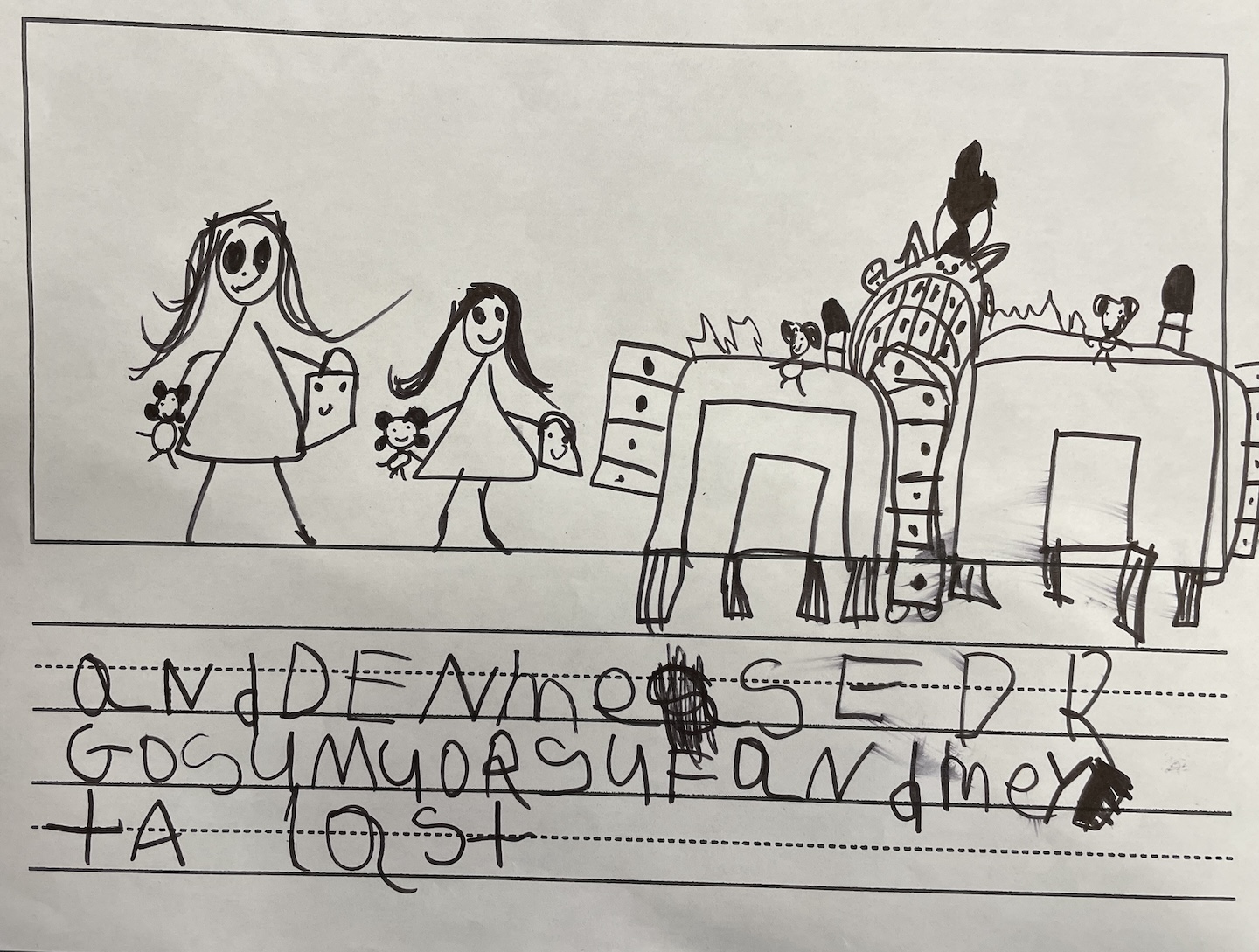
- The student has an awareness that words are made up of sounds and sounds are represented by letters. They also know that high frequency words are found on the classroom word wall and can be spelled conventionally.
- The sentences appear mostly as strings of letters with a combination of phonetically spelled words (sidr=sister, wok=walk, bejr=bedroom, den=then, sum=some) and high-frequency words (I, me, to, and, & my).
- Two of the pictures have labels for the people, and one does not. The final picture contains the most detailed drawing. Great care has been taken to represent the beds and the surrounding furniture.
- There is a progression from beginning, to middle, to end. The student attempts to incorporate “story language words” by writing “at last” on the third page.
- The student uses a combination of uppercase and lowercase letters and no ending punctuation.
Wonder:
- What does this student know or understand about telling a story? It’s interesting that they begin the first page with “I drawed me and my sister…” instead of just beginning with “Me and my sister…” It seems they are still learning to separate what they are doing (drawing) from what they are writing (a story). How can I support them in telling a story and using more expressive language?
2.

Notice:
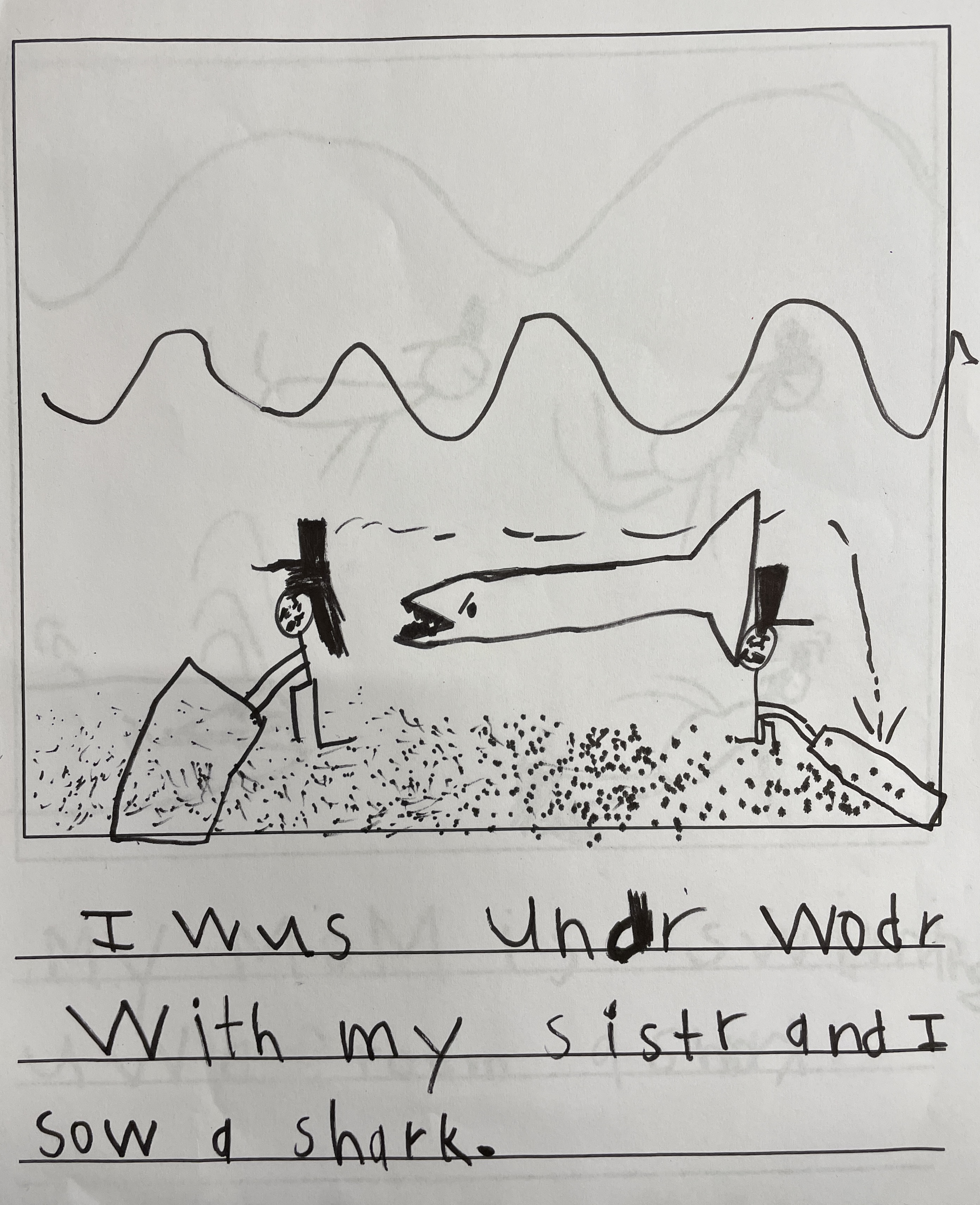
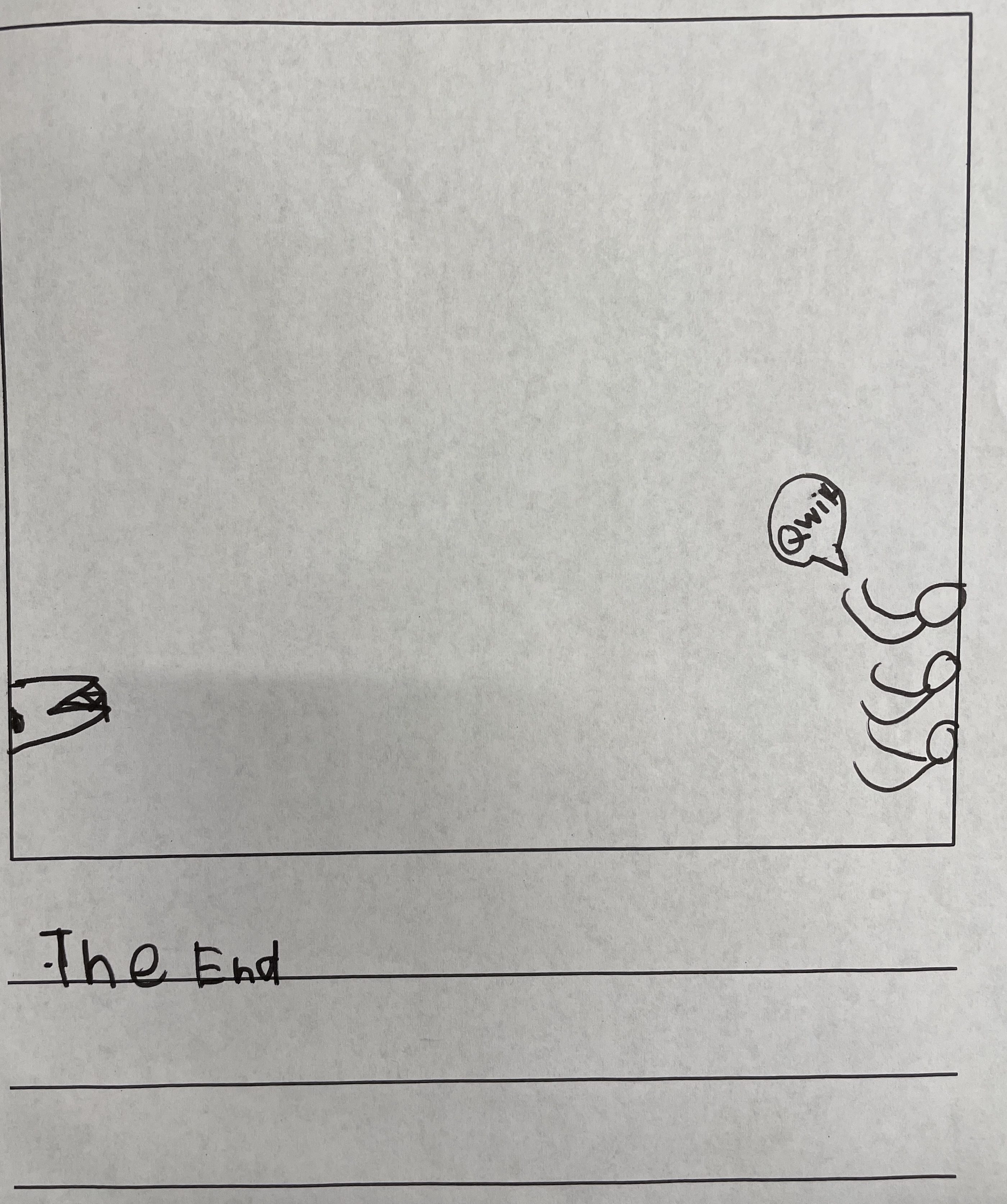
- The student is writing sentences with mostly clear spaces between words, phonetically spelled words, and high frequency words.
- They have some grasp of digraphs and blends (/th/, /sh/, /sw/, /fr/) and can use them independently.
- The student can tell a story in three parts. They use what seems to be humor to end the story with the use of a simple speech bubble, “Quick” and then showing just the front of the shark’s head on the left side of the page and the legs of the people swimming away on the ride side of the page.
- They mix lowercase and uppercase letters within words but use an uppercase letter at the beginning of a sentence and a punctuation mark at the end.
Wonder:
- Does the student see their story as humorous? If so, was it intentional on their part? How did they think to depict the ending so succinctly? Or did they just run out of time?!
- Where can they find ways to add more details to the story including where they were when they went swimming and what actually happened when they saw a shark? Can they add more details about how they were feeling or what they were thinking in this story?
3.

Notice:
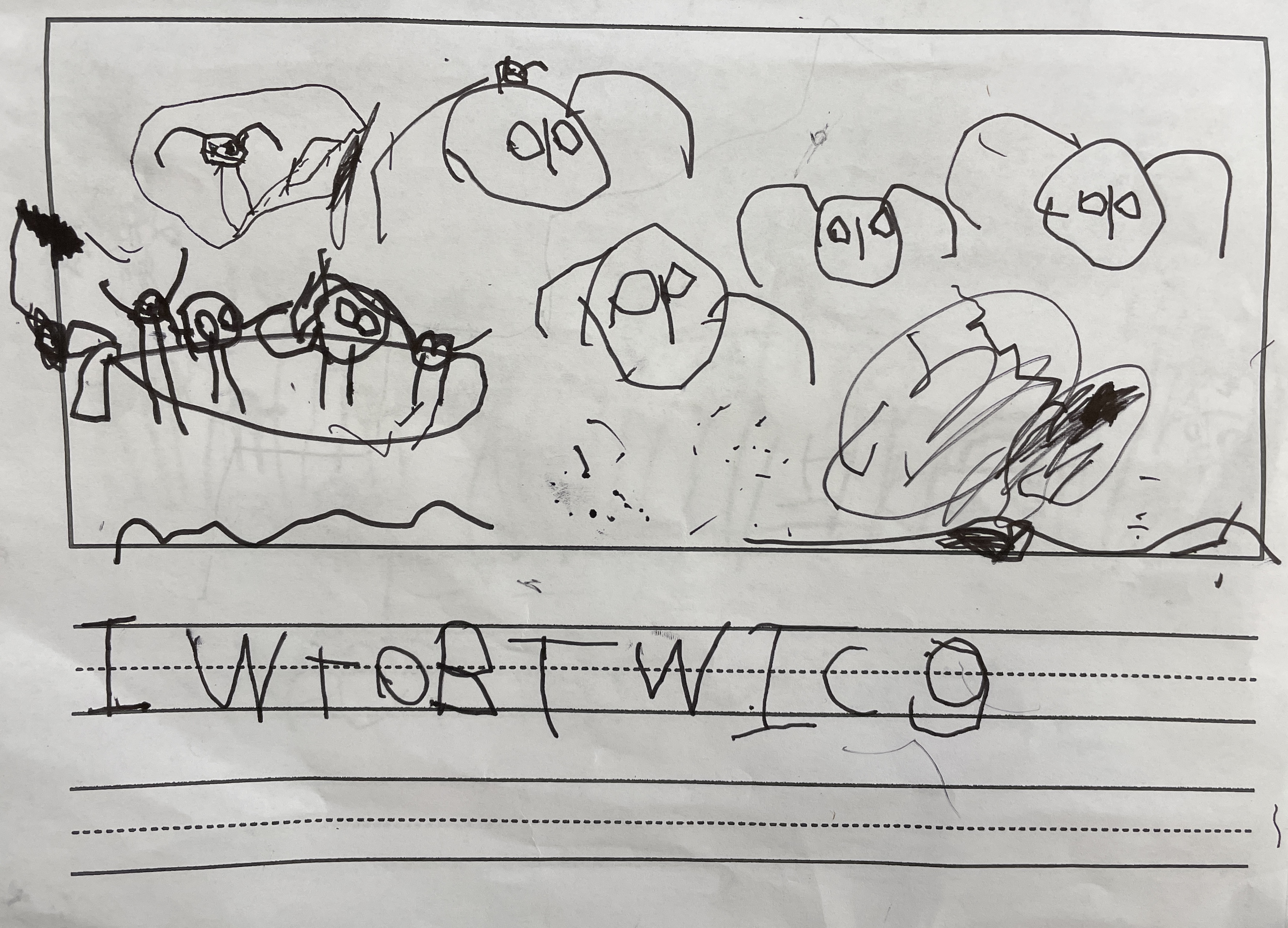
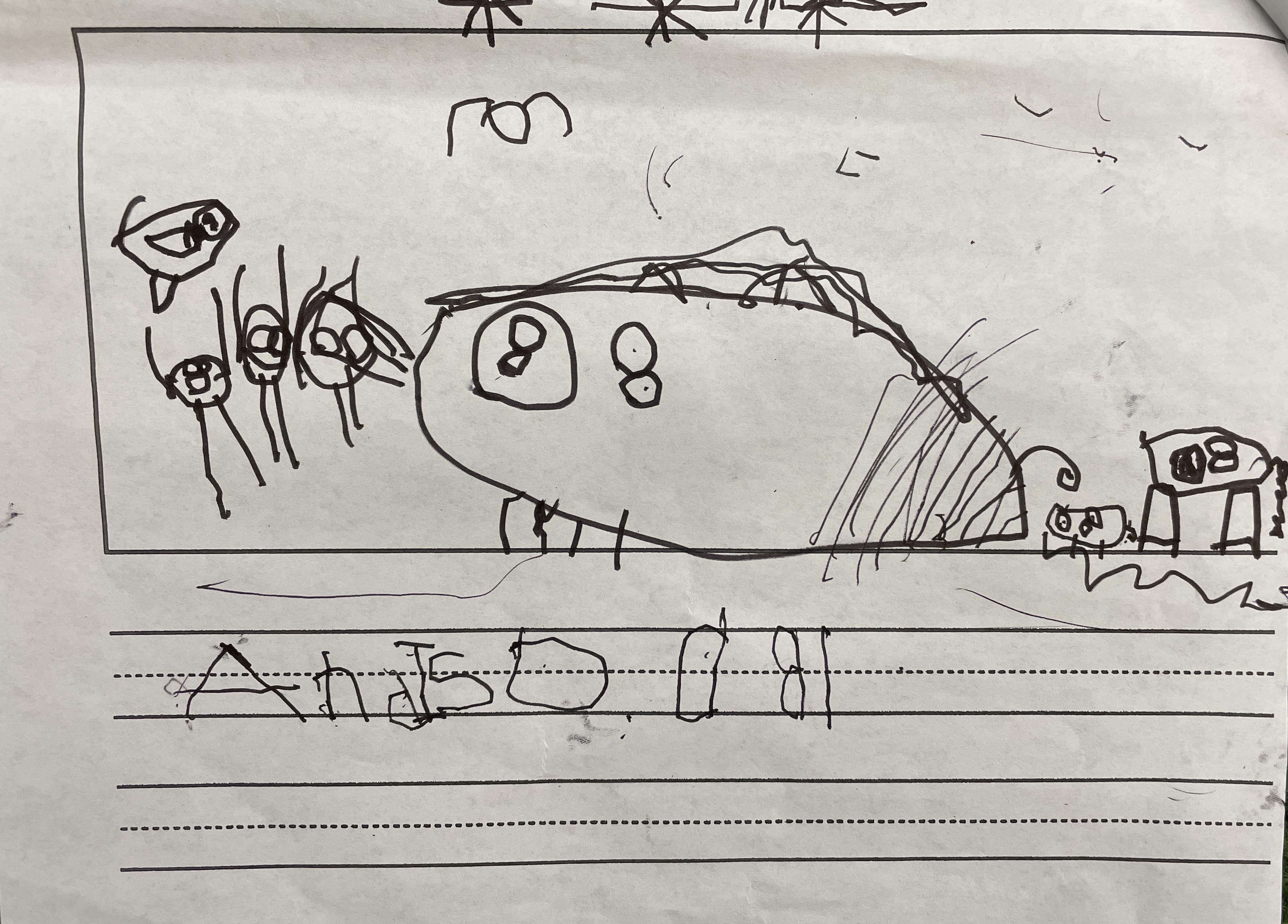
- The student’s pictures convey a story with a lot of energy and many details.
- The sentences are mostly strings of letters with one or two recognizable high frequency words (I, to, and). It is challenging to read it based on the letters alone (this child dictated their story to me after writing it).
- The student is still working on letter formation and is writing mostly in uppercase letters.
- The dictated version contains a fuller picture of a story with words and entire sentences that are not present in the student’s writing.
Wonder:
- The story reads much like a dream. Where did the student actually go? Why was there a pig in the water? Was it a real pig?
- Would the student’s work be more decipherable to the reader if they used more labels in the picture space?
- It seems that the student is losing track of the words they want to write before they are able to write them down. What supports can I give to help them hold onto their words long enough to write them down with at least one consonant for each word?
What’s Next:
If you haven’t had a chance to look closely at your students’ work from a “Notice / Wonder” stance before, I encourage you to try it. You might just discover something about them–or yourself–that you had not expected. If nothing else, noticing and wondering is an exercise in patience and understanding. It goes a long way toward centering and refocusing your teaching practice on what matters most: your students and their unique and complex writing journeys.
Discover more from TWO WRITING TEACHERS
Subscribe to get the latest posts sent to your email.


Thank you for sharing your process about noticing and wondering. I really enjoyed reading it. Out of curiosity, how do you decide what feedback from your list to share with the child (if any)? Or is your list just something to keep in mind as you see them progress in their writing?
LikeLike
As always an interesting post. Isn’t one of our greatest challenges allocating time to wonder?
LikeLiked by 1 person