Estimated Reading Time: 2 1/2 minutes (527 words)
Primary Audience K-12 Writing Teachers
I recently attended a virtual meeting with members of Missouri’s National Writing Project. Angie Hase led teachers through a ranking activity designed for students to examine texts written by their peers. This approach immediately intrigued me as I prepared to kick off my second-grade realistic fiction writing unit. I decided to try this ranking activity, hoping it would immerse my students more deeply into the genre.
Selecting Exemplars with Intention
To introduce the activity, I chose three student-written texts that exemplified the realistic fiction genre. These texts adhered to second-grade standards, featuring clear problems and solutions. My choices varied in length and voice but did not feature an obvious “best” story. This intentional decision ensured the activity encouraged inquiry rather than quick judgments.
Engaging Students with Peer Writing
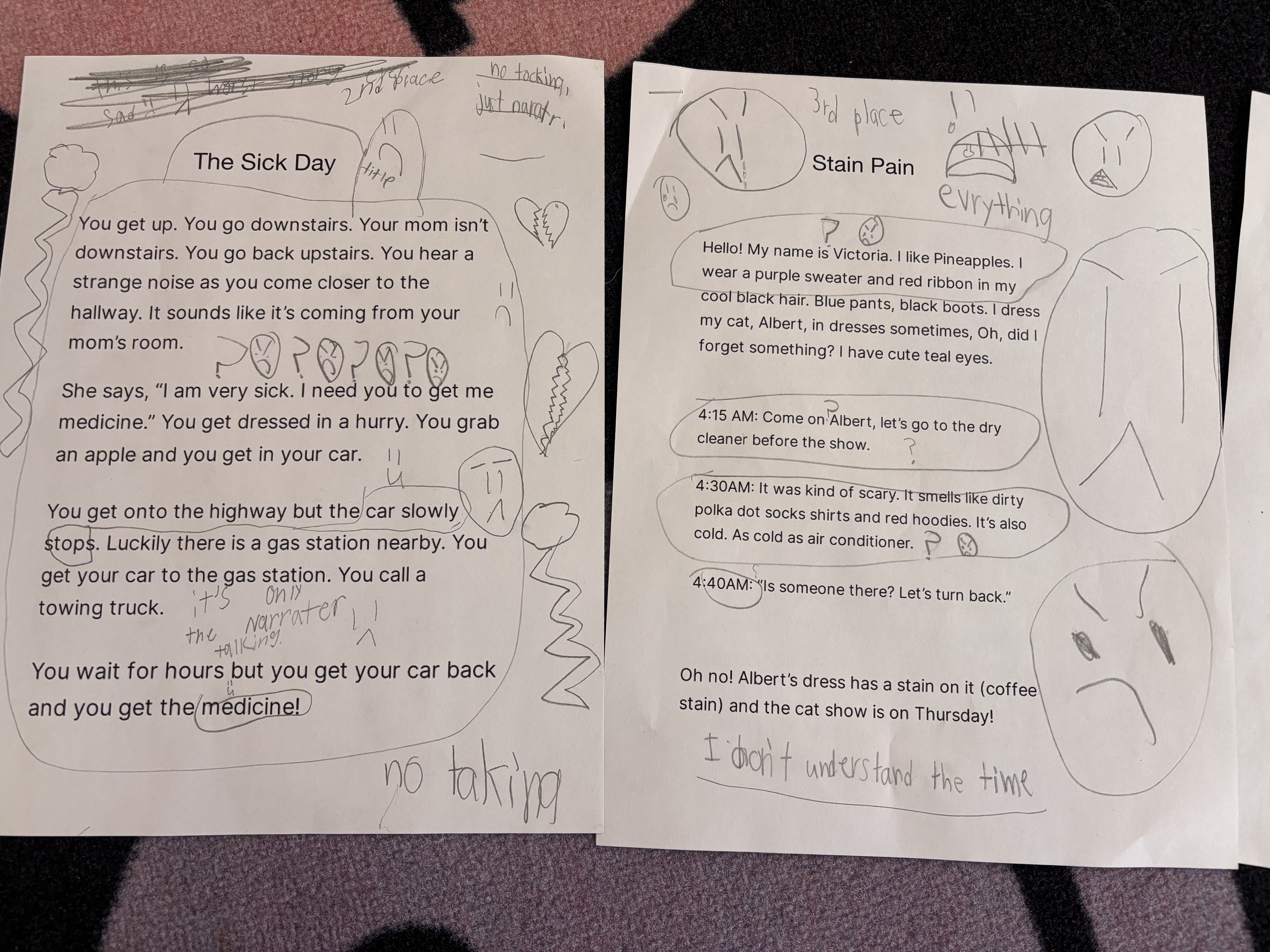
I began by reading the texts to my students, emphasizing that these were written by second graders just like them. This detail captured their attention in a way mentor texts often don’t. After reading the stories aloud, I tasked the students with annotating them. Together, we created a checklist of elements to look for:
- Word choice
- Character and setting description (Does it paint a picture in your mind?)
- Dialogue
- Lead
- Problem
- Solution (and ending)
Armed with these guidelines, students worked in groups, highlighting powerful parts and jotting down reactions like “boring” or “funny.” When I noticed comments like these, I encouraged students to explain their reasoning, which led to rich, revealing discussions. It was clear they were engaged and enjoying this new way of analyzing writing.
Collaborative Ranking Activity
Next, I asked each group to rank the stories. I provided no specific criteria for ranking—this was about collaboration and discovering what they valued in a story. The results were intriguing. Every story was ranked first by at least one group, sparking a discussion about the diverse preferences and priorities of writers in our classroom.

Connecting the Activity to Writing
The following day, students began drafting their own realistic fiction stories. I displayed the annotated exemplars prominently in the classroom, allowing students to refer back to them as they wrote. This visual reminder of our activity served as a guide and inspiration throughout the unit.
Revisiting for Revision
In the Zoom call, Angie Hase had originally presented this ranking activity as a revision tool. After ranking, students would compare their own drafts to the exemplars to identify areas for improvement. While I used the activity to launch our unit, I plan to revisit these texts throughout our genre study. For example, I taught a lesson about “getting your character out of trouble” a few days later. We checked the solutions in our ranked stories to help inform our decision-making as authors.
Reflections
This ranking activity was a powerful way to introduce realistic fiction to my second graders. It encouraged critical thinking, collaboration, and a deeper understanding of the genre. Most importantly, it showed my students that their voices and perspectives matter in the world of writing.
Have you tried ranking activities in your classroom? How do you engage students in examining and learning from peer writing? Share your experiences in the comments below—I’d love to hear your ideas!
Discover more from TWO WRITING TEACHERS
Subscribe to get the latest posts sent to your email.


