
For a long while, I spent countless hours in libraries and online searching out mentor texts to teach new skills or writing genres. While trade books continue to be a model for good writing, student-written mentor texts often better support my students. Don’t get me wrong; I can still dive head-first into Natalie Babbitt’s description of the sunset in Tuck Everlasting, but I also believe young writers can and should take guidance from one another.
In my classroom, student mentor text falls into three general categories. In this post, I’ll share how I gather that text, when I use it, and why it benefits our community of writers.
Using Previous Assignments As Mentor Text
Each year, I ask students whether or not I have permission to use their writing as mentor texts for future classes. For those who consent, I keep my eyes open for exemplary work. I copy those documents, store them in a “mentor text” file, and link their work in my planning document for quick access:
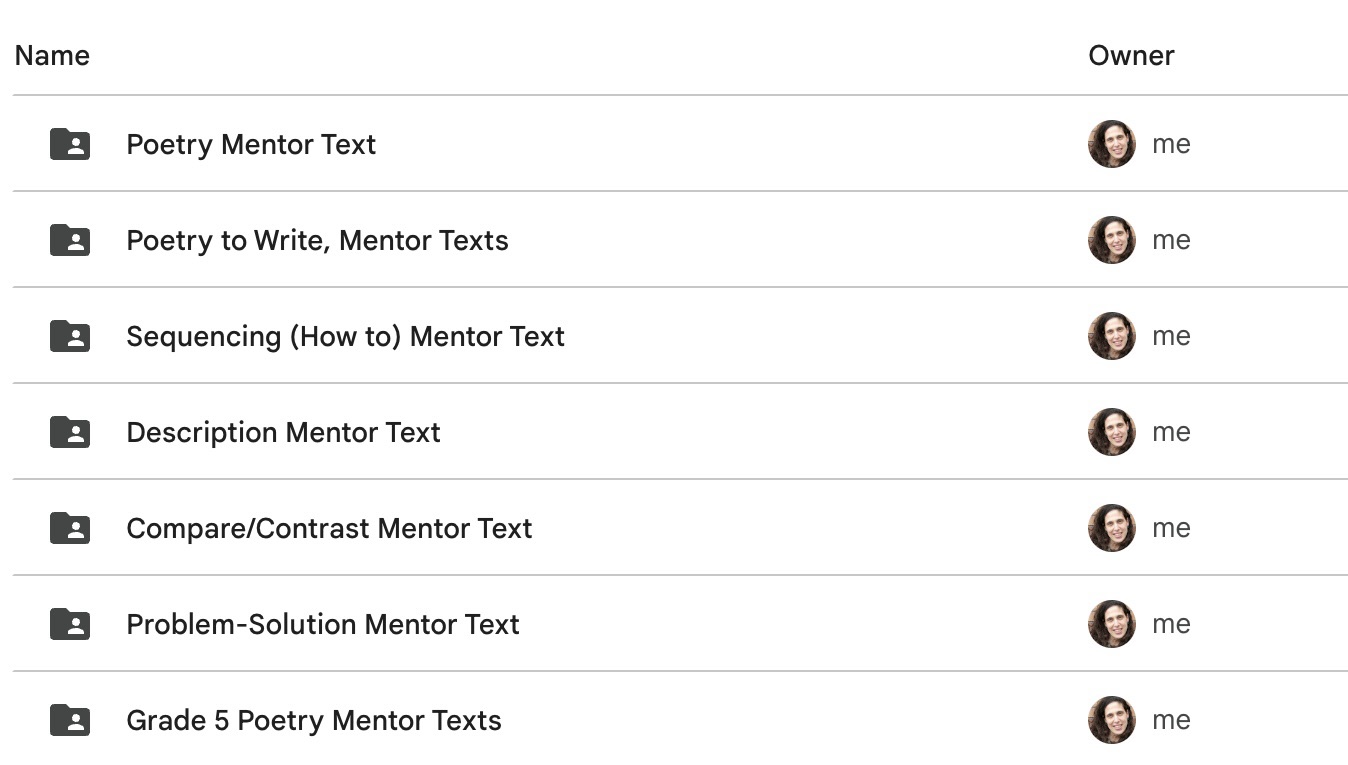
My writers often struggle with perfectionism and impostor syndrome. Having student-produced work is proof that the task required of them is doable. Furthermore, there’s a certain sensibility to kid logic and expression that’s tough to duplicate. Student-created work is more accessible to my writers, and I find they more readily see the use of technique and craft when kids are the ones they’re patterning after. Here’s a link to a set of student-written mentor texts I’ll be using when it’s time to teach Golden Shovel poetry.
Finding Everyday Writing to Share as Mentor Text
I’m always on the lookout for powerful writing. When I see an outstanding response to a prompt, or a well-employed craft move, I ask the student for permission to use their writing as a mentor text. I then tag the document or organize the files. This work especially comes in handy when I’m conferring with writers. I also use these texts during invitational groups focusing on a specific device or skill.

To illustrate the importance of this strategy, I think about exceptional administrators. They’re the ones who know my teaching and my goals. They say, “Hey, Lainie. You sound like you want to work on transitions. I know that Mrs. Smith is really good at them. How about I arrange to have you observe her one morning?” I feel reassured that my principal wants to see me succeed and wants to offer help in a low-stakes fashion.
Similarly, there’s a power in reproducing that dynamic within the writing classroom. “Jana, I see you’re working on incorporating dialogue with action. It just so happens that Ahmad is really skilled at it. May I show you some of their work to give you an example, or perhaps you’d like to confer with them?”
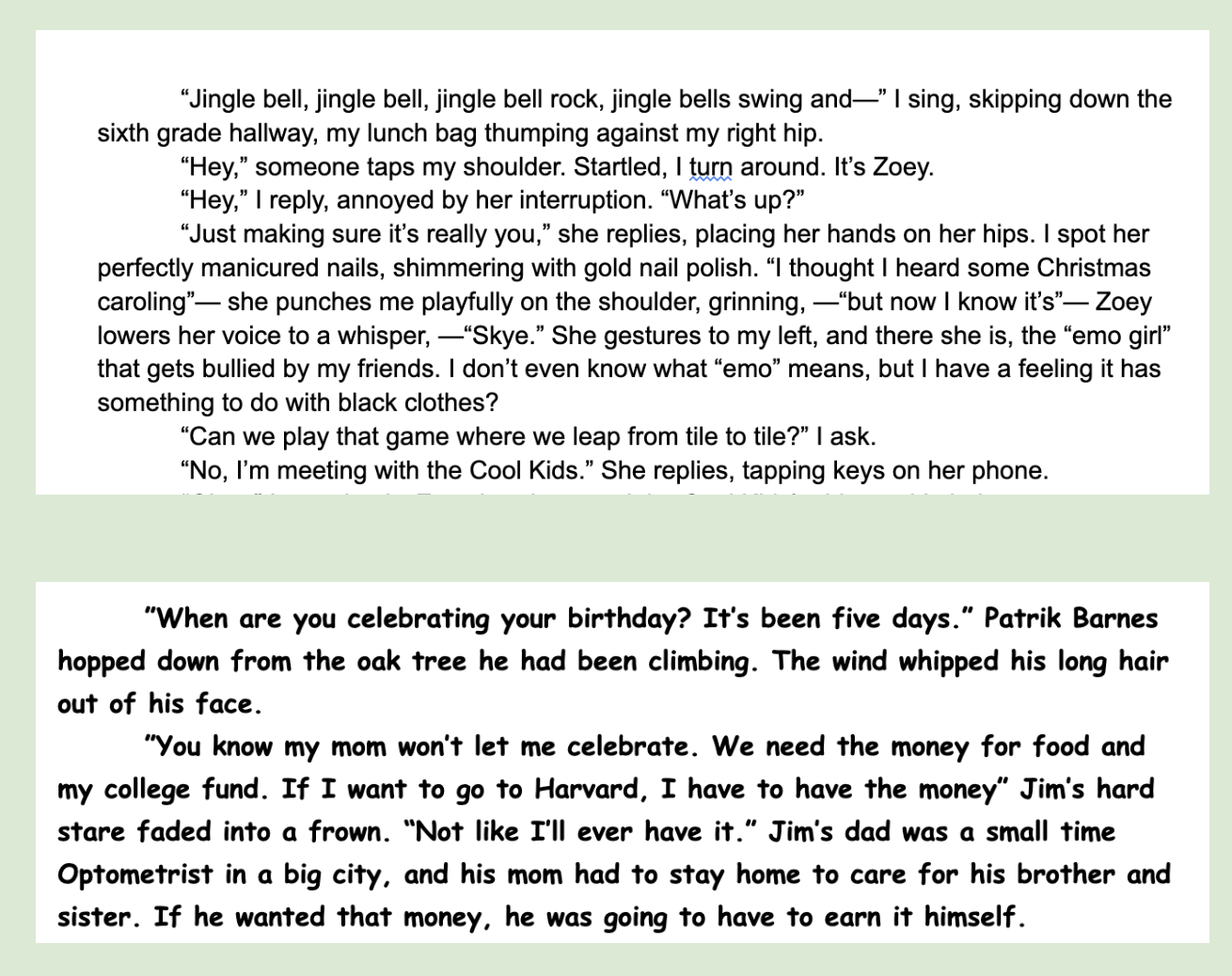
These passages show seamless integration!
When I know my writers and connect them through their work, I establish a system where students look to one another for expertise and skill.
Leveling Up: Student Nomination
I am not the only one in our classroom community who recognizes and appreciates powerful writing, nor do I wish to be. As students become more familiar with looking to one another’s work for inspiration and guidance, I open up the process to their suggestions. I can gather their ideas in a variety of ways:
- Comments on Google Docs or Seesaw posts: “I think this should be a mentor text for _____!”
- A class “I need / who can help” tracker on the whiteboard or chart paper – note that kids can nominate each other in the “who can help” category!
- Communication directly with me on daily writing reflection surveys.
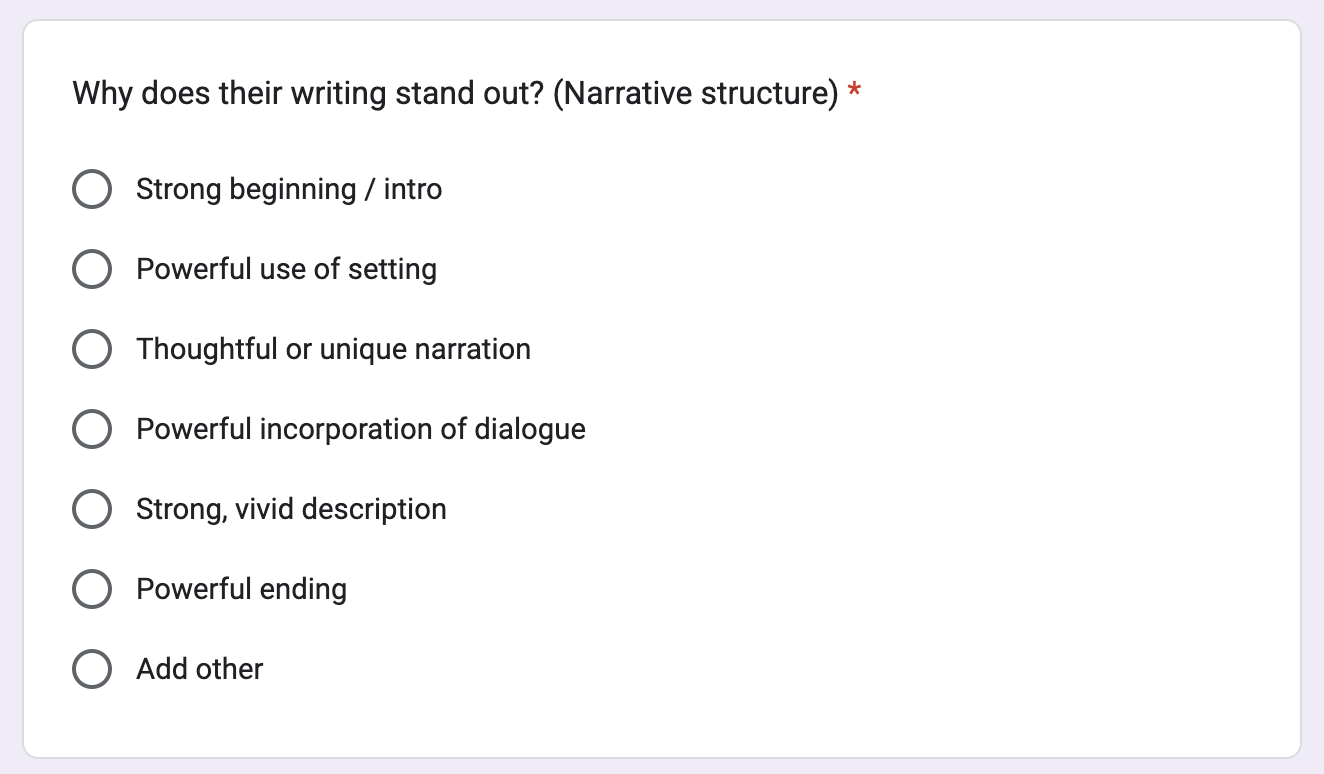
- A Google form that allows kids to submit nominations of student work at any time
The Bottom Line: Why Student Mentor Texts?
Using student-crafted work as mentor text has multiple benefits. First, these texts are most likely to reach my students at the proper instructional and developmental level, because kids with similar levels of writing and life experience create them. In turn, students see what’s possible for them to achieve. Reading and discussing kid-crafted texts gives students a more realistic sense of expectations when demonstrating a strategy or skill.
Most importantly, using student work as mentor text elevates their writing. People with fancy published books are no longer the only ones permitted to call themselves “writers.” Instead, students learn that they, too, have the skills, wisdom, and experience to enrich and benefit others around them.
What has been your experience with using student mentor text? What systems or structures have you put in place in your classroom? Drop a comment below!
This is a giveaway of Craft Moves: Lesson Sets for Teaching Writing with Mentor Texts by Stacey Shubitz, donated by Stenhouse Publishers (Routledge). To enter the giveaway, readers must leave a comment on any MODERNIZING MENTOR TEXTS by Mon., 1/20 at 12:00 PM EST. The winner will be chosen randomly and announced on Thurs., 1/23. The winner must provide their mailing address within five days, or a new winner will be selected. While TWT readers from around the globe are welcome to leave a comment, you must have a U.S. mailing address to win the book.
Discover more from TWO WRITING TEACHERS
Subscribe to get the latest posts sent to your email.


This arrived at the perfect time. I’ve been thinking about how to organize my student mentor text.
LikeLike
Just yesterday, I told a student who was struggling to get her head around an argumentative text that she wrote a knock out conclusion that I want to use as a mentor text when we review “creating a strong conclusion.” She was thrilled. Now I need to be better about making those google folders…
LikeLike