Estimated reading time: 4 minutes 28 seconds. Contains 896 words
Target Audience: Classroom Teachers, Coaches
How We Got Here
If you’re anything like me, you probably don’t spend as much time looking at student work as you’d like to. The school day is busy, life is busy, and you’re juggling writing workshop with reading, phonics, math, social studies, science, playtime, conferences, reports, faculty meetings, parent meetings…the list goes on and on! I recently had the opportunity to take a closer look at some of my students’ first attempts at “Show and Tell” writing–one of the first units of study in the Teachers College Reading and Writing Project kindergarten writing workshop. I thought I would take a moment to share some student work and my reflections with you.
Why It Matters
You may or may not be an early childhood educator. No matter what level of writing you teach or grade level of teachers you coach, I believe it is important to know where children start as writers. The range of writing abilities in kindergarten is wide. For most children, this is their first time receiving any kind of explicit writing instruction. Up until this point, they have been mostly oral storytellers with adults transcribing their words for them. It’s truly fascinating the first time I ask my students to label their pictures or write a sentence to tell about it. Some look at me like a deer in the headlights. They truly do not know where to begin!
Examples in Action
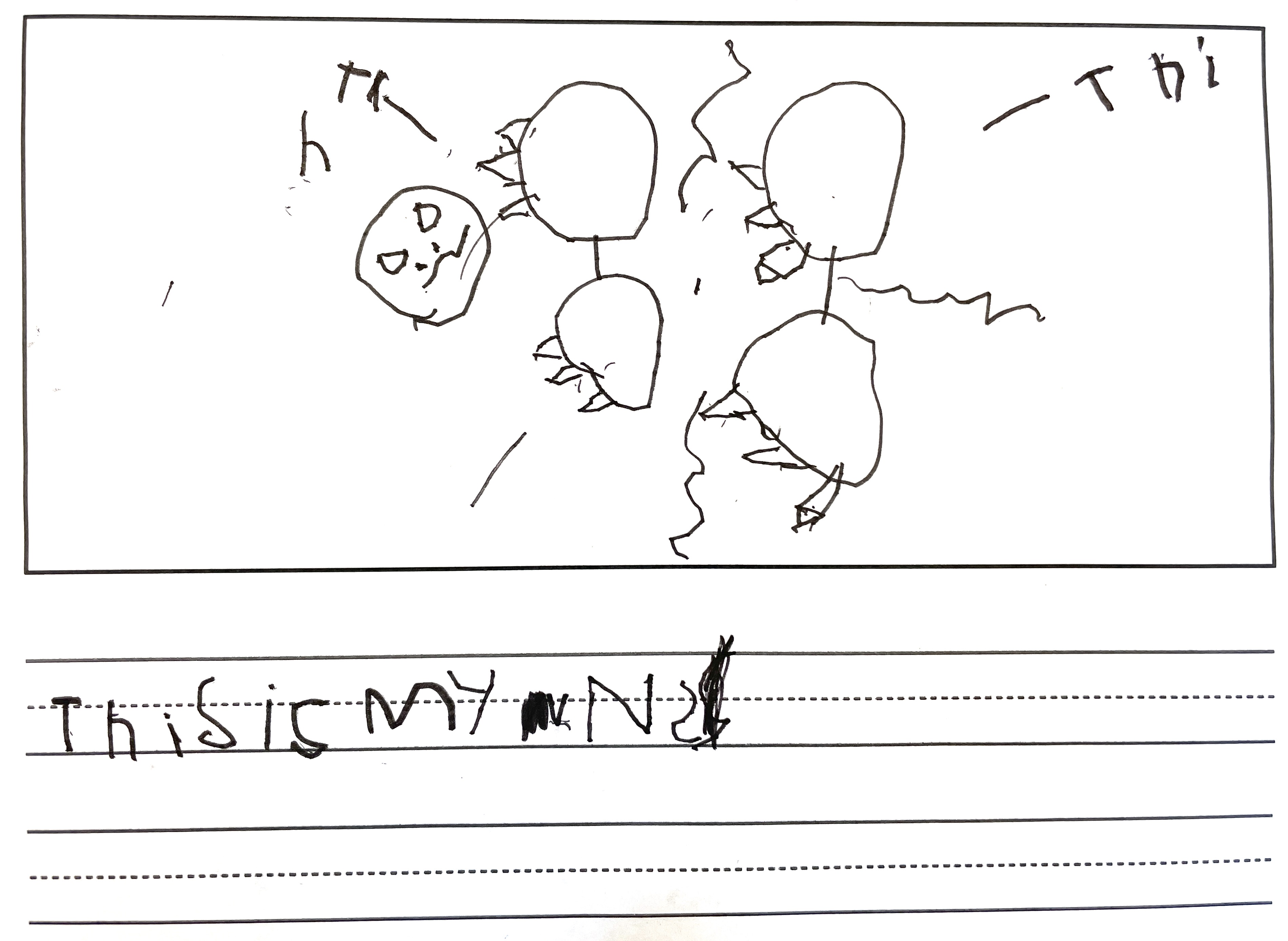
This student’s show and tell object was some kind of small, iridescent Pokemon character or figurine. I love the way he depicts his special object with those sharp talons and a ferocious face. He attempts to label his drawing in three places. He probably wrote ‘h’ for ‘head.’ The other labels are unclear to me. All the students were previously taught and given the words “this, is, & my.” With teacher support, he was able to arrange the three words in the correct order in front of him. He then wrote, “This is my NS” in the sentence line space. He used sound spelling to attempt the name of his special object and was able to write two letters for that word. I notice that while this student was able to organize his page, he would benefit from practice with stretching out words to hear more letters and sounds and then transferring that information to the page.
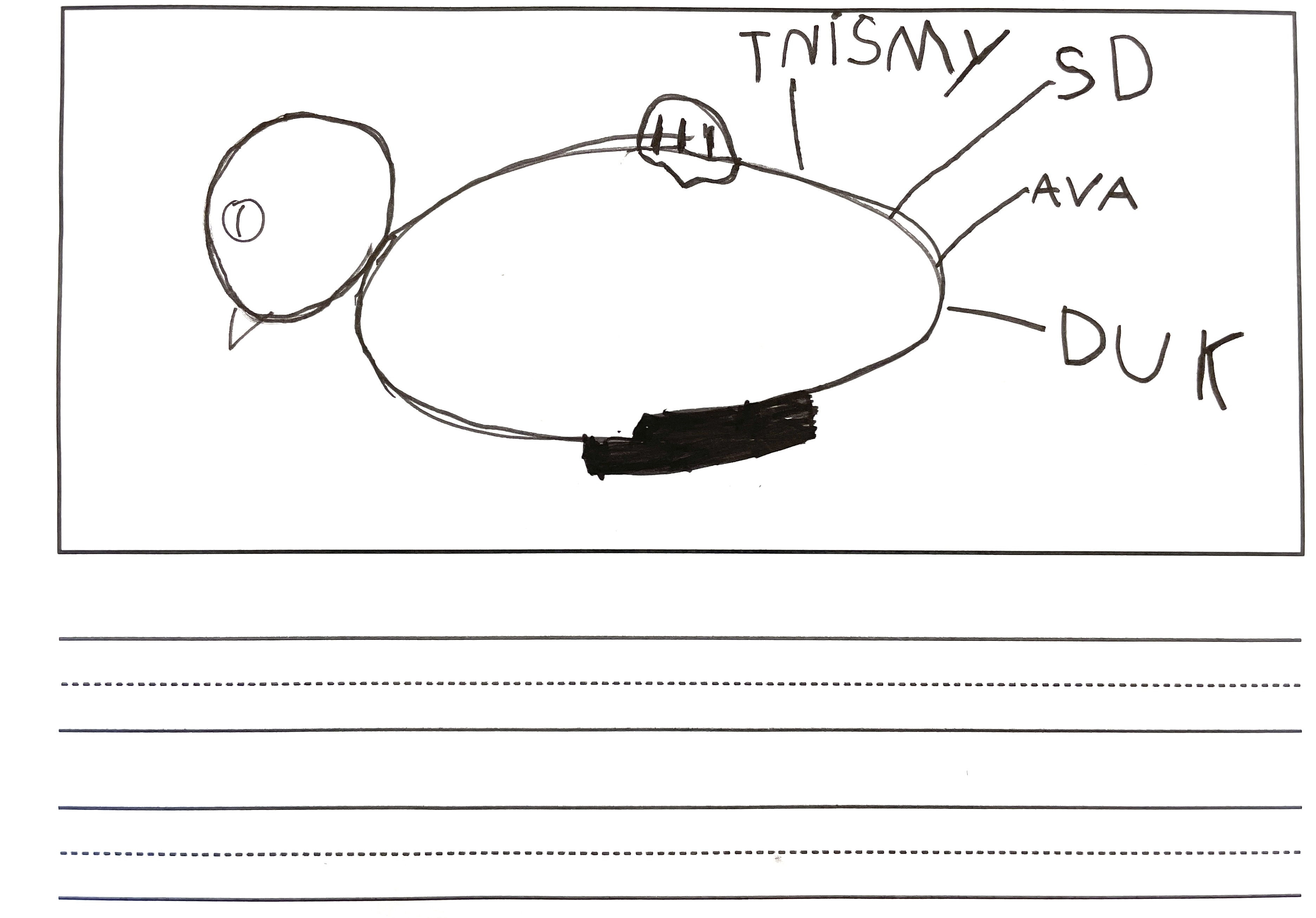
This student’s show and tell object was a painted papier-mâché duck that her sister made. What I think about most when I reflect upon this student’s writing is the difficulty she had at first feeling confident to draw it. She did not trust in her ability to depict it with simple shapes. But once she attempted it, she saw that she could do it. She even took care to notice and include the places where the object was starting to break or come apart, such as the darkened area on the bottom of the duck. She was given the same three words, “this, is, & my” to include if she wished, and she chose to write some of them in the picture space. Her labels say, “This my,” “SD,” “Ava,” “Duk” (This is my sister Ava’s duck.) She attempted a sentence in the form of four separate labels. Next steps for this student would be for me to check in with her about the organization of the page and note the difference between labels and sentences.
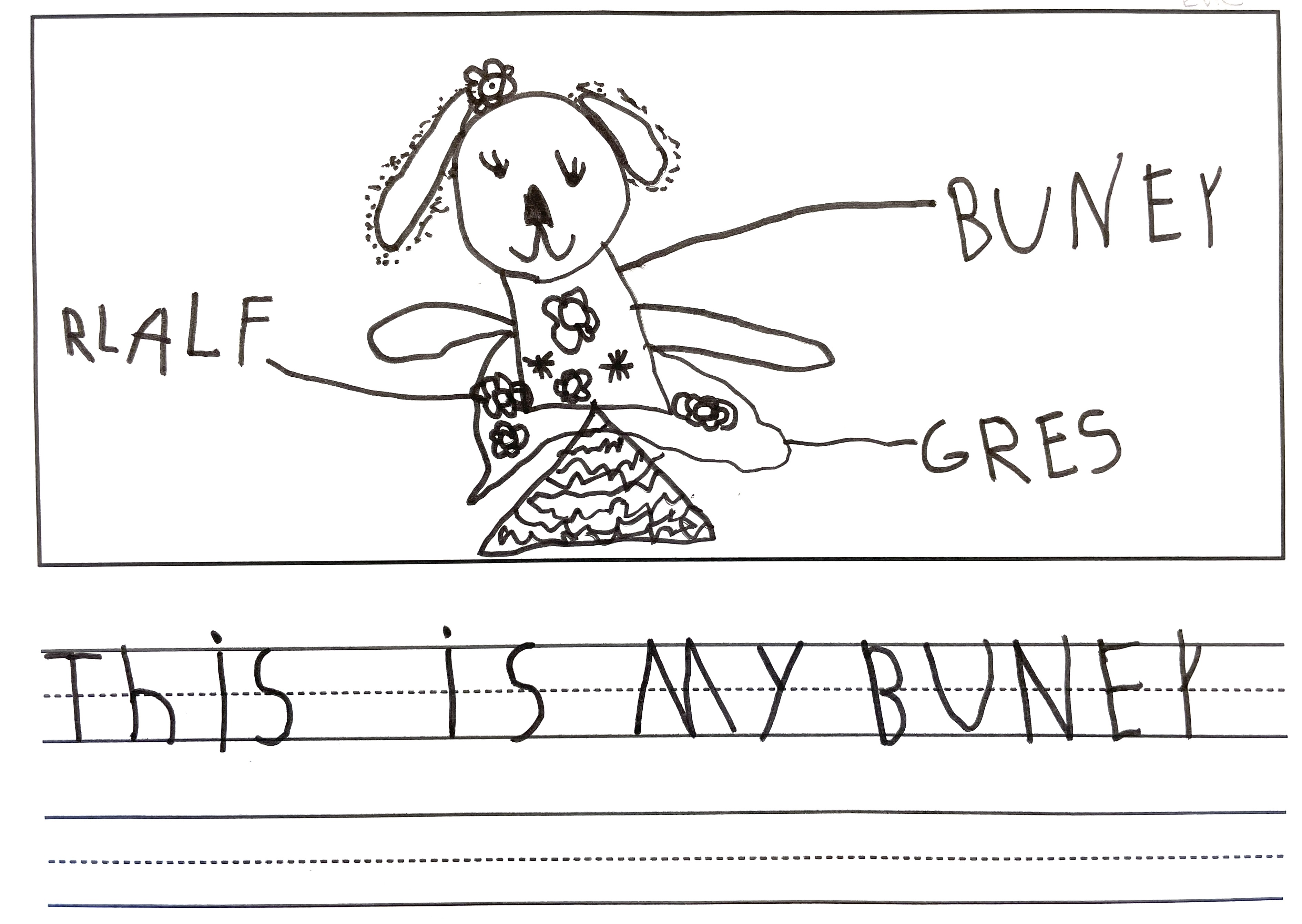
This student’s show and tell object was a pink stuffed bunny wearing a fancy dress. I notice the way that she drew her object with care and many details. Her labels are clear attempts at sound spelling using a combination of letters to capture beginning, middle, and ending sounds: “BUNEY” (bunny), “GRES” (dress), and “RLALF” (flower–from right to left). Her sentence reads, “This is my buney.” What I observed while she was working is that this student would benefit from more time. She worked hard to make a complete page with a drawing, labels, and a simple sentence, but she also had the stamina to keep going. If time had allowed, I would have encouraged her to write another sentence about her special object (which she eventually did on another page on a subsequent day). Also, once she feels more comfortable writing lowercase letters, I will encourage her to use them conventionally.
One Final Thing
Looking at student work is one way I get to know my students better–not just as writers but as learners. It shows me who they are, what they care about, what they can already do independently, and where they need support. It also acts as a window into their personality and their overall mindset toward learning. Are they open to trying new things? Do they take risks? Will they attempt something on their own or wait for the teacher to help them? Are they organized? Do they know how to use the different writing spaces on the page? Do they use writing tools like alphabet charts and word walls? What do they do when it’s time to clean up? Can they pick up next time where they left off or is it like starting the engine all over again? Do they find ways to write when they play? Do they enjoy sharing their writing with the class? Can they reread their work or do they rely on the teacher to help them? Do they think of themselves as writers? And so, so much more.
Discover more from TWO WRITING TEACHERS
Subscribe to get the latest posts sent to your email.


I needed this today! Every so often, I have to be reminded how powerful and important it is to spend time learning from the work my students do. Thank you!
LikeLiked by 1 person
Thank you, Lainie! Looking at student work is so interesting to me. I’m glad you appreciated this post.
LikeLiked by 1 person