Estimated Reading Time: 4 minutes (Contains 795 words)
Primary Audience: Literacy Coaches and Administrators; Secondary Audience: Teachers
THE BACKSTORY: At the beginning of this school year, I sat down with both of my district’s K/1 coaches, Jessica and Molly, to discuss ways to capture current practices in writing and support instructional shifts that will have a positive outcome for kids. Our conversation kept circling back to one question: Do our teachers have a strong understanding of the skills kids have acquired in the previous grade level and what is being asked of them when they enter the next school year?
HOW WE GOT HERE: Even though teachers have opportunities for vertical teams during the school year, we just haven’t mastered the ability to clearly communicate the progression of writing skills from one grade level to the next. Conversations tend to lean toward specific students or troublesome units instead of the ways that skills evolve over time.
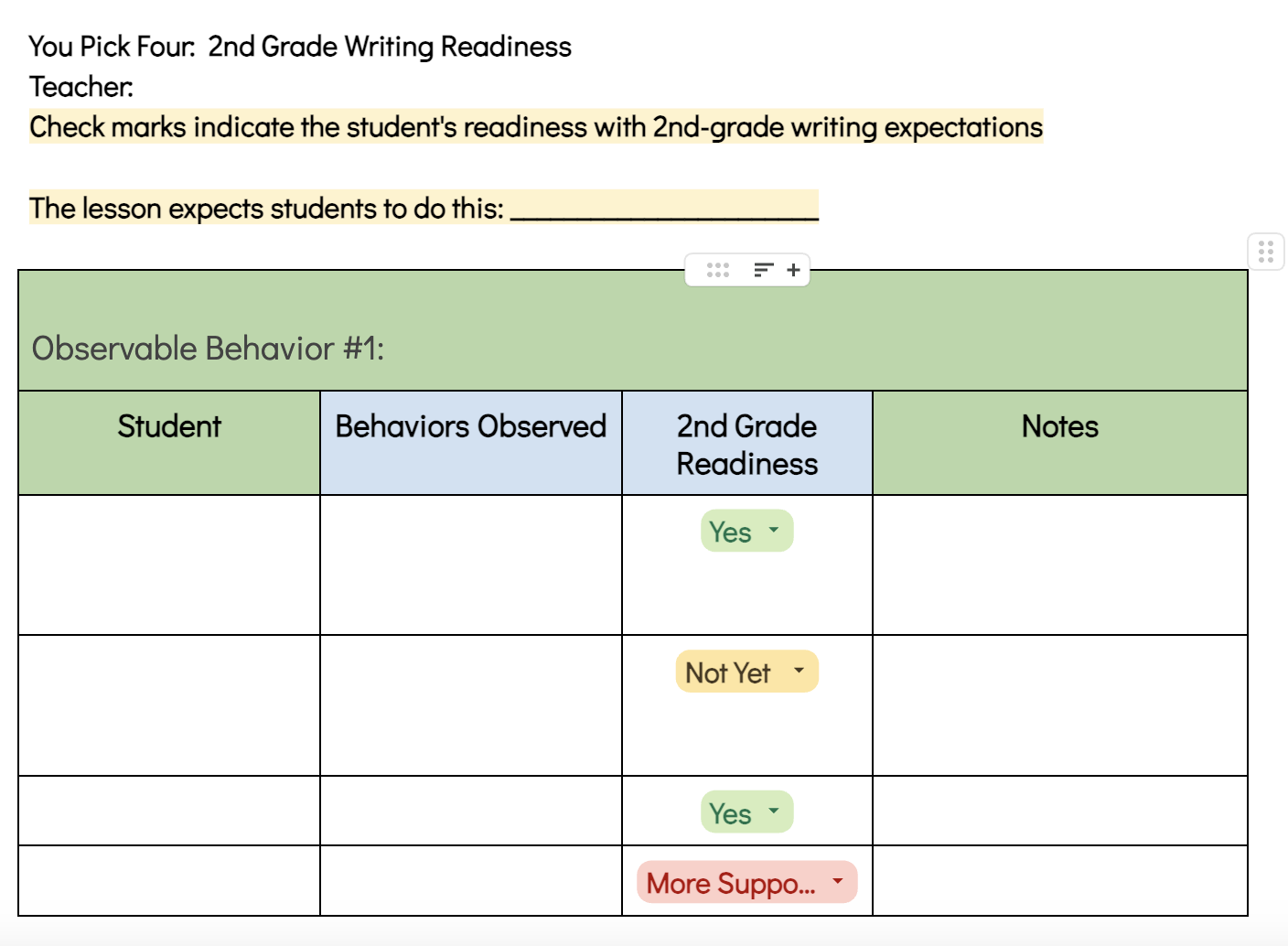
BEHIND THE SCENES: Jessica, Molly, and I decided to tackle this work by including some of our first-grade teachers, both of whom serve as curriculum writers, to join us in a collaborative and focused writing observation. After aligning schedules, securing classroom coverage, and creating a data collection tool (pictured below), we were ready to visit a second grade classroom during an early October writing lesson.
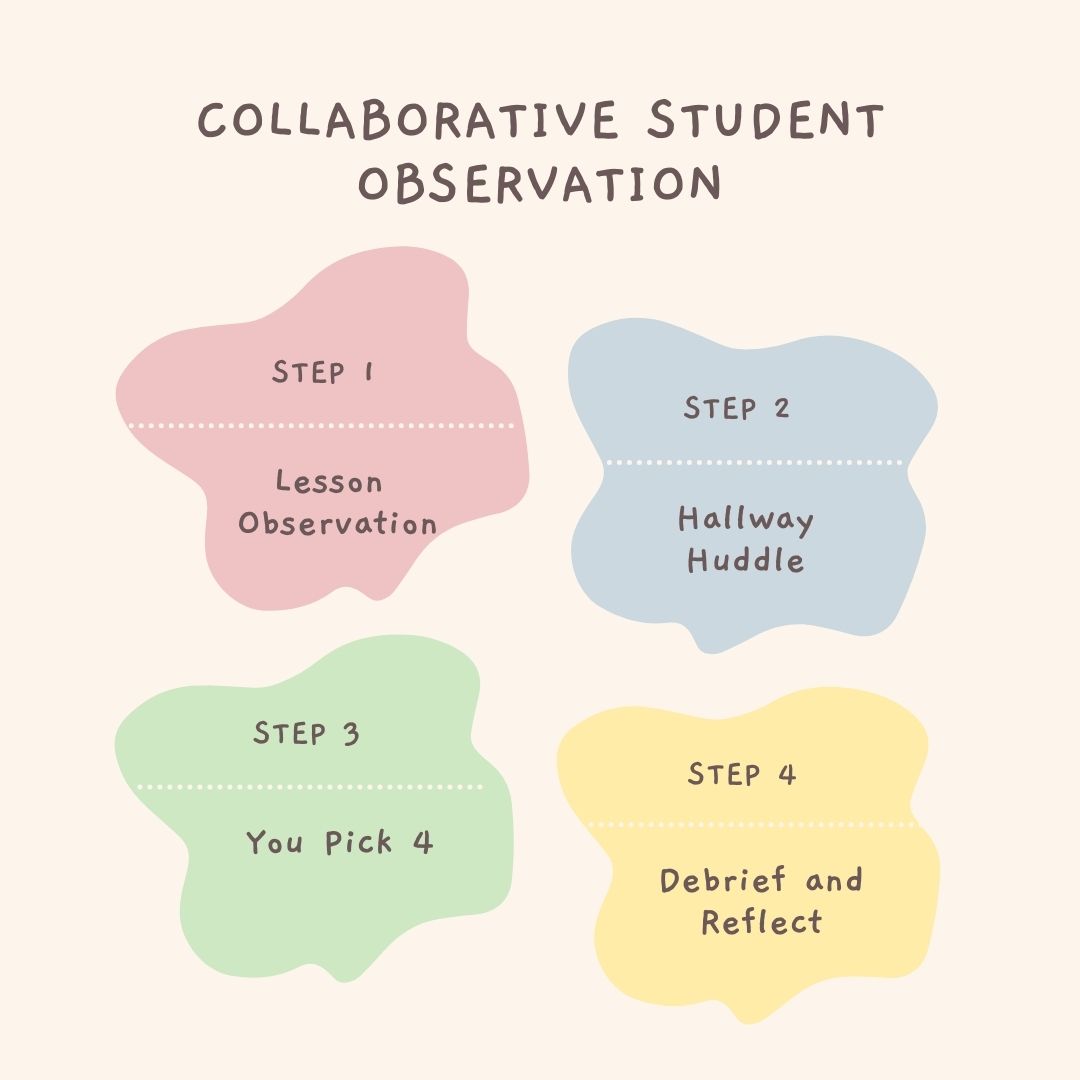
HOW IT WENT: We split our collaborative observation into four parts, spending about 45 minutes in total working together.
- Step 1: Lesson Observation. Our team watched the minilesson in action and noted some of the most important tasks students were expected to do to succeed during the lesson.
- Step 2: Hallway Huddle. While kids transitioned to their seats for independent writing, we stepped into the hallway for a 1-minute collaboration to identify four observable skills that we wanted to focus on during our time in the classroom. The class was drafting a scaffolded opinion paragraph in response to a story and each student had already completed a graphic organizer of ideas and written a lead sentence, so we decided to focus on these skills:
- Using transition words in appropriate places (this was the focus of the minilesson);
- Transferring ideas from a written organizer to a draft;
- Making sure each sentence was a complete thought that began with a capital letter and ended with a period;
- And, based on a pre-observation conversation with the classroom teacher, noticing developmentally appropriate spelling that captured each sound and approximated spelling patterns that have not yet been taught.
- Step 3: Pick 4. Using the coaching work of Diane Sweeney, we used a coaching move of each selecting 3-4 focus students when we returned to the classroom. While students wrote we noted if each child had the “second grade readiness” skills to do the work in each of our focus areas and jotted down our observations. We interacted with our focus students, supporting them in the work and asking them to explain their writing moves. A majority of our time was spent engaged in this step.
- Step 4: Debrief. We spent 10-15 minutes after the lesson sharing our observations, naming big takeaways, and reflecting on the process. Our major takeaways were that a majority of students were able to very successfully and independently meet the demands of the work and, although some needed additional support, just as many shocked us with the ways they helped peers, took their skills to a deeper level, and showed independence.
BIG TAKEAWAYS: While this process is a little more extensive than a regular observation and isn’t something that can happen on a daily basis, it was well worth the time and planning we invested. Here are some of the highlights that made us fall in love with this coaching move:
- Classroom teachers were a key part of the process.
- Our eyes were on the kids and their work the entire time, not on the teacher.
- We gathered extensive data on every single child in that classroom across multiple skills in a very short time.
- Our first-grade teachers gained a solid understanding of what is expected of their students when they arrive in second grade.
- We collaborated in a way that involved articulating specific skills, defining them, and reaching a common understanding of what we wanted to see.
WHAT’S NEXT: The teachers have already requested to do this process in reverse in the spring by going to visit a kindergarten classroom at the end of the year. They also expressed how valuable this work will be if we can transfer it to other teachers in other grade levels. Though classroom coverage can be tricky and aligning schedules might seem difficult, this low-prep, high-impact approach to deeply understanding how skills grow from one grade level to the next is a valuable use of time and resources.
Discover more from TWO WRITING TEACHERS
Subscribe to get the latest posts sent to your email.


