Estimated Reading Time: 2 minutes, 23 seconds. Contains 478 words
Primary Audience: Classroom Teachers and Literacy Coaches
The first time I ever read Crash by Jerry Spinelli was about the same time my oldest daughter started kindergarten. I loved the scene where Crash, the main character, is at Penn’s house and realizes how much Penn’s parents cherish him, especially his quirks. I cried during the scene, and even now, I can remember the emotionality of sending my daughter to school and knowing the no one would cherish her quirks the way I did.
Especially on the first day, but throughout the first weeks of school, I try hard to imagine who knows and loves the child that sits at a desk– here are a few questions I’ll carry with me as I connect and reconnect with children.
What does this child love? Many teachers have incorporated identity webs, heart maps, and other visual representations of selves into the first few weeks of school. These representations provide insights into what matters to children. But sometimes children don’t even know what they love. My five year-old neighbor, Rowan, loves dinosaurs, but I’m not sure those will show up on his heart map. My nephew loved building things with his dad, but I’m not sure that love would have shown up on an identity map. Don Graves was a literacy leader who believed in writing workshop for children, and he emphasized the importance of knowing children before teaching them. He is credited with the idea that teachers should know ten things about a writer before teaching them.
What can this child do? Assessment takes up a lot of time and energy during the first weeks of school, and it’s important. But sometimes assessment, despite all best intentions, takes on a deficit-based approach. By thinking about what children can do– as opposed to what they can’t– it’s easier to have an asset-based approach. Children will feel and respond to the nuanced focus on their strengths more positively. What can you do? is often an easier question for all people to answer than What can’t you do?— and both questions provide information about teaching and learning.
What can this child teach me? Ever since I heard Katie Egan Cunningham speak at NCTE many years ago, I approach children with intentional curiosity. Katie’s challenge was to have a sense of wonder with children and an openness to what they can teach teachers. Over and over, I’ve felt the positive energy that exudes from a child who feels I might learn from them.
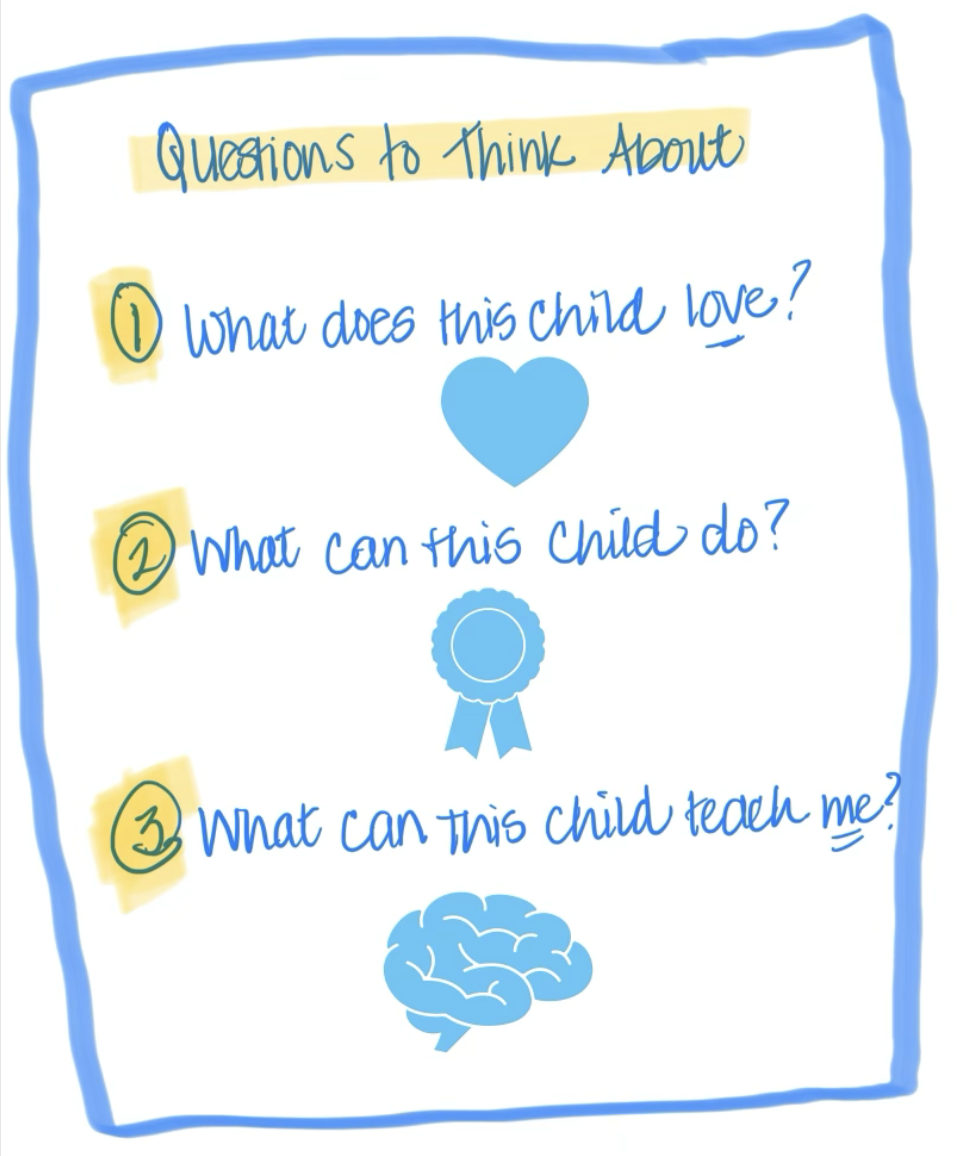
On Monday morning, by the time some of you read this post, I will be meeting and greeting children. I’ll be thinking about who cherishes those children, what they love that might not show up right away, and what I can learn when I am curious and listen. What do you love, what can you do, and what can you teach me? Three questions I’ll keep close at hand.
Discover more from TWO WRITING TEACHERS
Subscribe to get the latest posts sent to your email.


I love the simplicaity and the depth of these questions (and the answers you may receive). I will borrow this!
LikeLiked by 1 person
I love these three questions. They put children in the center of teaching and learning and that’s where there rightful place should be. I miss being in the classroom because I loved getting to know my new students in the fall. They always had something to teach me! Every. Single. Day. Thank you for this article!
LikeLiked by 1 person
Love this! ❤️
LikeLiked by 1 person