Estimated Reading Time: 2 minutes, 55 seconds. Contains 586 words.
Target Audience: Early Childhood Educators
A Backstory
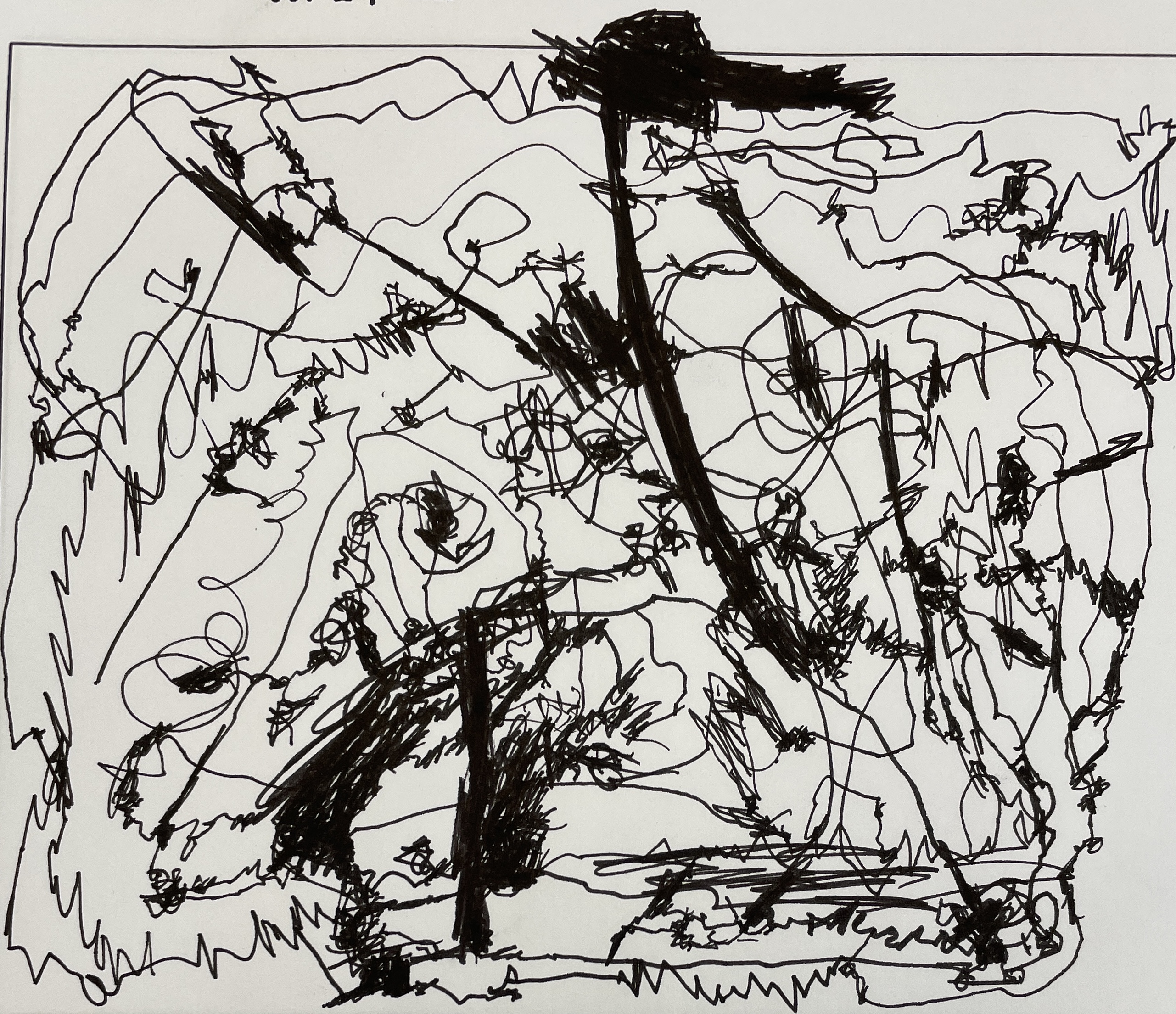
One of my biggest pet-peeves is when I hear one of my students tell a classmate that their drawing isn’t good because it’s “scribble scrabble.” It happened just the other day. My first reaction is usually hidden rage–inside my head I’m thinking, “Why would you say that? It’s so mean!” But in reality, it makes total sense.
Four and five year olds take pride in differentiating themselves from babies by showing off all of the big kid things they can do, including their newfound ability to draw in a more representational way. They may not be trying to hurt anyone’s feelings, but by calling someone else’s drawing “scribble scrabble” they are essentially saying, “You draw like a baby but you’re not a baby so why are you drawing like a baby?” When this happens, I typically ask things like, “What is scribble scrabble anyway?” or “What don’t you like about it?” After hearing what they have to say, I like to share my belief which is that I love scribbles and that everyone’s drawings have beauty, purpose, and meaning to the person who makes them, no matter what they look like or what anyone else thinks.
Why it Matters
Scribbling is one of the earliest forms of written communication. From the time a baby or toddler can hold a crayon, they can scribble. Scribbling is gestural, intuitive, and automatic. It typically begins as lines, marks, and shapes, and then moves into a phase that is more controlled but still non-representational before it shifts into something more representational. It can appear random and without meaning, but ultimately, scribbling has meaning for the child doing it and can also be informative to the teachers working with them. Scribbling is often accompanied by a student’s rich and detailed verbal descriptions and explanations. What looks like a random line, shape, or mark could in fact hold logical and precise meaning for the child. In the early childhood classroom, it is important for teachers to affirm this work rather than downplay or demean it as not good enough or without purpose.
Zoom In
In my pre-kindergarten classroom, there are a wide range of drawing styles. The below examples show three students who typically scribble when they write. It can be difficult to interpret what their stories are about based on their drawings alone, but each drawing has its own particular energy and way of communicating. It is also essential to let young children share their stories aloud so that they have opportunities to make specific connections to their picture and point out the important parts.


Go Deeper
For more information about the importance of scribbling as a form of early and emergent writing, please check out the following resources:
https://www.naeyc.org/resources/pubs/yc/nov2017/emergent-writing
https://www.zerotothree.org/resource/distillation/learning-to-write-and-draw/
https://bkc-od-media.vmhost.psu.edu/documents/TIPS0611.pdf
https://extension.psu.edu/programs/betterkidcare/early-care/tip-pages/all/scribbles-have-meaning
Discover more from TWO WRITING TEACHERS
Subscribe to get the latest posts sent to your email.


A huge thank you from a retired early childhood teacher – I loved this! Your open-ended question ““What is scribble scrabble anyway?” is so thought-provoking for students. Seeing the pictures of the prekindergarten writing and stories takes me down memory lane. I am sure that both students and families learn lots from your teaching.
LikeLiked by 1 person
Thank you, Maureen! I’m such a huge fan of young childrens’ drawings and I’m glad this post resonated with you.
LikeLike
Thank you for this! I keep trying to explain the importance of scribbling as writing’s precursor. The more early childhood and kindergarten programs focus solely on “academic” skills, the more these developmental milestones get squeezed out.
LikeLiked by 1 person
Yes, it’s so important!
LikeLike
It is so important to empower young children that what they can create by writing is meaningful and important, even a scribble. You explain so clearly the need to teach everyone the importance and beauty of scribbles! Thank you!
LikeLiked by 1 person
Thank you for reading and for your feedback!
LikeLike