
Estimated reading time: 3 minutes, 45 seconds. Contains 755 words
Primary Audience: Classroom teachers, grades 3 and up
A Backstory
As a teacher of gifted students in a high-performing district, I struggle with ways to break my students from perfectionist tendencies. Some writers stick with writing they already know, and some just won’t write.
I ache to see students take risks, to become braver in writing. And while I often give them “permission” to write things that aren’t great, students like to stay in their comfort zone.
For the longest time, I’ve pictured my ideal: students recognize strong style or craft, then turn right around and try it for themselves. But how could I teach or structure it? Everything in my mind felt too contrived, and I wanted the spark to happen naturally.
And then it hit me. It was my own fear of failure that was holding me back. I was so concerned about wasting instructional time with lessons that “crashed and burned” that I had forgotten the joy of trying new things. That’s when I realized I had to do exactly what I was asking my students to do: GET BRAVE. And with that, “Give it a Go” time was born.
The Details
To begin, I gathered my fourth-graders and said, “Friends, I’ve been thinking a lot about our writing, and I think I have an idea that’s going to make us stronger as writers. But I’m a little bit nervous. You see, I have never, ever done what we’re going to do today with a class. EVER. I’d like to try an experiment. If it doesn’t work, it doesn’t work. But if it does, I think we might be onto something! I think we can really build something big here. Are you ready to give it a try?” Spoiler alert: they were IN.
We started with this excerpt from Natalie Babbitt’s Tuck Everlasting. I chose this passage for its astounding sensory imagery. Oh, to write with her skill!
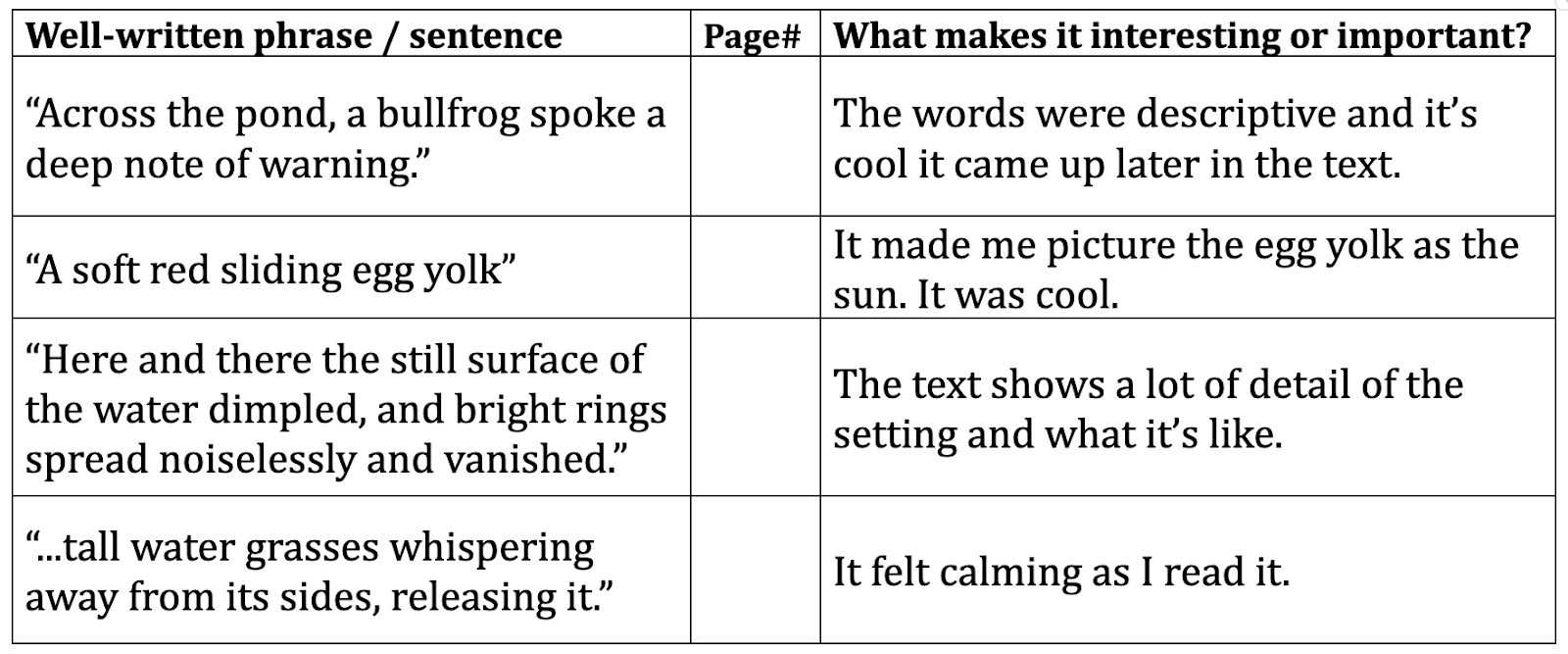
We then discussed impactful phrases and their effect on us. Our class chart:
And then I said, “Friends, what if WE could have that impact on our readers? What if WE tried to offer description that affected our readers just as deeply? What if WE give it a go?”
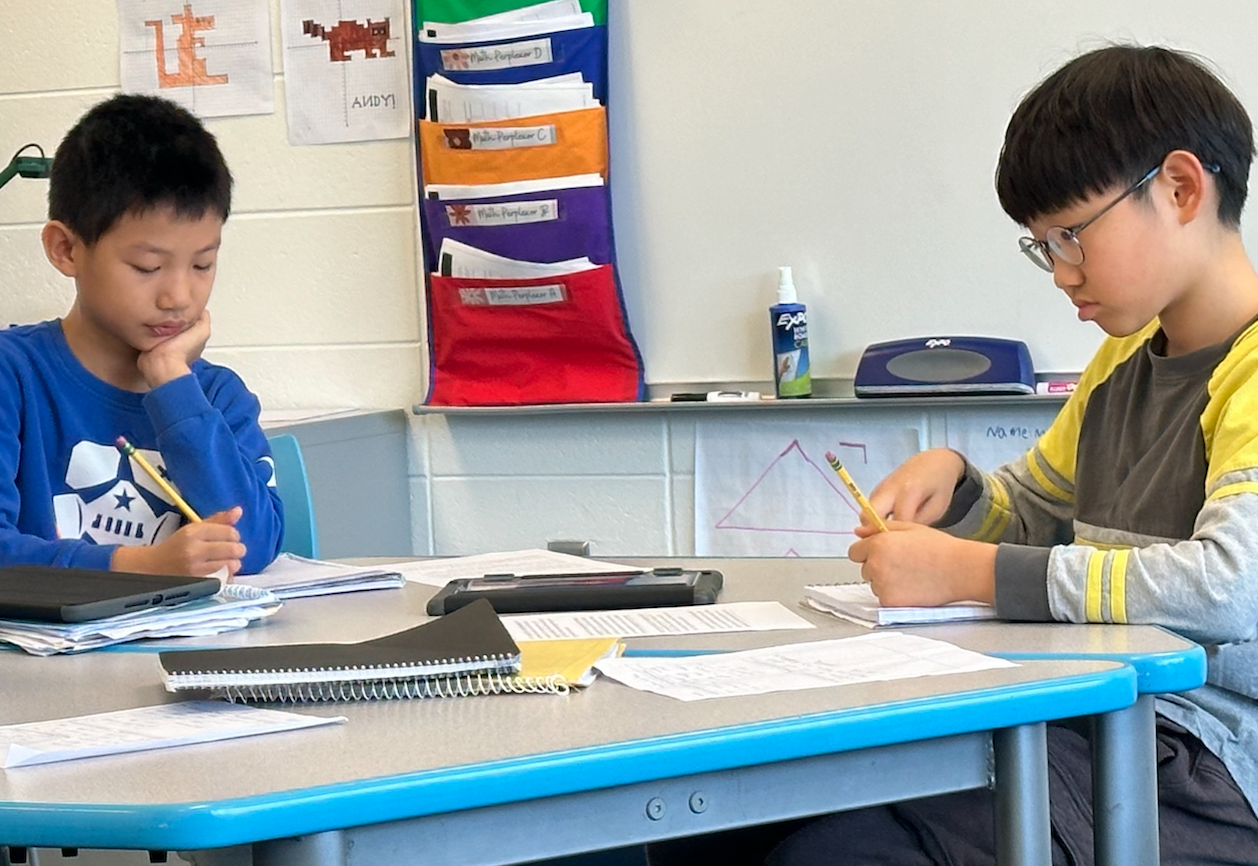
Everyone, myself included, sat down for the next fifteen minutes to create sensory imagery in their writing. No one worked on a story they had already written; this was purely a time for invention and creation.
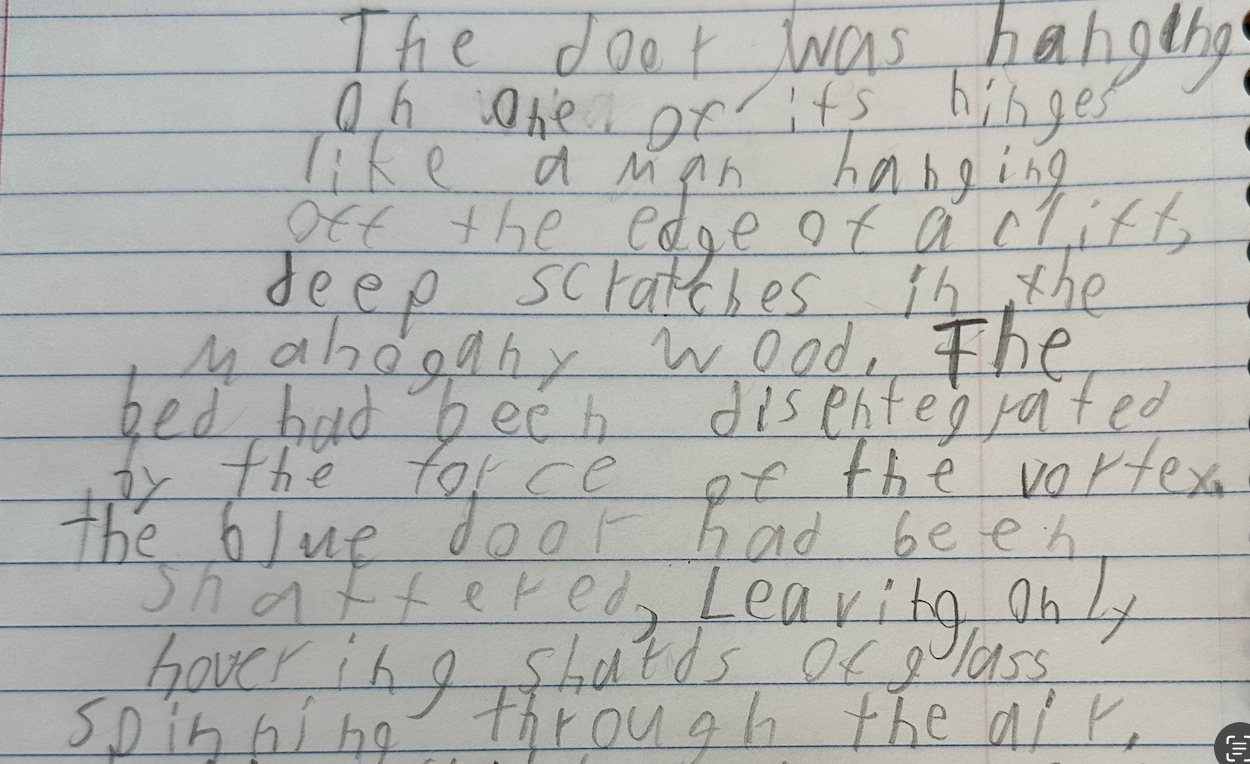
Some worked directly from Natalie Babbitt’s text, “translating” her writing into words of their own:
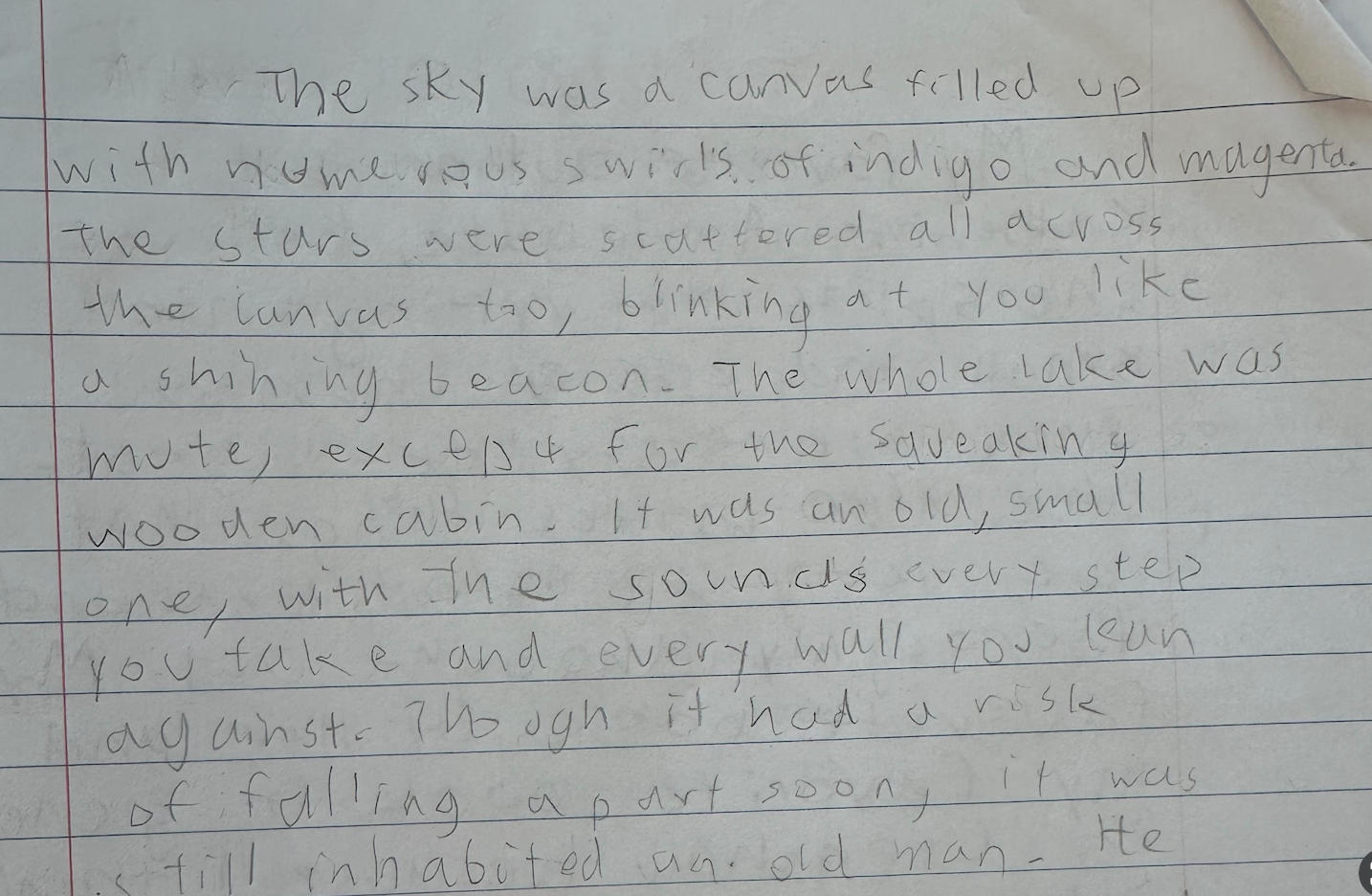
Others created entirely different worlds of their imagining:
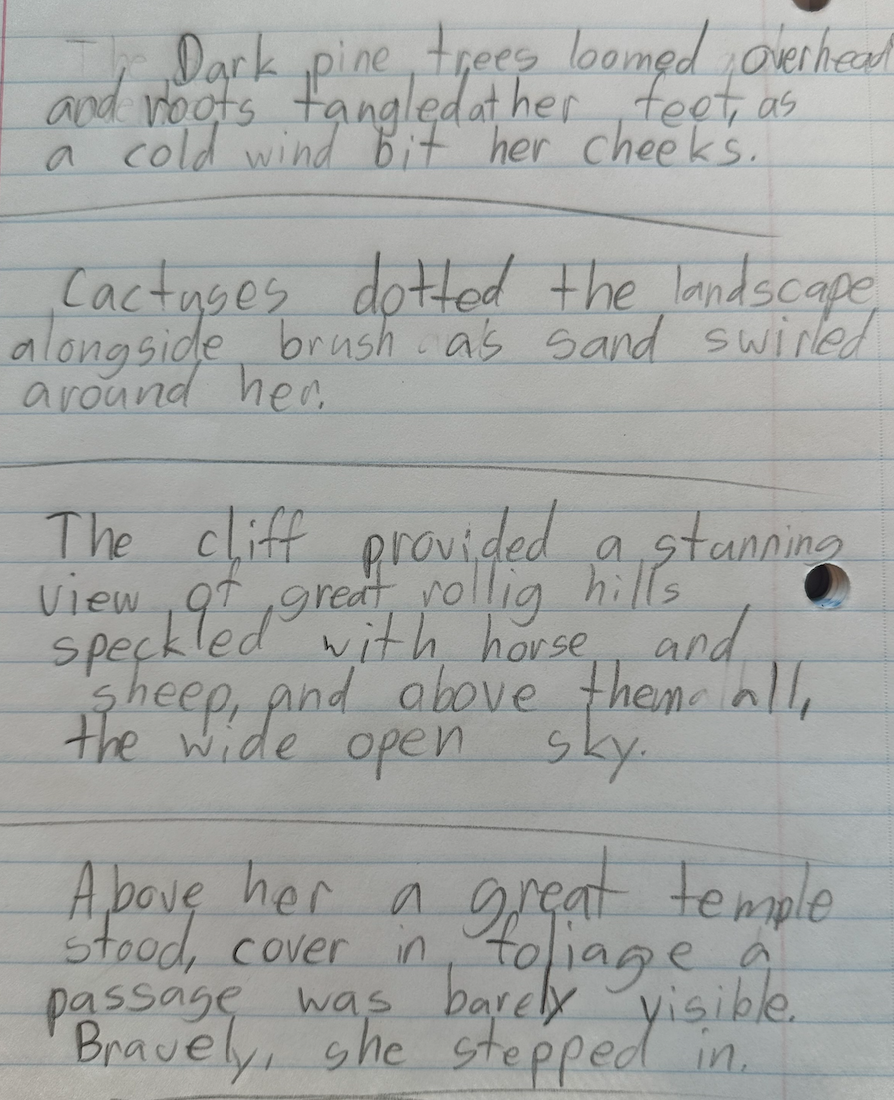
I even had one create their own vignettes from different scenes.
So…how did it go? Judging from the intensity of work time and the quality of their writing, they took well to it. I asked students to reflect on how it felt to see a strategy and “give it a go.” All of them noted positive experiences. Here are some parting thoughts:
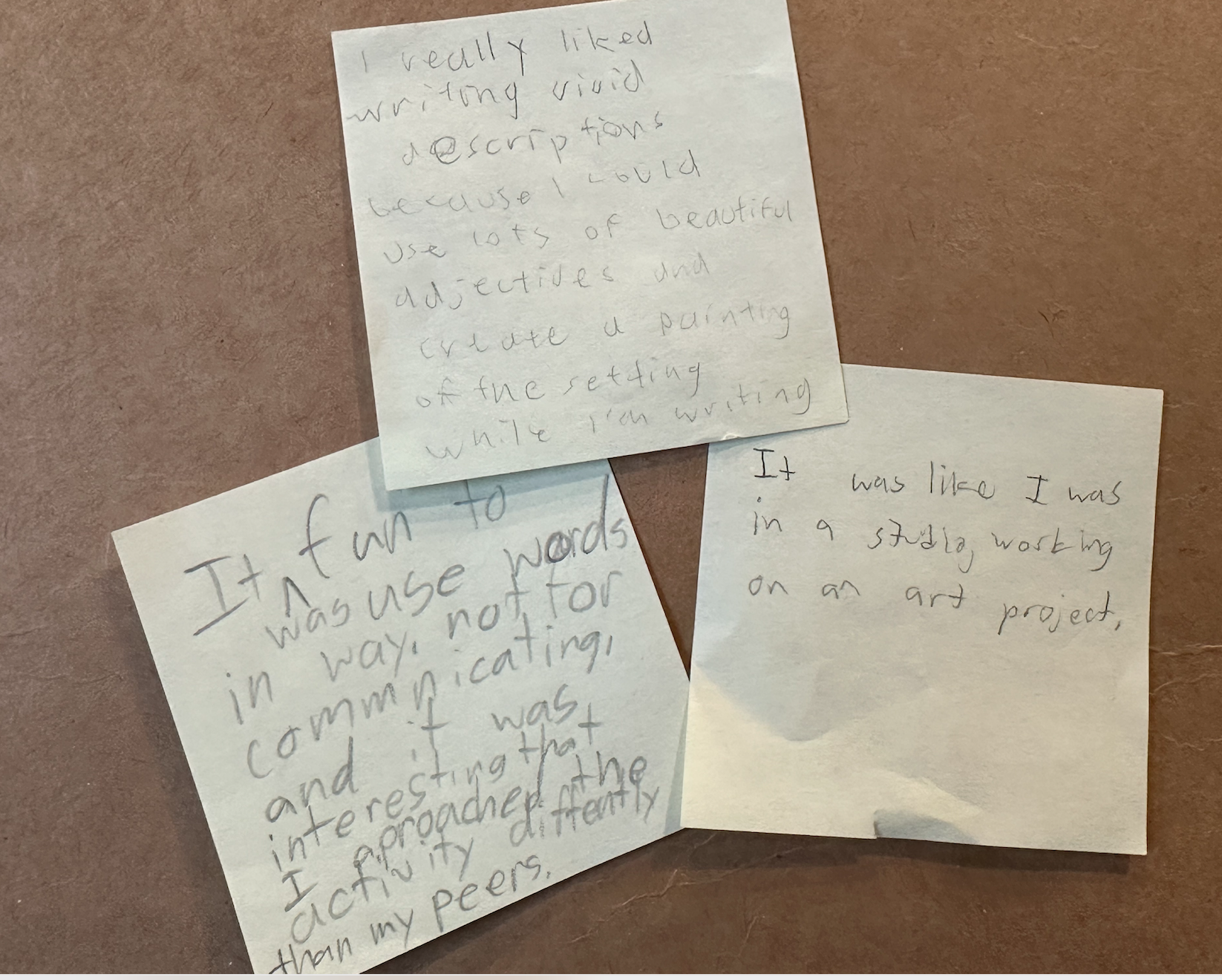
“It was fun to use words in [a] way not for communicating, and it was interesting that I approached the activity differently than my peers.”
“It was like I was in a studio, working on an art project.”
What’s Next
- We’ll definitely “give it a go” again. It’s a quick way to teach style and craft moves such as changes in tense, using short sentences, or switching narrative point of view.
- We’ll continue to use this time for new, short pieces rather than adding to current ones. It’s sometimes important for my writers to break from the constraints of their current work.
- I’ll encourage students to take a strategy they like and employ it elsewhere in their writing, not just in my class, but in their homerooms as well.
- I’ll remember to trust my own instincts as a teacher, to take risks with lessons and ideas that may or may not work, so that both my students and I can continue to learn and grow.
- I’m encouraging colleagues to do the same: think of something new, get brave, and give it a go!
Discover more from TWO WRITING TEACHERS
Subscribe to get the latest posts sent to your email.


I appreciated the intensity they had when having a go with this. I appreciated their reflections. You’ve teed them up for next time!
LikeLike
Inspiring, to me, too! How freeing to take one small thing away from a larger context- here, description of a scene. How fun to work on vivid description. Couldn’t you also “give it a go” and describe a character out of the blue- unconnected to any piece you were working on? You might fall in love with them and have to use them somewhere!
LikeLike
Fran, I love this idea! I’m adding it to my list – and I hope others will, as well.
LikeLike