Last Tuesday, Clare wrote a wonderful slice of life post about what everyday learning in a classroom really looks like and feels like, aptly entitled: Learning is Managed Chaos. These lines resonated with me: “We need to remember, however, that young learners can only appear independent in an environment that is carefully and thoughtfully managed to support this gradual release of responsibility. When we take the time to manage the confusion so our readers are engaged and in control of their learning we are providing the greatest opportunities for growth.”
Later that morning, I found myself facing a writer’s workshop full of sixth graders eager to continue drafting their feature articles, but needing writing conferences right away. How to manage this chaos, I wondered, in a way that would manage confusion, maintain engagement, and foster independence through a gradual release of responsibility?
The path to this particular place had been carefully planned:
- we had spent weeks immersed in reading and discussing nonfiction
- we had sketched topic ideas that were important to my kids , and planned subtopics that were relevant and connected
- we had researched and collected information that was both interesting and informative
but, now that it was time to draft, my students seemed reluctant, even anxious, about continuing to draft. It was almost as though we had over prepared.
Rather than spend more time on yet another mini lesson, I asked my kids to search through some of the mentor texts we’d studied and find snippets they’d loved best – leads that invited them in, passages that piqued their interest, ideas that were clearly explained, quotations that were artfully woven in. We charted and marked some of these up, and then walked about the room, inspecting our thinking, and refreshing our memory as to what constituted the rich writing we hoped to craft:

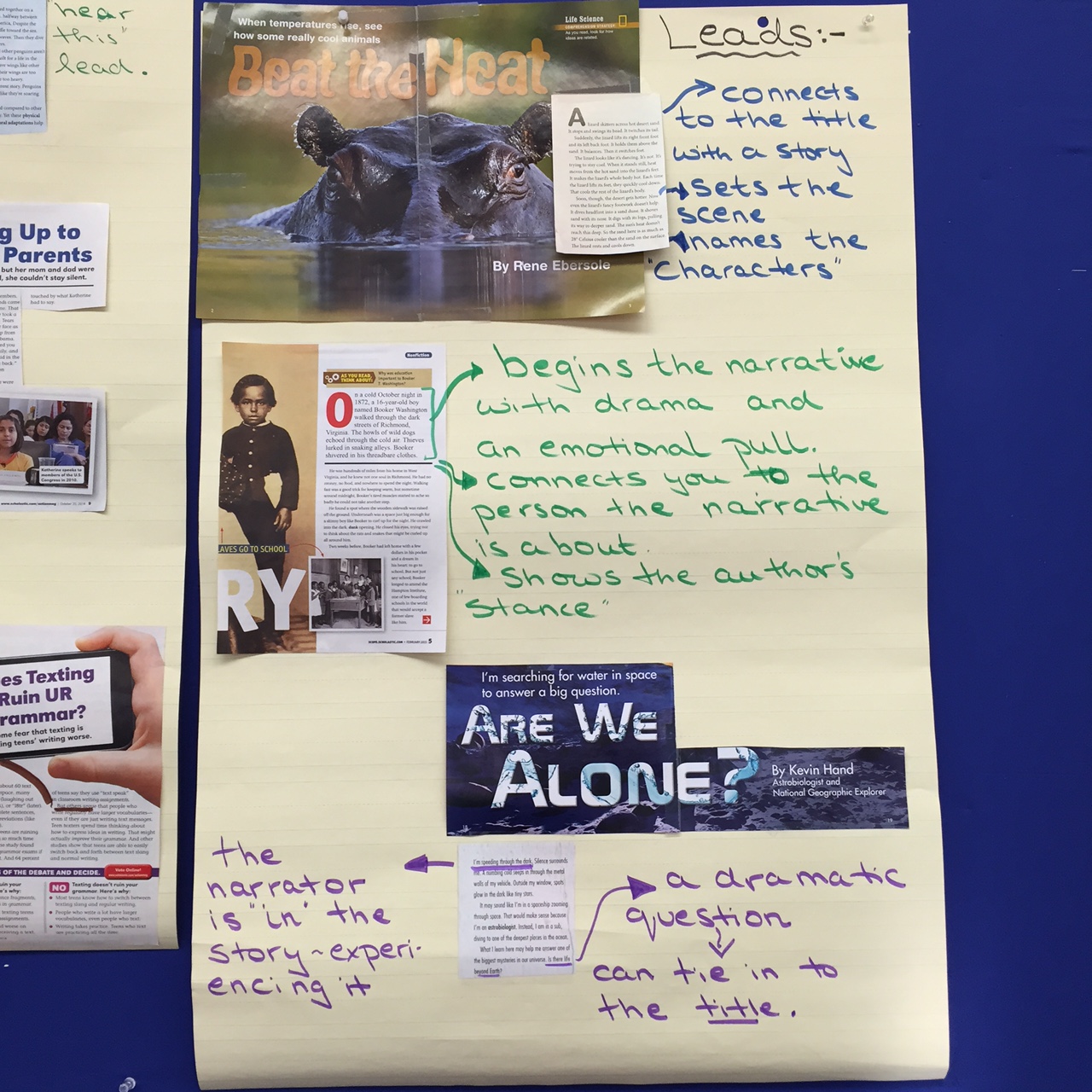

When my students went back to their drafts, they seemed more focused and energized. Every once in a while, one or two would return to a chart to re-examine a strategy or clarify a technique. Sometimes they would pause to discuss how they would try tweaking their draft and try out a particular craft move they liked. Sometimes, they gave each other advice. Sometimes they met with me to confer about a point or two. Most importantly, they went back to their drafts and continued to write.
Later that day, I created smaller versions of our craft charts, so that my kids could keep them at their desks for easier reference. I tried to organize these mini charts so that craft moves were easy to spot, relevant, and focused; a meaningful writing tool, as opposed to a distraction:


Although these charts will never take the place of writing conferences, they do give my students a sense of independence and agency. In this case, at least, we had found a way to manage chaos.
Discover more from TWO WRITING TEACHERS
Subscribe to get the latest posts sent to your email.


I love the way these charts support your writers when they aren’t conferring with you. While nothing can take the place of you, the teacher, these run a close second!
LikeLike
Love this. The hands on work with the mentors is so powerful. The naming of moves is perfect. Really inspirational, just what they needed.
LikeLike
What a great idea! My sixth graders and I are launching a unit on writing graphic novels about our ancient civilizations that we have been studying. This idea will come in handy as we dissect comics and graphic novels to use as mentor texts. Thank you.
LikeLike
Tara –too funny!! I am away for break and have been “unplugged” since Thursday. I decided to catch up a bit this morning and your title grabbed my attention first –then I saw my name! Thanks –I love reading the line you chose. Sometimes rereading your own writing through the eyes of another person is powerful. I love the ideas you shared for managing the chaos!
Clare
LikeLike
I know the feeling of everyone ready for a conference! I too have tried mini-charts but not the type in your example. Mini- annotated charts! Perfect! I will be trying this with our persuasive speeches next week! Thank you Tara!
LikeLike
I want to be a fly on the wall in your classroom. I often direct my students to mentor texts, but this seems to be such a thorough examination of them. I am wondering how I can adjust this noticing for younger students. Do you have a list of craft moves to look for? Perhaps if they had the moves to look for, they would see them more readily.
LikeLike
Reblogged this on A Teaching Life and commented:
Posting on Two Writing Teachers today:
LikeLike
I loved how you created the mini-anchor charts for the students to refer back to . . . A great reference tool and reminder for them as they draft! Seeing the writing strategies in action in the mentor text samples is a great way to reinforce the teaching that has occurred in the classroom! Wonderful post as always — thank you 🙂
LikeLike
Tara,
Thanks for sharing that even the best plan needs to be “re-visited” because the student voices (data) express uncertainty. They did not lack knowledge, only confidence; yet the day had to support their forward growth! 🙂
LikeLike
Love how you helped them to recapture the joy. Sometimes writing can be a slog, but it can’t start out that way. Yea for all of you!
LikeLike
Magazines are a great idea! I have many books but can’t always make copies. Thanks for sharing!
LikeLike