
Sixth graders have short-term memories. Just when I’d thought that I’d nailed down efficient routines, and I was sure that my writing workshop was going to run smoothly for the rest of the year… my kids returned from Thanksgiving Break and appeared to have forgotten everything about those routines.
Every. Single. Thing.
Monday’s writing workshop was, in a word, chaotic. So much so that my student teacher and I were left shaking our heads and wondering: what went wrong? what can we do to get back to normal…soon?!
What we noticed:
- Writers wasting time getting back to their seats from the meeting area to write. Students seemed to be sauntering back to their desks, often pausing too long to sharpen and re-sharpen their pencils or have a conversation about lunch/recess/after school going’s on.
- Once they were at their desks, many of my kids seemed to have forgotten the purpose of their editing sheets. My students use these to make notes at the end of each writing workshop, which I review and respond to before we meet again. This way, each student has a game plan for writing workshop – they know what they need to attend to while I am making my conference rounds:
- Speaking of conferences, my kids also seemed to have forgotten the etiquette that makes for effective and productive conference time: wait your turn, work until it’s your turn, do not interrupt another conference. So, we needed a quick reminder about what conference time should look like, sound like.
- Conference time is precious. It’s my job to be be able to help my kids identify specific issues and areas of improvement, but it’s also my kids’ job to be able to name a writing issue they are struggling with when they request a conference. On Monday, it seemed as though my kids were requesting conferences just to chat. I love chatting with my kids…but not during writing conferences. During writing conferences, I want to chat about a specific piece of writing right there on the desk in front of us.
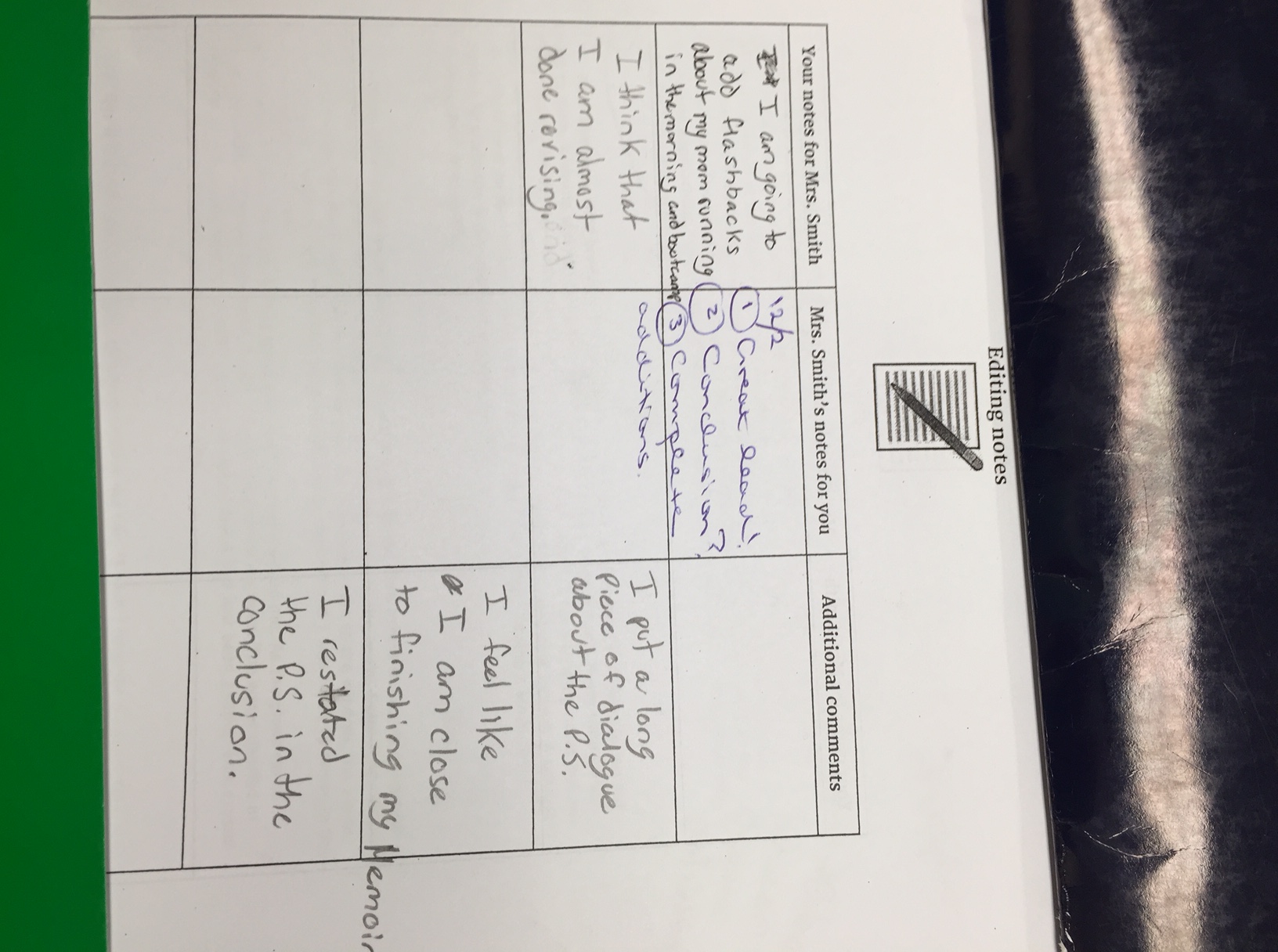
So, Tuesday’s memoir mini lesson gave way to time for this:
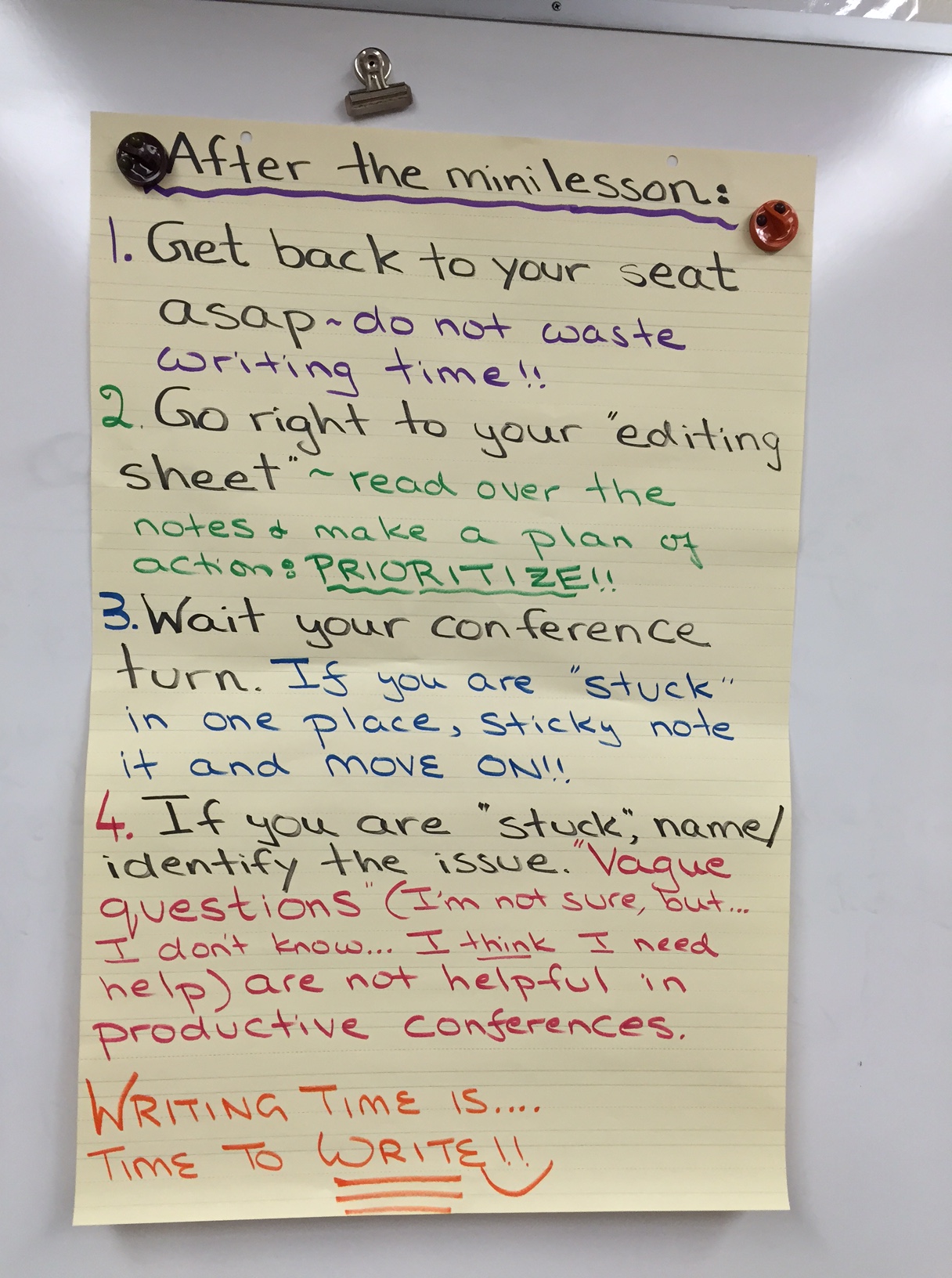
And, by Tuesday, we were back to “normal” . Until the day after Winter Break, of course, when it will be time, once again, for this:

Discover more from TWO WRITING TEACHERS
Subscribe to get the latest posts sent to your email.


Tara, I love the editing sheet and the concept, I am going to use it if I may? Loved most of all that your kids saw conference as a time to have one on one catch up chat with you, I had a little giggle at that. They must love you. 🙂
LikeLike
I’m not surprised your students were unsettled and chatty the first day back after holidays. Even adults returning to work like to take some time to catch up with each other and share stories of holiday events. Perhaps allocating a short time for this talk, perhaps 5 – 10 minutes, followed by a reminder of established practices before easing them back into the routine may make for a smoother transition from holiday to work mode. I know when I return to work it can take a little while to get back into the ‘swing of things’. We can’t expect more of children. A few extra minutes spent re-establishing connections may return positive dividends in the future. I think it is wonderful to share little hiccups like this. When others realise they are not the only ones experiencing similar things solution-oriented conversations can occur. 🙂
LikeLike
Tara, this is how I usually on Tuesdays feel after the March SOLSC. During March, I’m writing daily and then when that habit gets broken, I just wander around aimlessly, sharpening pencils. I need a teacher like you in my life to notice that and help me reset. 🙂
LikeLike
What a great way to connect this to our adult writing lives. This could be the “connection” in a reset minilesson!
LikeLike
Might be helpful to forward to teachers around Winter Break or the first week back! ☺
Linda Thompson, Ed. D.
Director of Secondary Education
Carmel Clay Schools
LikeLike
Tara, I like the use of the editing notes. Would you explain more on how you use this? I think it would be useful for my students after Christmas. I teach 4th grade and would like the kiddos to take more responsibility for the revising and editing in their writing. Thanks. Sylva
LikeLike
Hi Sylva,
Once we begin drafting a piece of writing, each of my students gets an editing sheet. Five minutes before workshop ends, I ask them to make a note about something they are struggling with/feel stuck in. Then I collect the folders and review/give feedback. This way, when students return back to their desks after the minilesson of the day, they can use my notes to get going right away until I can conference with them. These sheets go back and forth until the piece is published – when I use it for assessment purposes to gauge how much effort the student made in incorporating strategies into their writing. I find that this is an effective way to make sure my kids get to their writing fast, and don’t have to waste time waiting for me to conference with them.
Hope this helps!
LikeLike
Tara,
So important to figure out the “reset”. . . I had to do this myself on Monday. I had tasks to do but wanted to check Twitter, visit about Thanksgiving . . . and not focus on tasks. Now thinking that I will write my list of “What to do” after Christmas BEFORE the break begins – similar to your planning sheet!
Thanks for making me think about this both personally and professionally!
LikeLike
I love that idea of taking this trouble spot, the day after Thanksgiving break, and using it to help myself make a list for the day after winter break. I do this in my personal life for the day I come home from vacation….didn’t see the transfer ’till now. Thanks Tar and Fran!
LikeLike
So true! But I love the approach that we get in and reteach. It’s easy to be frustrated when they do this, and let me tell you fifth graders have that same amnesia. I love your editing sheets Tara, I think that’s a great way to help kids reflect and focus.
LikeLike
Reblogged this on A Teaching Life and commented:
Posting on Two Writing Teachers today about writing workshop routines:
LikeLike