Estimated Reading Time: 3 minutes, 531 words
Primary Audience: PK-12 classroom teachers, coaches
The Context: This year, one of my school’s goals is to increase opportunities for students to write across the day. Learning Logs are a Project GLAD strategy that we have found highly effective for meeting this goal. The beauty of Learning Logs is that their open-ended format allows them to be used across any subject in response to new learning of any kind. This predictable structure becomes a low-prep strategy teachers can use to support their students to process new information and make personal connections to their learning through writing. The simple format is adaptable to meet diverse learning needs.
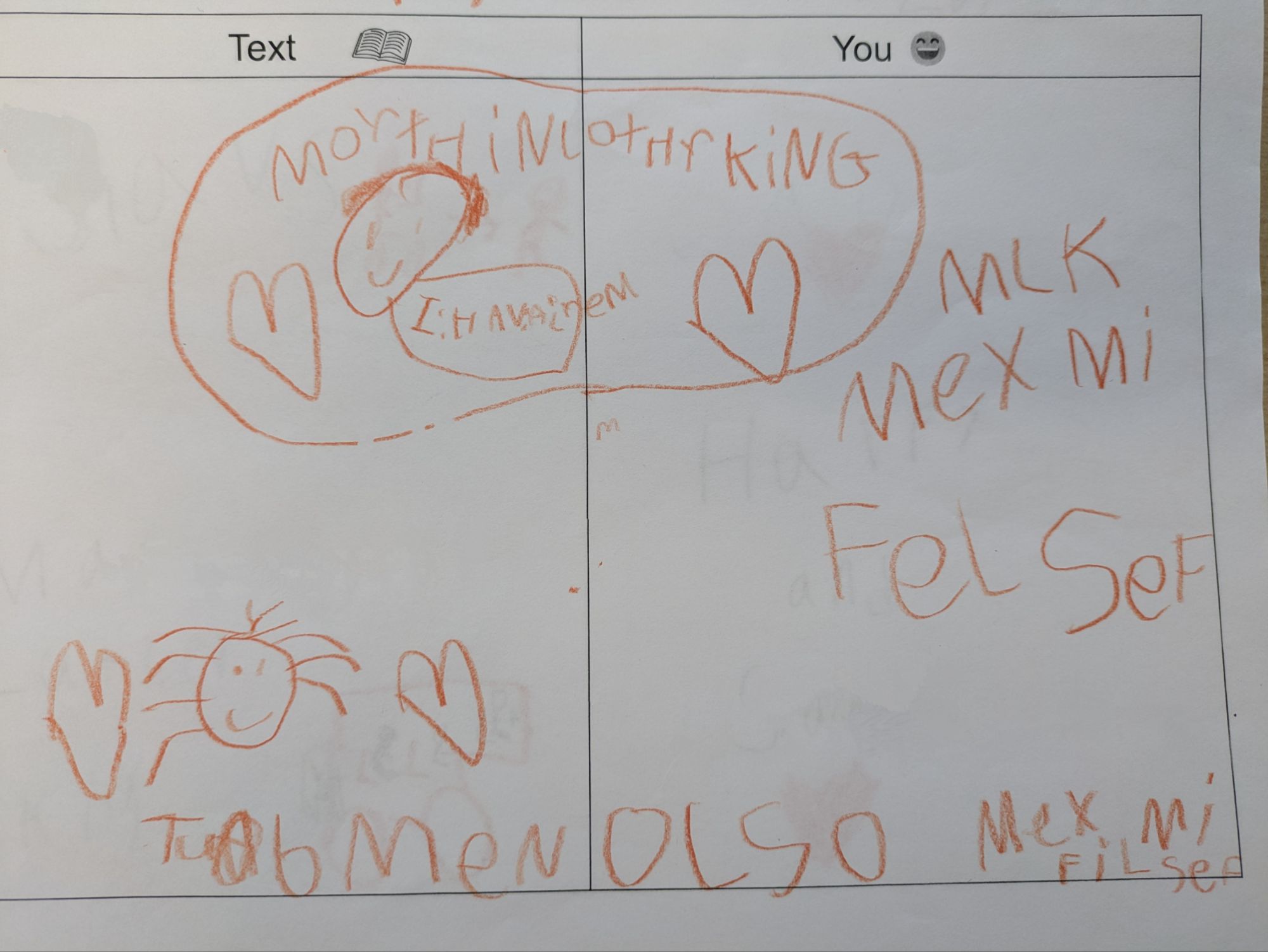

How It Works: Learning Logs are simply a sheet of paper divided in half with the word “Text” on the left and “You” or “Me” on the right.
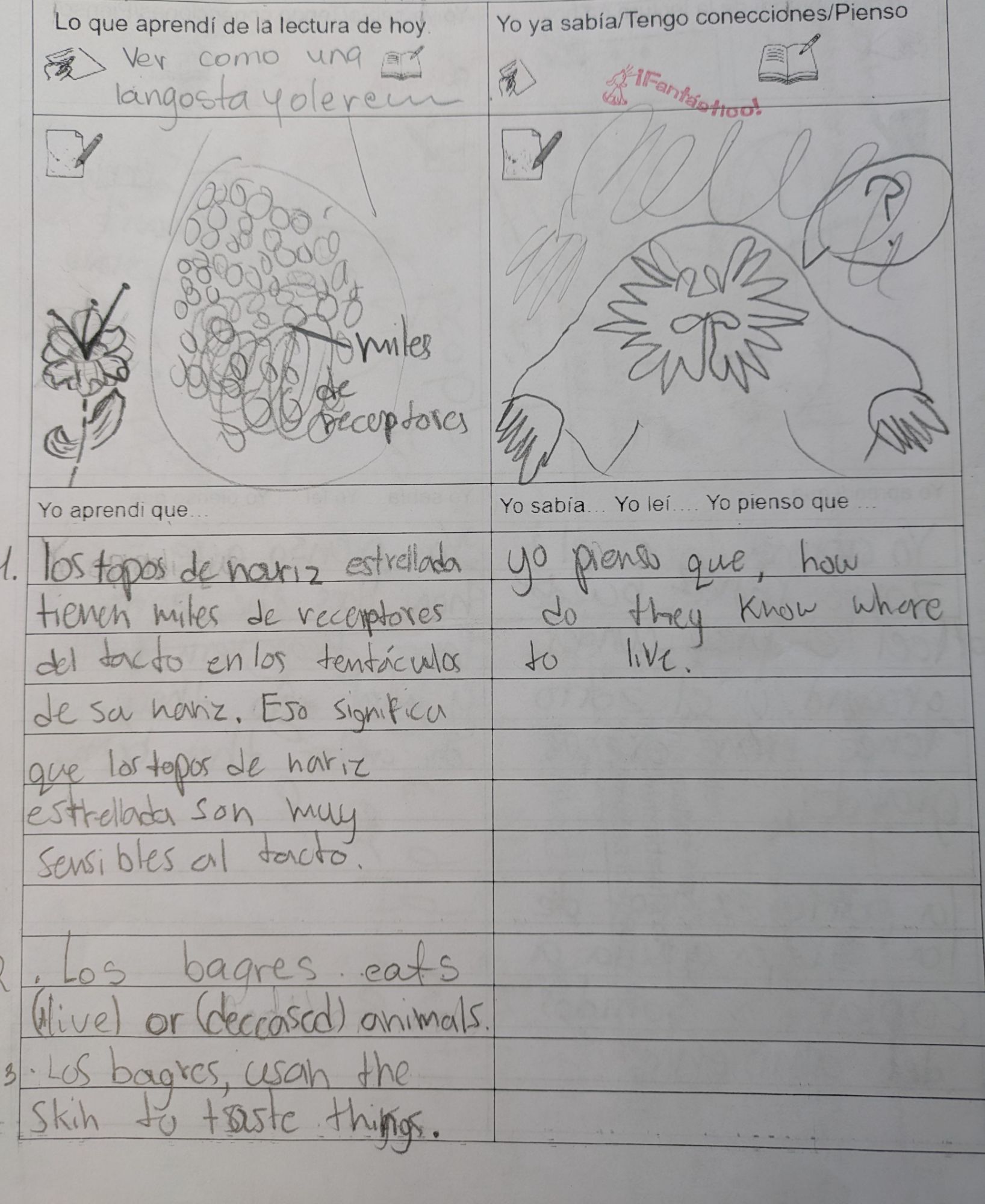
On the left side, students write and sketch about what they learned in response to a specific text. “Text” is a broad term that refers to the source of learning, such as a book, article, video, diagram, map, etc. This summary of new learning serves as a formative assessment of what students are taking away from the lesson.
On the right side, students write and sketch their personal thoughts, reactions, and connections to their new learning. Students will often write questions they have, related information they know, or personal stories they are reminded of by the information. Through these questions, stories, and connections, teachers get to know more about their students’ experiences and interests.

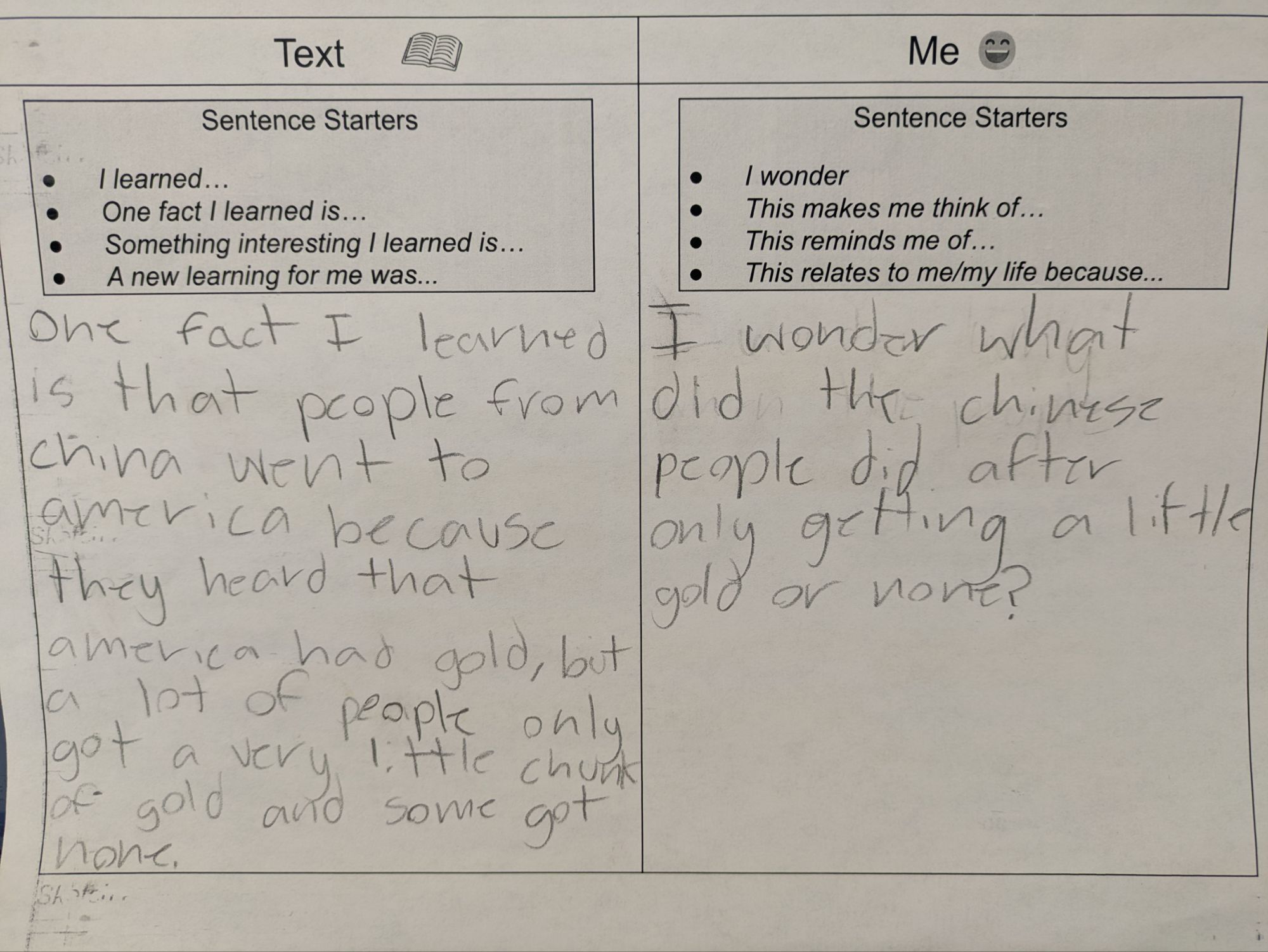
Learning Logs are easily differentiated to meet a variety of learning needs. As a Project GLAD strategy, it was specifically designed to support multilingual learners (MLs). Encouraging sketching with labels allows emergent MLs to express their learning even if they do not have all of the vocabulary and grammar to do so in complete sentences. All students are encouraged to sketch because it helps the brain to process information in a multimodal way that leads to stronger neural pathways. Sentence frames can be added to the learning log or posted on a chart to support students in getting started and writing complete sentences. Lines can also be added to the template to support students with the mechanics of writing (just make sure there is also a space for sketching).
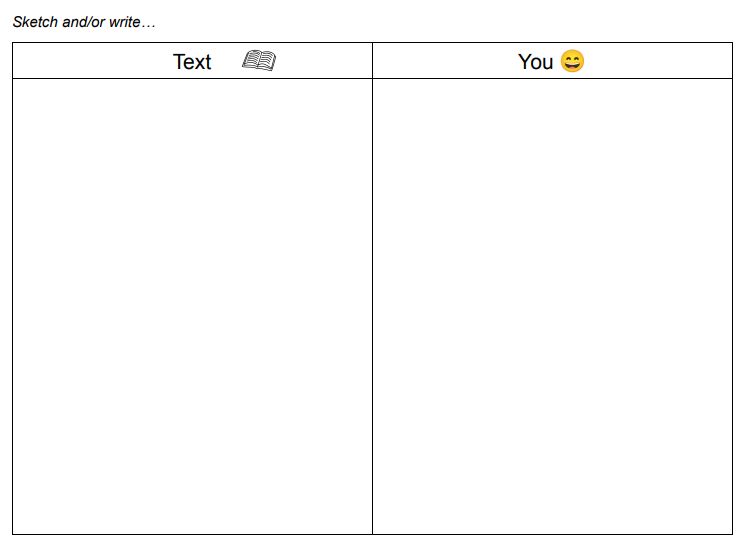
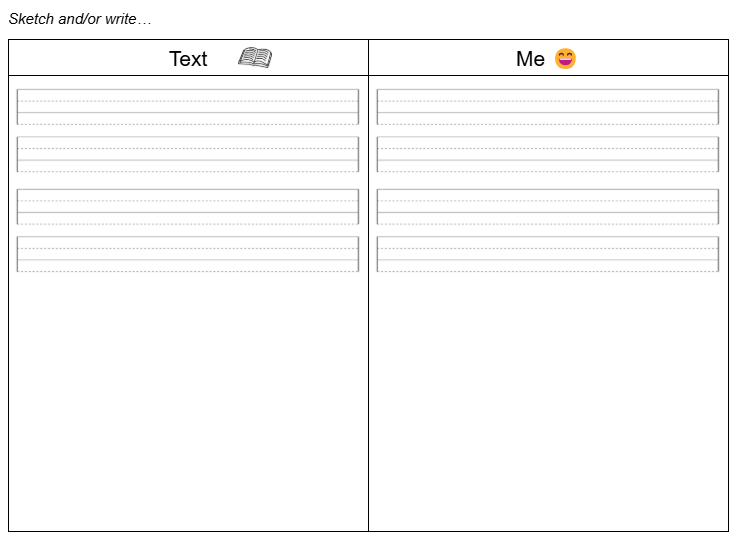
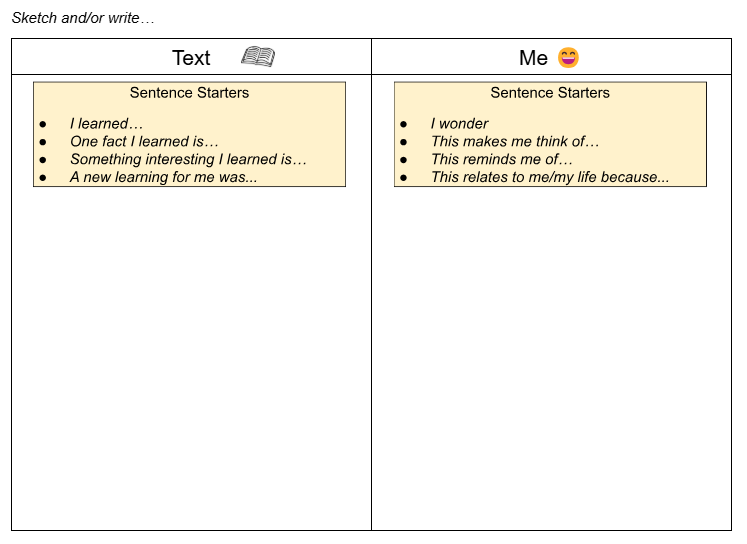
Learning Logs are a teacher favorite because, as I mentioned before, they are very low prep. Once you have your template, keep a stack on hand to use at any time. Or, copy a packet of learning logs for each student so that all you have to do is say, “take out your learning log and write about what you just learned.” You can also forgo the template and have students simply fold a piece of paper in half or draw a line down the middle of their notebook page. The best learning log template is the one that gets used!
The Bottom Line: Learning Logs are a low-prep, highly transferable, and easily adaptable strategy that helps students process new learning and make personal connections to their learning through writing and sketching. Give it a try and I bet you’ll be hooked!
Discover more from TWO WRITING TEACHERS
Subscribe to get the latest posts sent to your email.


I love the student writing examples and especially the translanguaging that’s happening in the dual language example. I love how high leverage this strategy is and by using a consistent structure, students can focus on the new learning and connections they are working to communicate through writing. I appreciate the differentiated examples and agree that it can be easily customizable to the needs of different students. Thank you so much Shawnda!
LikeLike
I’m so glad the examples and variety are helpful! It really it a high-leverage strategy that is easy to implement. Thanks for your comment!
LikeLike