Estimated Reading Time: 3 minutes, 575 words
Primary Audience: teachers, coaches, administrators
Have you ever read a student’s writing and thought, they write the way they talk? As educators, we know that written language more closely matches academic speech, with sophisticated vocabulary and structures, than everyday speech. We teach students to say it before they write it, so we need to teach our students how to say things in an academic manner before we expect them to use sophisticated language in their writing. To be precise, we need to help our students develop oracy.
The Context: Oracy is a term that I come across often in recent research on multilingual learners. What is oracy? Oracy is part of oral language. Think of oral language as the big umbrella that covers all sorts of skills like talking to friends, expressing emotions, asking for information, telling jokes, and more. Oracy is a “subset of oral language skills that students need to meet academic and content objectives” (Butvilofsky et al., 2023, 23). It is all the vocabulary and language structures that allow our students to comprehend academic texts and express themselves in academic situations. Oracy development is important for all students, but it is especially important for our multilingual learners.
Oracy, like writing, is an expressive language skill, meaning that it is something that students actively produce (rather than take in like the receptive language skills of listening and reading). To develop oracy, teachers must teach it explicitly and–this is important–provide time for students to practice through oral rehearsal.
How it works: To develop oracy that supports writing, focus on vocabulary and language structures.
Vocabulary is the bricks of oracy. Students need to know a lot of bricks (words) related to a topic in order to talk (then write) about it. There are two types of vocabulary. The first is genre-specific vocabulary such as transition words, dialogue tags, and synonyms. These are words that anyone expressing themselves in that genre would be likely to use. The second type of vocabulary is content-specific words. These are the words related to the specific topic that a student is writing about, so can vary from student to student.
- Have students repeat new vocabulary aloud. One of the most common phrases I use when teaching is “say that with me.”
- Create and post charts with important vocabulary. Avoid slides because they are not always available for students to reference when they need them.
- Give students a personal word bank of the vocabulary they need for their topic. This can be as simple as a sticky note stuck on their notebook or folder.
- Use mentor texts to point out vocabulary you have already learned in context. When you find new, related words, add them to the vocabulary charts.
- Use chants to teach vocabulary related to the genre and/or content students are writing about.


Language structures are the mortar of oracy. It is what holds the bricks (vocabulary) together and allows students to express themselves fully. Students need to learn to use language structures when speaking before they can transfer those structures into their writing. Examples of language structures include complete sentences (for our primary students and beginner multilingual learners), compound and complex sentences, varied verb tenses, and structures of dialogue.
- Explicitly teach language structures as a minilesson objective.
- Use sentences from mentor texts for examples of sophisticated language structures. Have students read the sentence(s) aloud with you to become familiar with saying the structure.
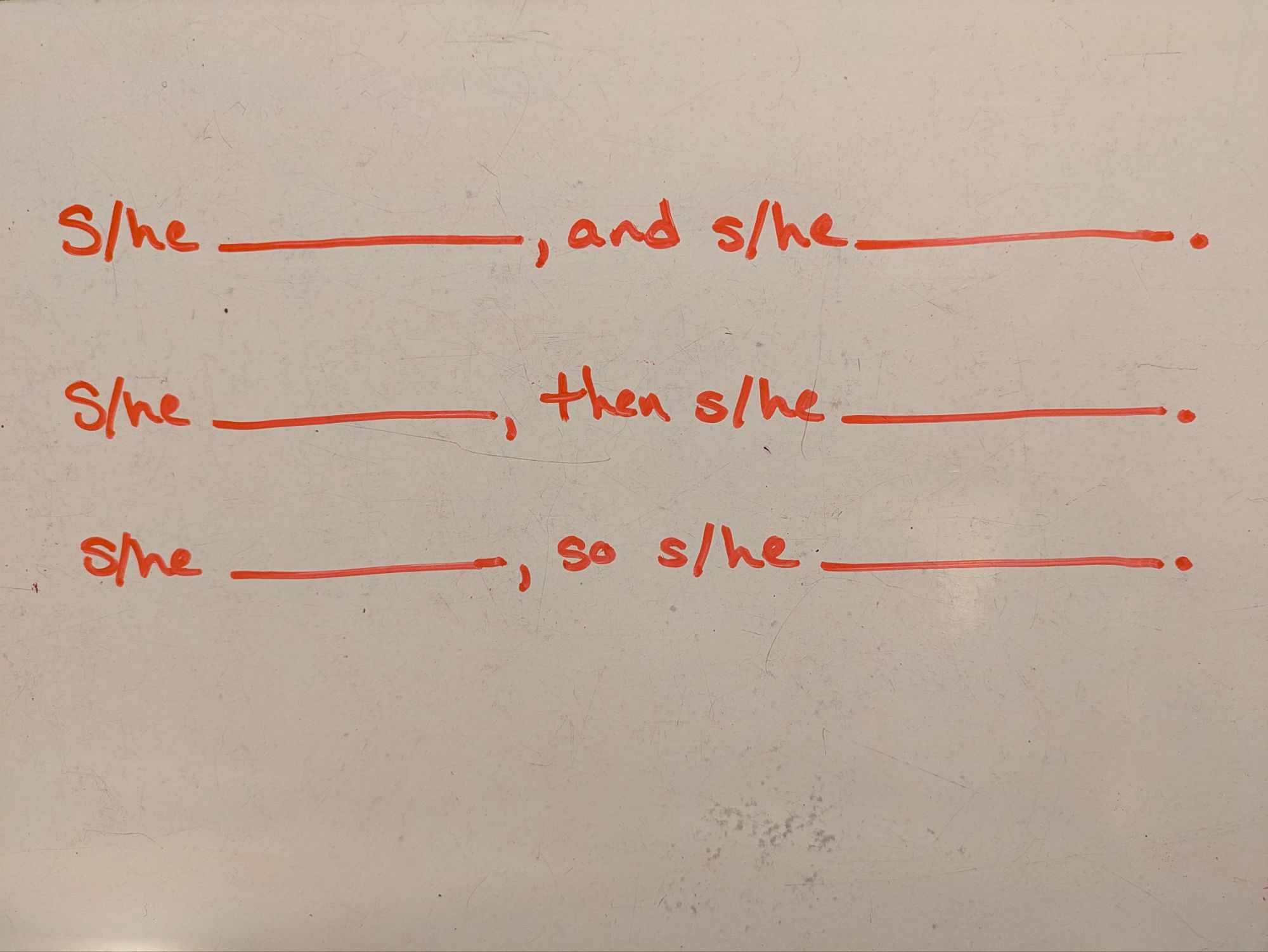
- Provide sentence frames for students to reference as they practice saying the structure.
- Include time for students to regularly “turn and talk” to their writing partner during the minilesson, midworkshop teach, and share.
Go Deeper with these related posts about teaching and using:
- Sentence expansion
- Sentence patterning charts
- Compound and complex sentence construction
- Oral language
- Chants
References
Butvilofsky, S., Escamilla, K., & Hopewell, S. (2023). Biliterate Writing From the Start: The Literacy Squared Approach to Asset-Based Writing Instruction. Brookes Publishing Co.
Discover more from TWO WRITING TEACHERS
Subscribe to get the latest posts sent to your email.


Shawnda, what an amazing tutorial on Oracy. Like Stacy, I wasn’t quite familiar with what it involved, and your building metaphor made it so very clear. I’m thinking now about how and where I see it in my own teaching. I’d like to be more clear and deliberate about developing those skills. Thank you!
LikeLike
I love these ideas for helping students improve both their writing and speaking/listening abilities, especially for multilingual learners. The “said is dead” chart was especially help for me to understand that we aren’t just trying to make our students sound “more academic”—we’re really just trying to give them more rich and specific language to better express their ideas!
One question I do have is how would you adjust these strategies in the teaching of dialect, local color, authentic dialogue and those parts of texts—in reading or writing—in order to help students discover these kinds of “bricks” and “mortar” at work in other cultures for themselves?
LikeLike
I love these ideas for what seems to me a chance to help students expand their writing and speaking abilities simultaneously. The “said is dead” chart especially helped me see why this is important, not necessarily to make our students sound more “academic” in their writing/speaking, but more so to give them a richer and more vibrant way of expressing their ideas! I think this especially builds scaffolding for the times when we have students read aloud as a revision strategy for their writing– because if they don’t speak more complexly, reading aloud won’t help them revise quite as well. One question I have, though, is how can we teach the caveat that if they are writing with a specific dialect (say, trying to capture their grandmother’s Spanglish), they can still use these skills while being true to the dialect they are capturing?
LikeLike
I was unfamiliar with the term, and I appreciate how you explained its importance in developing students’ academic skills, especially for multilingual learners. The distinction between vocabulary as the “bricks” and language structures as the “mortar” resonated with me. It’s clear that fostering oracy can significantly enhance students’ writing abilities. Looking forward to exploring this concept further!
LikeLiked by 1 person