Estimated reading time: 3 minutes. Contains 571 words.
Primary Audience: K-12 Classroom Teachers, Language Arts Specialists, Instructional Coaches
Why Oral Language Matters
There are many instructional practices for writing that work well for students. As a writing teacher, I have an intuitive “gut feeling” about the effectiveness of one strategy or another. Still, I’m aware that I function within a system where data-driven instruction isn’t a suggestion; it’s a demand.
When it comes to using oral language in my instruction, I can point to the anecdotal evidence I see in my classroom. I know, however, that personal examples may not convince administrators, parents, or members of the public that I’m engaging in best practice. For that, I wanted to seek the legitimacy of peer-reviewed data for my classroom instruction.
What the Research Says
While oral language and writing production seem intuitively linked, Kent and Wanzek (2016), in their 25-year meta-analysis, note a general lack of research into the effect of oral language, particularly concerning writing, and recommend more study of how these skill sets are linked.
One possible reason for the lack of research is that teachers often overlook oral language when they plan for language arts instruction. A study by Hall, Capin et. al. (2021) noted that narrative proficiency (the ability to retell stories) was the strongest predictor of academic performance in grade 2. Yet their observations in forty-one classrooms over a semester found no time dedicated to oral storytelling despite its correlation to narrative structure. While that finding saddens me, it’s not surprising: reading and writing are the skills assessed in standardized testing, so it makes sense that many educators forgo instruction in oral communication.
When teachers do incorporate speaking and listening within language arts, some studies show a connection between oral language and writing skills across genres and age groups.
For example, Philppakos (2019) conducted a study examining how oral language supports editing and revision of writing. Her findings assert that fluency in sentence construction helps writers communicate with readers, and that oral rehearsal and conversation builds that skill. Kids speak better than they write; oral rehearsal guides them in sentence production, expansion, and elaboration.
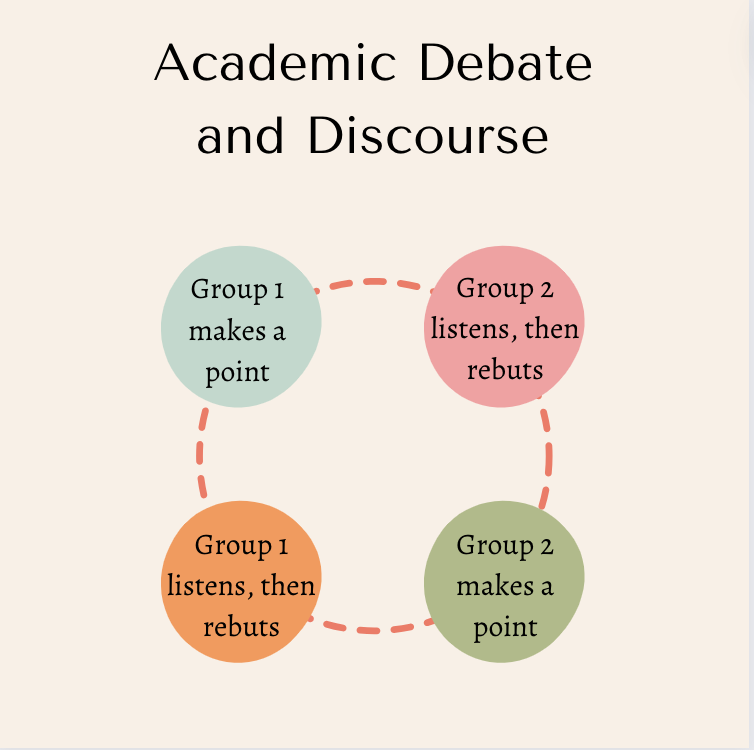
Research also shows that the collaborative reasoning strategies used in the primary grades are helpful and effective in upper grades, particularly in oral argument, academic discourse, and debate. Philippakos (2022) asserted that reasoning and argument are, in themselves, based on oral exchanges. When students talk to each other, they can work through their ideas and reasoning in a way that helps them articulate their thoughts for others – which, in turn, supports clarity and depth of writing.
Implications for Practice
So what can a teacher do? It’s essential to know that empirical research supports oral language as a component of writing instruction. Of particular note are the following strategies and skills:
- Oral telling across grades and genres: Let students of all ages talk through their writing. Provide opportunities for them to articulate stories aloud as a bridge between thought and the written word.
- Conversation starters and stems: Use structures for talk that encourage elaboration, vocabulary use and complex sentence instruction. Incorporate ways for students to elevate their use of language by allowing them to craft language organically and in their own voice.
- Opportunities to verbally “think it out” across genres and grades: This might include an “AMA” (Ask Me Anything) format when constructing informational text, structured debate / academic discourse, or working with a group to “crowdsource” ideas for revision.

Go Deeper
Interested in learning more about using oral language throughout your instruction? Here are a few resources to try:
Why Storytelling in the Classroom Matters – Edutopia Article by Matthew James Friday.
Exploring the Power of Oral Language: A Conversation with a Colleague – Two Writing Teachers podcast episode hosted by Stacey Shubitz (Guest: Lainie Levin)
Use Oral Language to Strengthen Opinion Writing Skills (For Writers of All Ages!) by Sarah Valter on the Two Writing Teachers blog.
Talking it out: Oral Language as a Tool for Revision by Lainie Levin on the Two Writing Teachers blog.
Works Cited
Capin, Dille, J.T., P., Fall, A., Gillam, R. B., Gillam, S. L., Hall, C., Roberts, G., Vaughn, S., Wada, R. (2021). Narrative instruction in elementary classrooms: An observation study. The Elementary School Journal, 121 (3). https://doi.org/10.1086/712416
Kent, S. C., & Wanzek, J. (2016). The relationship between component skills and writing quality and production across developmental levels: A meta-analysis of the last 25 years. Review of Educational Research, 86, 570-601. https://doi.org/10.3102/0034654315619491
Traga-Philippakos, Z. A. (2019). Sentence construction: Supporting elementary students’ editing skills. The Language and Literacy Spectrum, 29 (1), Article 3. https://digitalcommons.buffalostate.edu/lls/vol29/iss1/3
Traga-Philippakos, Z. A. (2022). Developing strategic learners: Collaborative reasoning with strategy instruction to scaffold debate and support the writing of arguments. The Language and Literacy Spectrum Vol. 32 (1), Article 3. Available at: https://digitalcommons.buffalostate.edu/lls/vol32/iss1/3
This is a giveaway of How to Become a Better Writing Teacher by Carl Anderson and Matt Glover, donated by Heinemann. To enter the giveaway, readers must leave a comment on any BUILD YOUR EXPERTISE BLOG SERIES POST by Sun., 2/18 at 12:00 PM EST. The winner will be chosen randomly and announced on February 19. The winner must provide their mailing address within five days, or a new winner will be chosen. TWT readers from around the globe are welcome to enter this contest!
Discover more from TWO WRITING TEACHERS
Subscribe to get the latest posts sent to your email.


Thank you for sharing this research. I need to use it more with my 2nd graders before they write.
LikeLike
Loved the thoughts in this article. I have been working with a concept called “Story Workshop” in kindergarten and have found it to be helpful with developing oral language as they talk together in creating/finding their stories and then capturing those stories in writing – in a social, collaborative, playful environment. Thanks for helping to affirm the importance of oral language development.
LikeLiked by 1 person