Estimated reading time: 2 minutes, 30 seconds. Contains 514 words.
Target Audiences: Classroom Teachers and Literacy Coaches
The Context: After observing in classrooms where writing conferences ran too long, taught multiple strategies, or left many students needing clarification on how to implement whatever the teacher taught in their writing, I realized that it helps students and teachers understand their roles in a conferring session.
Why It Matters: All students need an opportunity to know their role in a writing conference so they can set the agenda and receive whatever they need most from you when they have a one-to-one writing conference.
By the Numbers: Here are some typical time ranges to illustrate my point:
- Time Range for a Writing Conference: 5 – 7 minutes
- Independent Writing Time: 30 minutes
- Average Class Size: 25 students
You’ll reach seven students daily if you aim to hold one small group lesson (e.g., four students for six minutes) and three writing conferences during every independent writing session. Meeting with seven students daily (and keeping excellent records) will let you meet with every student in a highly individualized setting at least once weekly.
The Details: Students understand their role in a writing conference when they’ve been part of writing workshops year after year. When students are newer to writing workshops — or if you need to deliver a refresher after a school vacation — you can try one or both of these ways to help students better understand their role.
- Show students a couple of videos of writing conferences. (Carl Anderson’s A Teacher’s Guide to Writing Conferences, Grades K – 8 is an excellent resource since the online companion features video clips of Carl conferring with students across grade levels.) Give students a lens (e.g., student or teacher, researching or instruction) to watch each video. Then, lead a discussion about what they noticed Carl saying/doing, the students saying/doing, and how they can transfer what they observed to their writing conferences with you.
- Fishbowl writing conferences. Sometimes, everything goes right with you and a student writer. One powerful thing you can do is to ask the student for permission to have other students watch you have a future writing conference. This fishbowl session could involve having that same writing conference again as part of the teaching share or having students watch a brand-new writing conference.
- You’ll want to lead a debrief where students share their noticings. You could highlight specific moves you or the focal student made that you want others to replicate.
- If you’re concerned you won’t be able to have a student reproduce a conference for others to fishbowl, you could record writing conferences on your smartphone or tablet and show it to your entire class soon after that.
Example in Action: Drawing off of a list of teacher and student roles in a writing conference from Welcome to Writing Workshop, here’s a sample of the kind of chart you might co-create with students after they watch writing conference — on video or live in the classroom.
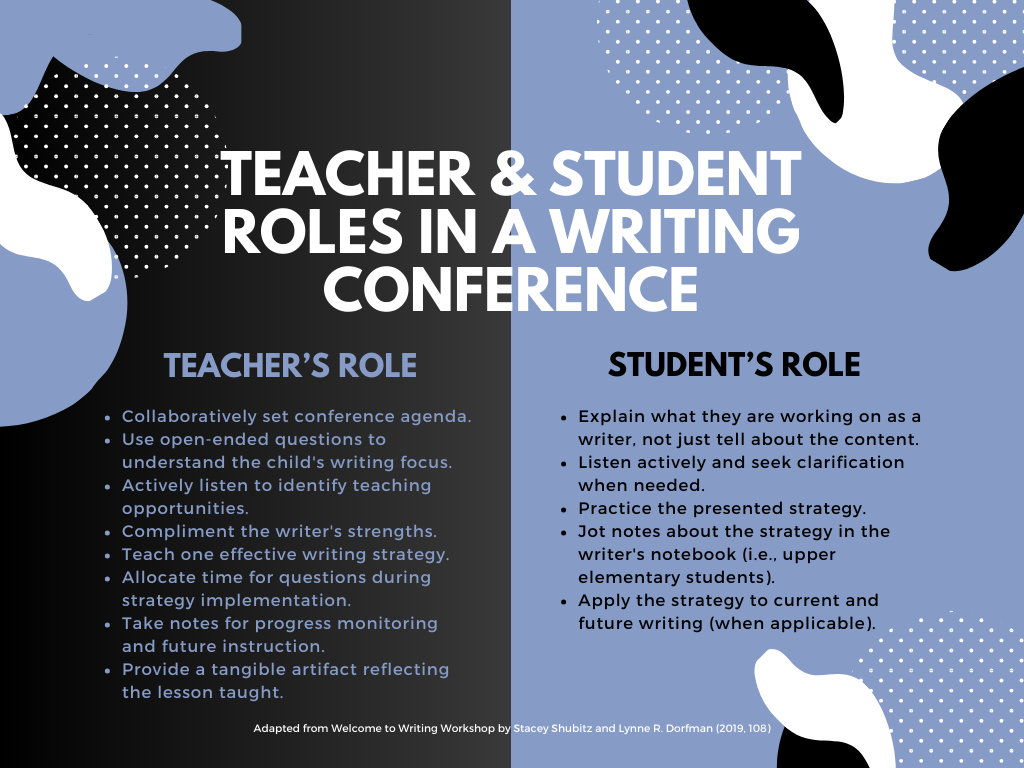
The Bottom Line: Writing conferences involve distinct roles for teachers and students.
What’s Next: Listen to a few #TWTPod Tip for Tomorrow episodes (Each episode is less than 10 minutes!) for more ideas to maximize conferring time.
Discover more from TWO WRITING TEACHERS
Subscribe to get the latest posts sent to your email.


Fabulous post, Stacey! Thank you for breaking down the structure, right down to the minute. I have the Anderson book, and I’m printing this article to go in it as a resource. You’re always so helpful.
LikeLike
I’m glad it was helpful, Kim! Happy conferring!
LikeLike