Primary Audience: Classroom Teachers and Instructional Coaches
Estimated Reading Time: 6 Minutes (1,172 Words)
A Back Story
“They start squirming when they see writing is next on the schedule!” Lynn, a third-grade teacher, exclaimed early in the school year. As a literacy coach, my work often involves supporting teachers who have moved grade levels. This year, I’ve been working closely with Lynn, who recently moved from first grade. Writing time has been a bit tricky. We’ve been working together to try and change that, helping the students to find joy in the writing process. Our work has gone “off script” at times, both in terms of the curriculum and traditional coaching work, but it has been in direct response to what we see these students need.
This is the part of coaching I love the most: the action research that comes with working alongside teachers to find solutions to challenges. No playbook or curriculum can give us step-by-step instructions for how to work through every challenge that we encounter day to day and year to year. Here are some ways Lynn and I have worked together to foster a culture of writers in her classroom.
What It Looks Like
Collaborative Conversations and Planning: Lynn and I have a scheduled weekly planning time. We use this time to plan for our work together, look at student work, or troubleshoot things we are seeing in the classroom. Our collaboration does not end there. It takes many forms throughout the week. We often touch base before, during, and after a lesson, even if the moments are stolen as I walk with her as she transitions her class to lunch. We also text. I can do some pretty good coaching work via text! Lynn will often check in with me when planning at home in the evenings or on the weekends. Needless to say, talking about our shared work is necessary and ongoing.
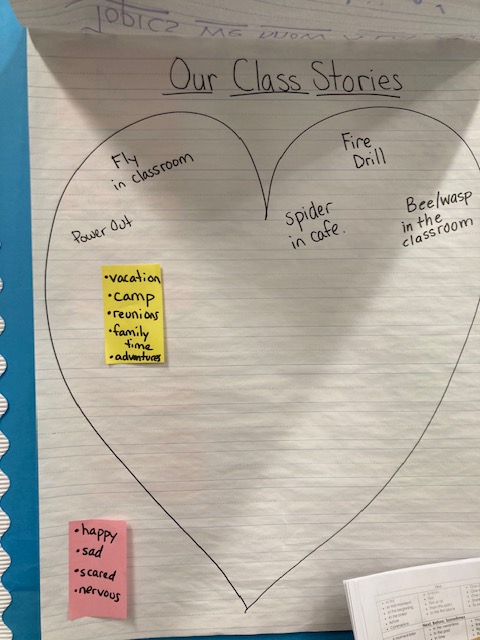
Fostering Writing Identities: This has been one of our greatest challenges, but one that Lynn and I knew was at the top of our list for making a change in her classroom. We knew that if we didn’t help this group of students see themselves as writers, it didn’t matter how great our lessons were. We began small, inviting the students to draw and then write. We moved on to shared writing opportunities, giving the students plenty of opportunities to orally rehearse the way our class stories could go. We worked hard to give students a vision of the work they could do.
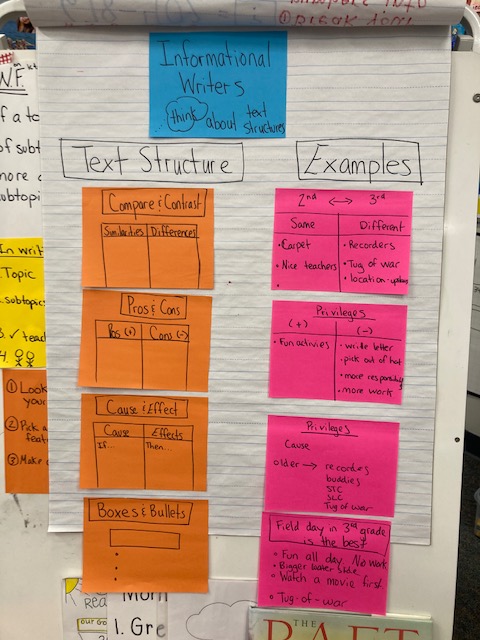
Capitalizing on Partnerships: Building in plenty of purposeful partner time has been helpful. As we plan each lesson, we think about how we can structure time with partners to have a clear purpose and routine. Social interaction is important to this group. Layering in thoughtful partner work has given students additional opportunities to practice some of the skills we are working on. It has also fed a need that the students have to socialize. I have been pleasantly surprised to look around the classroom and see most partnerships on task, truly supporting one another in the writing process.
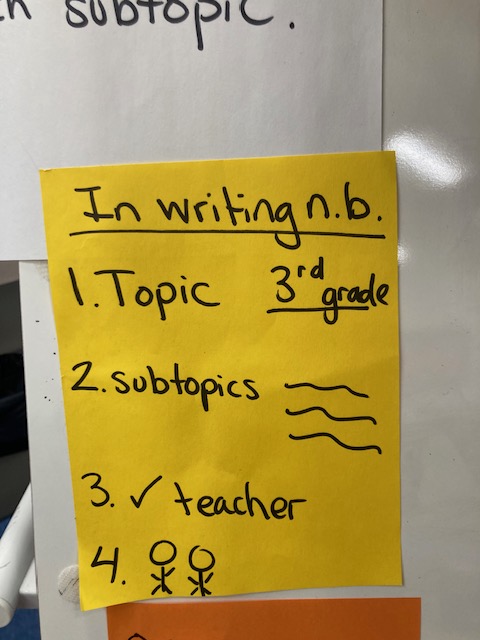
Fostering Independence: Lynn and I have learned that her students were at varying levels of independence. Part of our planning has been to think about how to grow each student towards greater independence. As part of the link in our mini-lessons, we outline the work students can do during their independent working time. When students seem unsure, we can point them back to the list. We have created individual checklists for students who require more support in maintaining independence during the workshop. Lynn and I also divide and conquer. We have learned that some students need more support during the planning part of the writing process. Thinking about individual needs has helped us to think about meeting the needs of all students across the writing process.
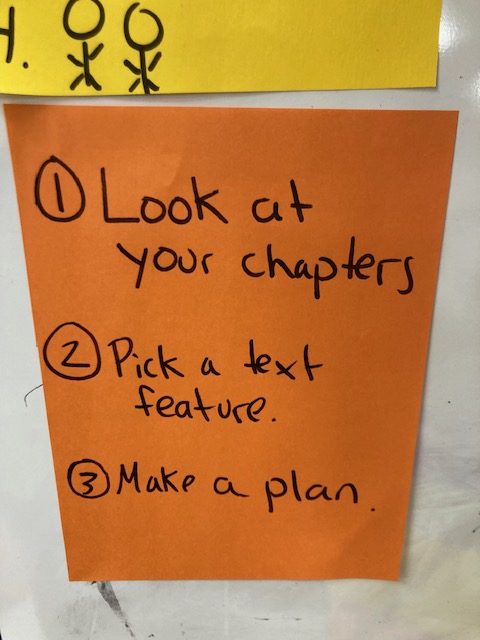
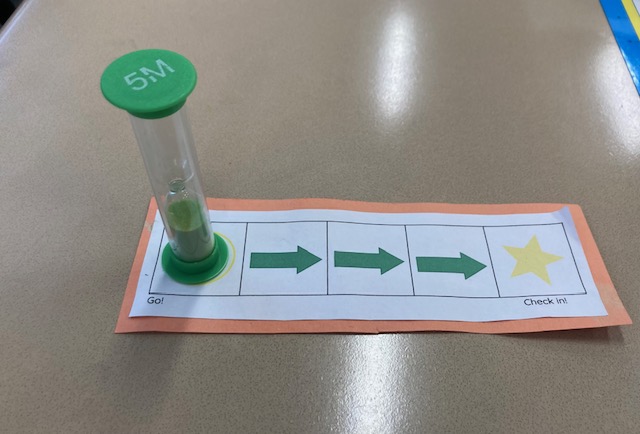
Plenty of Celebrations: Fostering a community of writers is not always easy…or pretty! There are days that the work looks messy, and Lynn and I both end up looking at each other, defeated. In those moments, it is essential to look for the tiniest moment to celebrate. We all want to feel seen. Lynn and I celebrate the work kids are doing, even approximations. We have celebrated students’ work in many ways, including highlighting work during the share part of the workshop or even mid-workshop interruptions. We have sent notes home, given compliments, and just found any opportunity to see the students.
The celebrations don’t end with the students. Because Lynn and I are both committed to the work with her class, we both find time to share celebrations. I let Lynn know that I see all her hard work paying off in all the ways her students are growing. She shows her gratitude for our partnership by stopping by my office at the end of almost every day to share a story, say thanks, and give me a hug.
The Impact
A few weeks ago, Lynn and I gave an on-demand assessment before starting a new unit on informational writing. We brainstormed some topics together as a class. We then introduced some paper choices and set kids off to write. Lynn and I hung back for a minute, sitting on the classroom carpet, watching the students get started. This group of students that, just a few weeks earlier, were wiggling out of their skin as writing time approached. But on this day, they all chose a topic and paper and got right to work.
Two Writing Teacher author Leah Koch recently wrote a Slice of Life, From “Kids Who Write” To Writers. In that piece Leah wrote, “It was exhausting as a teacher. They weren’t writers yet. They were just kids who write. Rather, they were kids who were forced to write.” This was the exact transformation that Lynn and I have been observing, watching her students grow from “kids who write” to writers.
Just today, Lynn popped her head in to share that as her class walked to lunch, she overheard many talking about how they love writing time. “Not just one or two…but a bunch.”
The Bottom Line
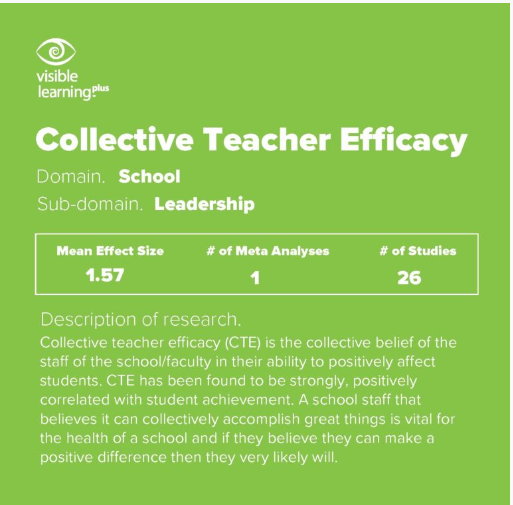
In a recent grad school course, we discussed teacher efficacy, which Hattie describes as “the collective belief of the staff/faculty in their ability to positively impact students.” This of course made me think of my role as a literacy coach and the work I get to do daily, alongside teachers like Lynn. When we believe in the work that we do and the work we get to do with children, everyone benefits.
Discover more from TWO WRITING TEACHERS
Subscribe to get the latest posts sent to your email.


I love the idea of individual checklists and the boxes with the timer and arrows! Great post.
LikeLiked by 1 person