Estimated Reading Time: 4 minutes (783 words)
Primary Audience: PreK-5 Teachers

Who They Are & What They Bring: Artists are the kinds of writers who typically feel passionate about drawing and confident in their ability to represent their ideas through pictures. Artists are prolific and spend most of their writing time on their illustrations. They are skilled at making their drawings comprehensive, detailed, and nuanced. Artists are “decision makers” (Already Ready, 2008; p. 141) who readily use drawing to communicate, tell stories, diagram, and explain.
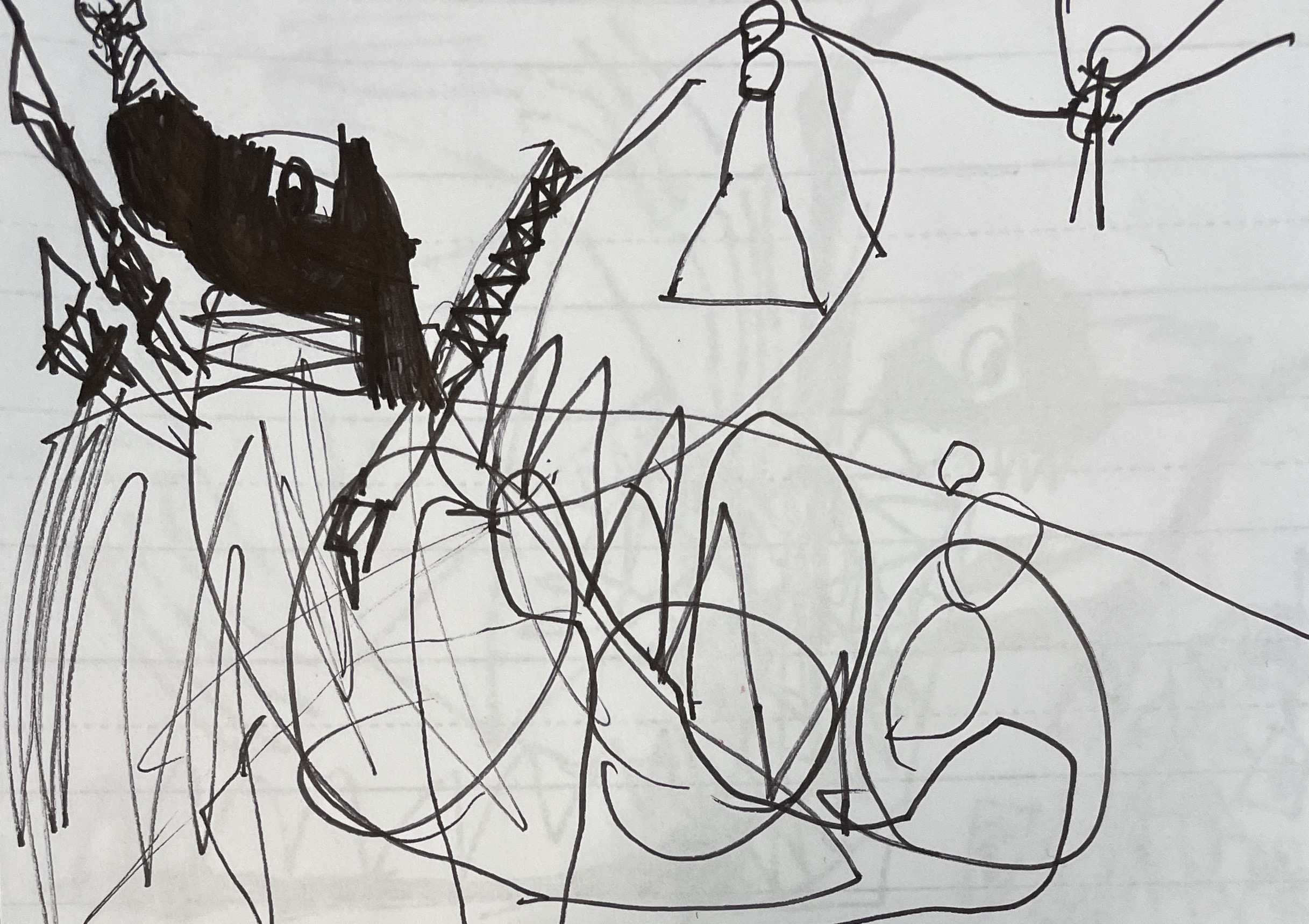
A Backstory: Growing up, I knew that my parents valued and found beauty in the art that my siblings and I made. We were constantly encouraged to make and create, and our drawings, paintings, and sculptures were prominently displayed throughout our home. I have surely inherited this affinity for children’s art. As a parent of two young children and an early childhood educator, I lean into what I know about drawing as a vital form of communication and expression, especially in the earliest years of writing.
Why it Matters: Young children are natural, intuitive artists. Just as cooing and babbling precede talking, drawing precedes writing. Drawing is integral to the writing process for emergent and developing writers. Drawing helps young writers plan, organize, and represent their thinking. After children have orally rehearsed what they want to write, artists draw their ideas with purpose and care. Sometimes artists rely heavily on their drawings because they are not confident writers of letters, words, and sentences, but this is certainly not always the case. Very often, artists simply love to draw. They get deeply engrossed in their drawings, and they find the most value, purpose, and satisfaction in making them.
One Thing to Remember: Sometimes I rush my artists when they take too long with their drawings because I’m worried they won’t have time to get to the writing part. I do this, especially when I believe a student is actively avoiding it. But I must remember that writing is as much about the process as it is about the product. Teachers, myself included, tend to be product-driven—we want to see results and have closure as students “finish” one piece and move on to the next. Perhaps instead, art-oriented writers need systems and structures that support them as they learn to broaden and expand their comfort zone, even if it means developing their artist identity faster than their writer identity. If we want to encourage a shift, it can be done as long as we still meet their fundamental needs as artists.
Meeting Their Needs: How can teachers meet the needs of their artists?
- Help artists recognize that being an artist is an aspect of their writing identity: It might be framed along the lines of, “You’re the kind of writer who takes great care to make really detailed and beautiful drawings…” or “You’re the kind of writer whose drawings are just as important to you as your sentences.”
- Help artists keep up the pace: If you’re concerned they’re spending too much time on their drawings and not enough time on their writing, use a tool like a timer to limit how long they can draw in a given sitting.
- Help artists deepen their illustration abilities: Give them specific drawing objectives or goals. For example, challenge them to make drawings that convey time (day vs. night) or place (inside vs. outside), etc.
Of Note: In Already Ready, Katie Wood Ray and Matt Glover suggest using mentor texts to help artists strengthen the work they’re already doing and give it more direction. The following list of illustration features could be studied in a mentor text and then turned into a teaching point for passionate artists to attempt in their own work (Already Ready, 2008; p. 142):
- Perspective–zoomed in or zoomed out
- Interesting uses of color
- The presence (or absence) of detail
- The presence (or absence) of white space in the background
- Borders and other graphic features that enhance the illustrations
- How the words are matched in the illustrations
- How the illustrations show more than the words
- Illustration layout–where the illustrations are in relation to the words
The Bottom Line: Be patient with your artists! It’s all about balance. We want them to know their illustrations are important and valued. We also want to help them understand there is another essential component to their work: the writing! By giving artists their own goals for their illustrations they can feel successful and “accomplished” before moving on to the written component of their work.
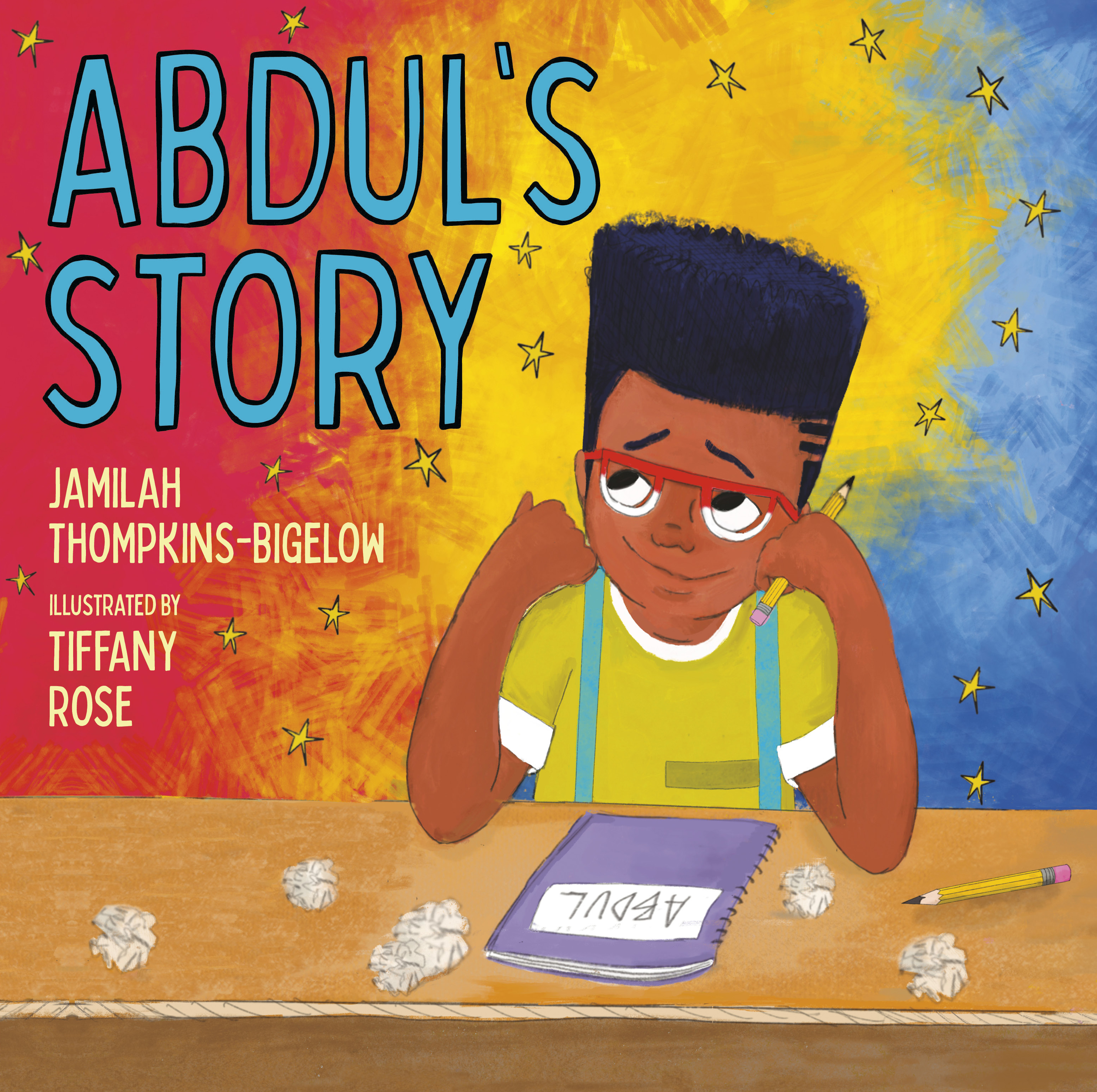
Giveaway Information: This is a giveaway of ABDUL’S STORY by Jamilah Thompkins-Bigelow, donated by Simon & Schuster. Readers must leave a comment on any SAVE A SEAT for EVERY WRITER BLOG SERIES POST by Sat., 8/12 at noon EDT and have a U.S. mailing address. The winner must provide their mailing address within five days, or a new winner will be chosen.
Discover more from TWO WRITING TEACHERS
Subscribe to get the latest posts sent to your email.


This piece is full of important information for teachers of all ages! So often when kids can write, we focus more on the writing than the art. Jerome Harste (I think it was him) write extensively about how art is a child’s first form of writing. Embracing art as an integral part of a writers process is so important! Thank you for writing and sharing this piece! Great tips, too!!
LikeLike
Love the illustration feature list!
LikeLike
I love this. Our first kindergarten unit celebrates drawing to tell a story and learning how to share that story with a partner. We called the unit emerging storytellers. We can’t rush them
LikeLike