Estimated Reading Time: 3 Minutes (Contains 629 words.)
Primary Audience: K-6 Classroom Teachers
Why It Matters
One of the many gifts of being a teacher is the fresh start that each new school year brings. I remember being a classroom teacher and going through a unit or even a lesson and saying to myself, “Next year, when you do this, don’t forget…” or even jotting myself notes to myself with tips for the future.
The beginning of a new school year also allows us to think about how our classroom is set up and how students will interact with the space. How can we set up the room and the materials to foster independence and engagement? Having a purposeful writing center is one way to support ongoing student agency in your classroom.
Think back to your writing workshop last year. How did students utilize the writing center? Were they able to access materials independently? Were there tools there that they knew how to use that enhanced their writing? Now is the time to envision a writing center’s potential and begin to plan how to bring that vision to life.
The Details
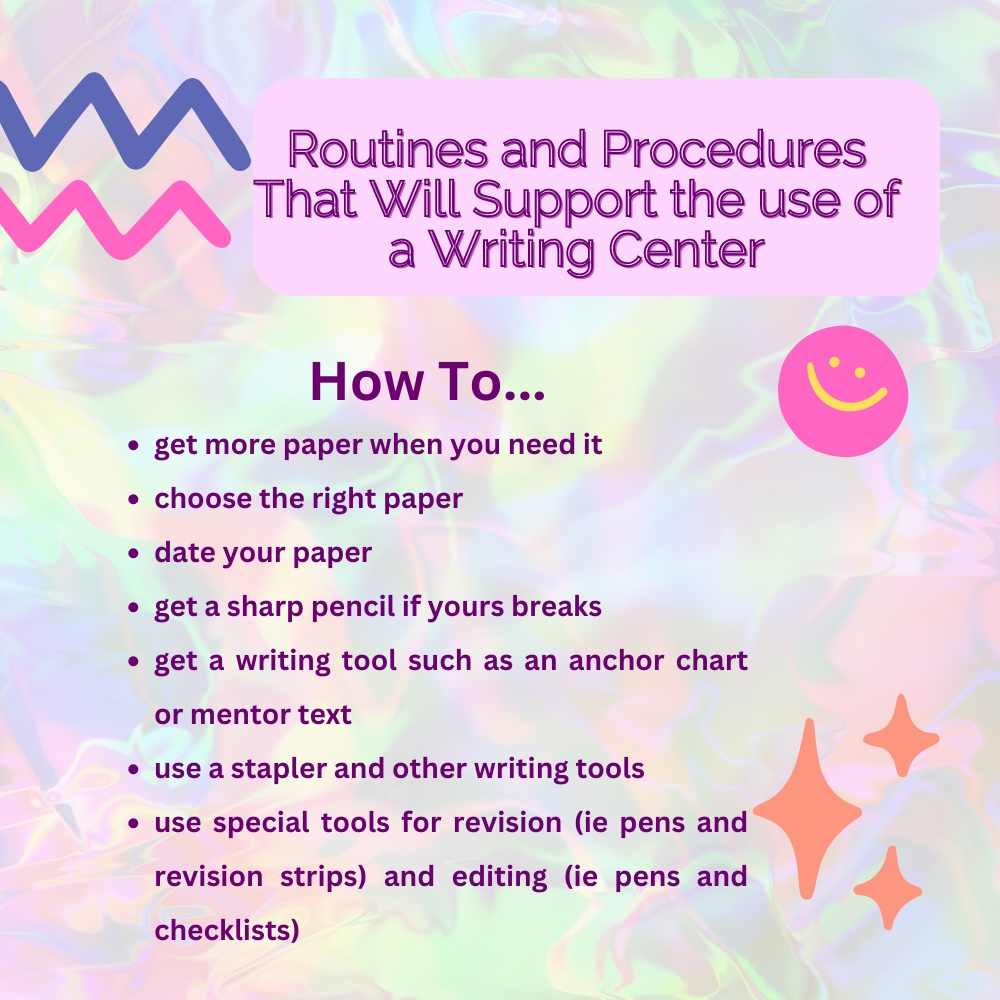
Teaching Routines and Procedures: Having a well-stocked and organized writing center is just one piece of the puzzle. In order for students to learn to utilize the space, they need to learn the routines and procedures for accessing the various components in the writing center. This involves more than just telling students how to do it or showing them one time. Responsive Classroom has a simple routine called Interactive Modeling, that can be used to teach various social and academic routines throughout a school day. This modeling shares clear expectations for classroom routines and provides opportunities for students to practice. You can read more about Interactive Modeling here.
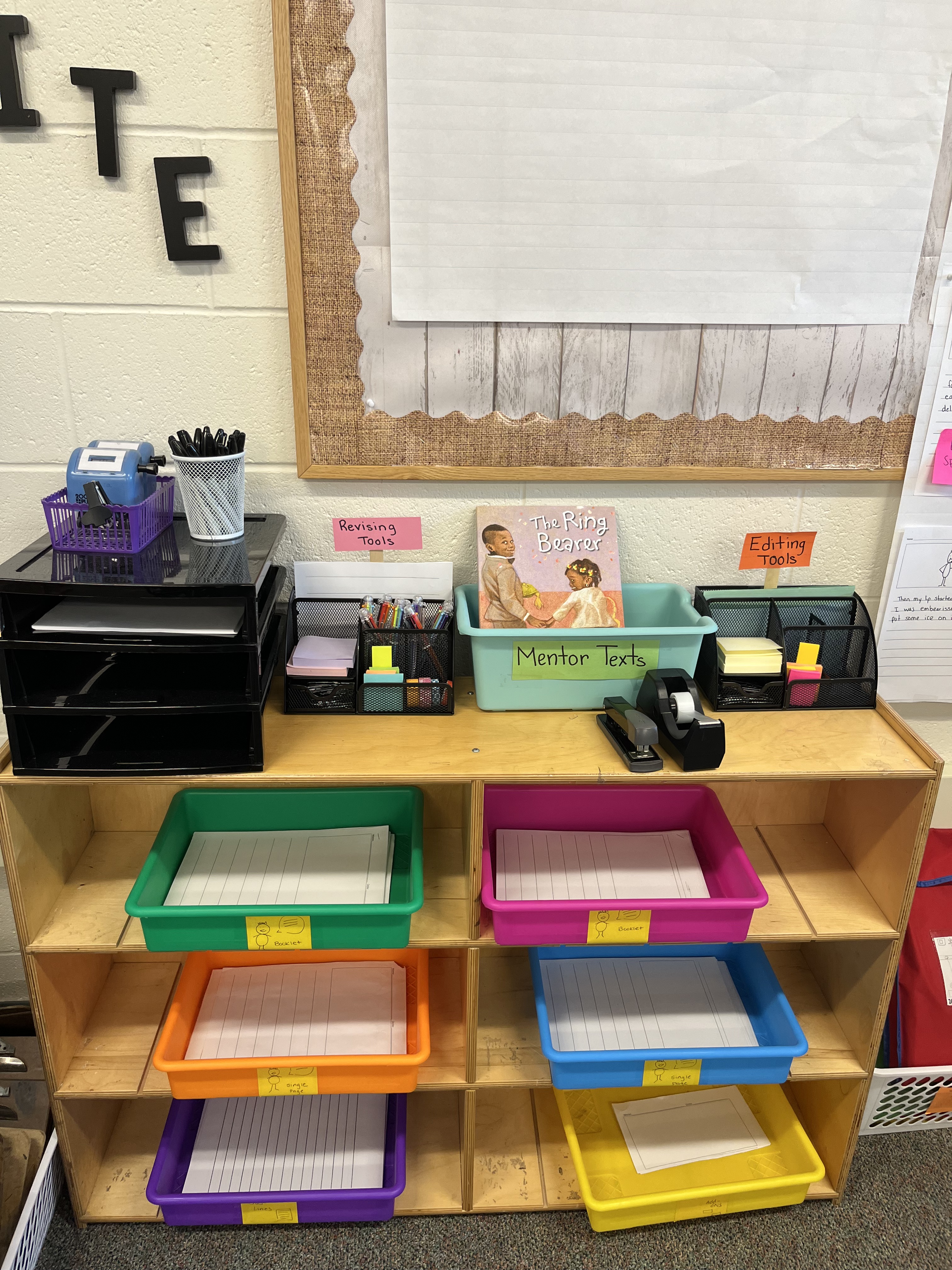
Tools and Supplies: When considering provisioning your writing center, starting with less and adding more as the school year progresses may be helpful. This approach will allow students to practice basic routines and allow time to teach into new tools and materials in a meaningful way.
- Writing Paper: Paper choice is important. However, too many choices can be overwhelming. A quick tip I got from a TCRWP staff developer was to have three paper choices and to teach students to think about how much they have to say on each page, a little, a lot, or somewhere in between. Here are some labels I’ve used to help students choose appropriate paper.

Labels that can be used to help students choose paper that is just right for them.
- Writing Utensils: Starting with a basic tool, such as pencils or felt tip pens, is probably best. Over time, you may introduce additional tools, helping students to think about when they might use them and what works best for them as a writer.
- Construction Materials: Empowering writers to add to and take away from their writing will go a long way as students learn to revise and edit their pieces. Having tools such as tape, staplers, sticky notes, and paper strips alongside modeling can all support this work.
- Writing Tools: As you introduce writing tools such as anchor charts or checklists, these tools can be added to the writing center for students to access as needed. Through small group work or even as you send students off to write after a mini-lesson, quick reminders about the tools available to students can help ensure that these tools get used.
- Mentor Texts: A writing center is the perfect place to showcase mentor texts. These texts may include class pieces created through shared or interactive writing and exemplars shared throughout the unit. As you explore and study texts from published authors, you can mark them up with sticky notes for students to reference on their own.
The Bottom Line
The beginning of the school year is the perfect time to reimagine a writing center’s role in your classroom. With clear expectations for how this space can be used, writing centers will allow for students to take ownership of their writing process.
Go Deeper
To learn even more about writing centers, check out these past posts from the blog:
Back to Basics by Beth Moore
Sharpen Your Workshop Routines: Writing Centers to Organize Your Materials by Beth Moore
Discover more from TWO WRITING TEACHERS
Subscribe to get the latest posts sent to your email.


Thank you for the link to the Interactive Modeling explanation. That’s a helpful tool!
LikeLiked by 1 person
I like that tip about the three paper sizes. Believe it or not, I haven’t heard that tip before. Thanks for sharing it and for this post to get us in a back-to-school mindset.
LikeLiked by 1 person
I love the mentor book bin! Great ideas, thank you!
LikeLiked by 1 person
Such a timely post as we’re all setting up our classrooms. Thanks for the tips!
LikeLike